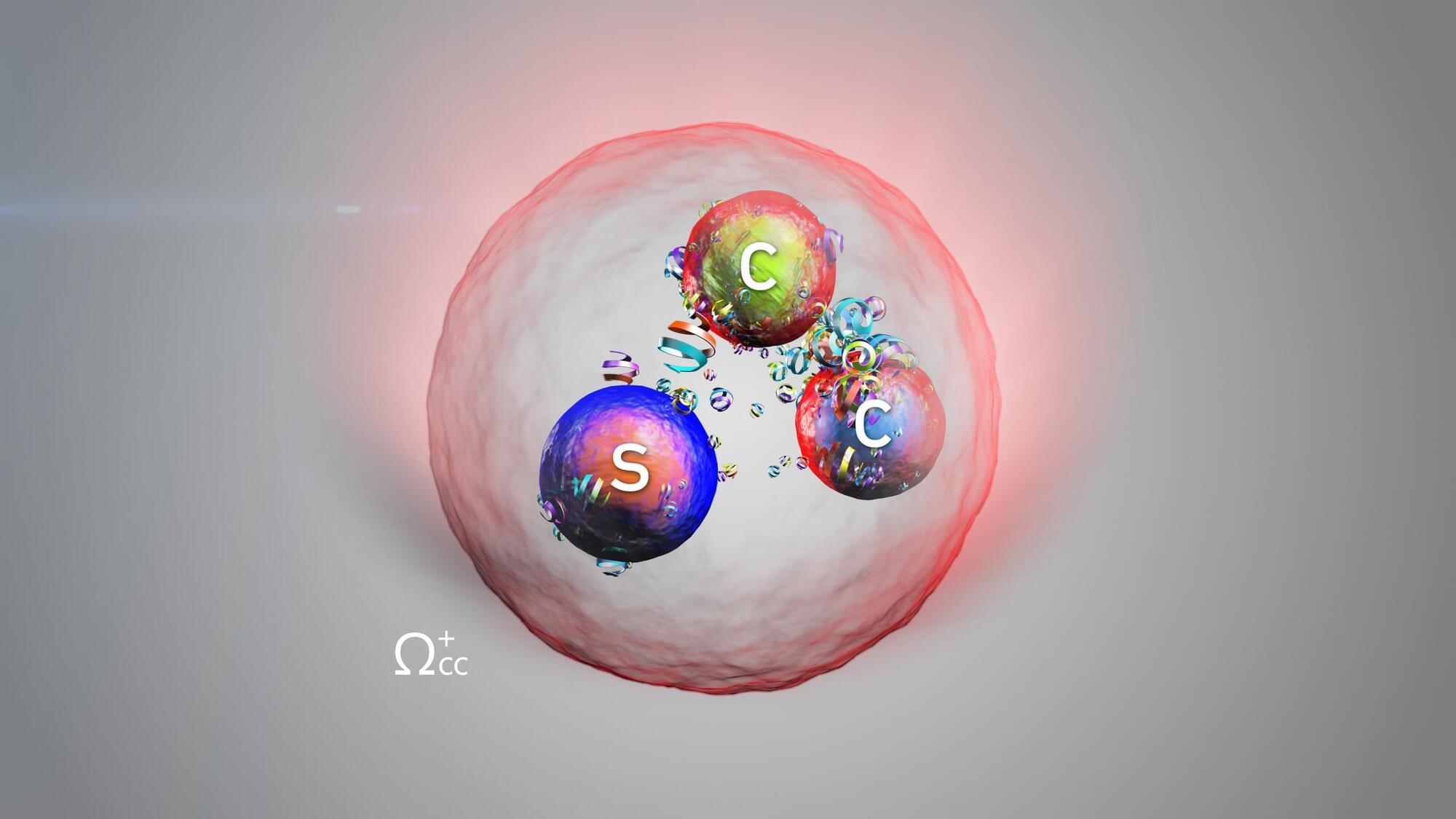
The new particle, composed of one strange quark and two charm quarks, completes a set of particles first theorised over half a century ago.
Written by:
Rory Harris.
—
Go to https://surfshark.com/abidebyreason or use code ABIDEBYREASON at checkout to get 4 extra months of Surfshark VPN!
Join my Patreon: / abidebyreason.
_____
This video is about how Divergence and Curl, along with the theory of Vector Analysis was discovered.
_____
Image Credits:
https://commons.wikimedia.org/wiki/Fi…, https://creativecommons.org/licenses/.… Approaching a Black Hole: NASA’s Scientific Visualization Studio — Caltech-IPAC/Robert Hurt, Caltech-IPAC/Keith Miller, NASA/JPL/Chelsea Gohd, Global Science and Technology, Inc./Ella Kaplan, NASA/GSFC/Mark SubbaRao Many more images that are public domain from wikimedia commons _____ Sources: Vector, A Surprising Story of Space, Time, and Mathematical Transformation by Robyn Arianrhod A History of Vector Analysis by Michael J. Crose Maxwell’s Treatise on Electricity and Magnetism + A Dynamical Theory of the Electromagnetic Field Great videos by Kathy Loves Physics: • Quaternions are Amazing and so is William…,
• How Maxwell’s Equations (and Quaternions)… _____ Corrections: 15:12 — on screen it should read “born in Scotland 1831″ instead of 1931 _____ Music: Epidemic Sound Animations created using Manim: https://www.manim.community/ Illustrations and Thumbnails: Christine Kosakowski This video was sponsored by Surfshark.
https://commons.wikimedia.org/wiki/Fi…, https://creativecommons.org/licenses/.…
Approaching a Black Hole: NASA’s Scientific Visualization Studio — Caltech-IPAC/Robert Hurt, Caltech-IPAC/Keith Miller, NASA/JPL/Chelsea Gohd, Global Science and Technology, Inc./Ella Kaplan, NASA/GSFC/Mark SubbaRao.
Many more images that are public domain from wikimedia commons.
Europe fears US AI control as OpenAI, Anthropic rules tighten at G7 talks
The “Godfather of AI” and Nobel laureate Geoffrey Hinton just said the quiet part out loud: he believes today’s AI is already conscious — and that our entire model of the mind is “as wrong as the belief that people were designed by God.” In this clip from the Big Technology Podcast, Hinton dismantles the “stochastic parrot” argument (“I think that’s complete nonsense”), explains why understanding a question is impossible without real comprehension, and walks through the Copernicus → Darwin → AI arc that he says will end humanity’s belief that it is special. Then he turns to the company at the center of the AI safety debate: Anthropic. Hinton argues that a publicly traded AI lab has “a fiduciary duty to maximize profits for shareholders — as opposed to legally required to not wipe out human beings,” and warns that Anthropic is “caught in a bind” trying to stay safe while raising the money it needs to compete. He closes with the line every founder and regulator should hear: progress is the accelerator, regulation is the steering wheel — and the big labs are asking us to let them build a very fast car without one. Chapters: 0:00 “I believe they’re already conscious” 0:05 Why “stochastic parrot” is nonsense 1:40 We’re about to become the cat 3:40 Anthropic is caught in a bind 5:00 Regulation is the steering wheel, not the brake Geoffrey Hinton won the 2024 Nobel Prize in Physics and is often called the Godfather of AI for his foundational work on deep learning and backpropagation. He left Google in 2023 to speak freely about AI risk. 🎙️ Full episode (Big Technology Podcast): • AI Pioneer Geoffrey Hinton: AI Is Consciou… 📺 Frontier Cut curates the sharpest clips from the world’s top AI and business podcasts. New episodes weekly. 🔔 Subscribe: @frontiercut #GeoffreyHinton #AI #Anthropic #AISafety #Superintelligence #AGI #BigTechnologyPodcast
What if one of the most important assumptions in modern cosmology is wrong?
Priya Natarajan discusses new observational hints that dark energy may not be constant over cosmic time — a possibility that would have major implications if confirmed.
0:00 Is Dark Energy Really Constant?
1:30 New Hints From Observations.
2:23 Why Changing Dark Energy Matters.
4:14 What Changing Dark Energy Would Mean.
6:44 What Evidence Would Convince Us?
Priyamvada \
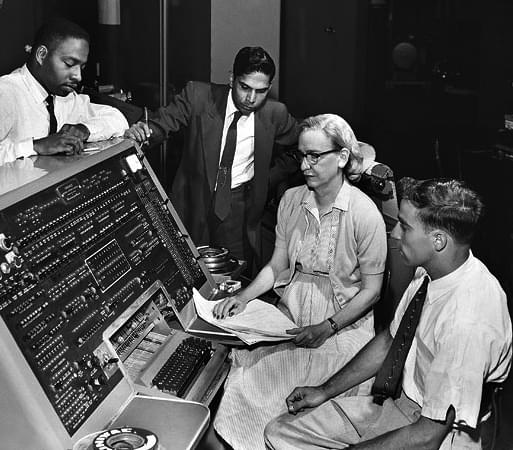
Drawing from historical examples, Carmen Kivisild puts forth a bold vision for why wet lab automation is the future of biology. I’ve had similar hopes/thoughts for how biology will progress and I greatly enjoyed how this essay put words to these concepts.
Like Grace Hopper killed the punch card. The story of how “scientist” gets redefined.
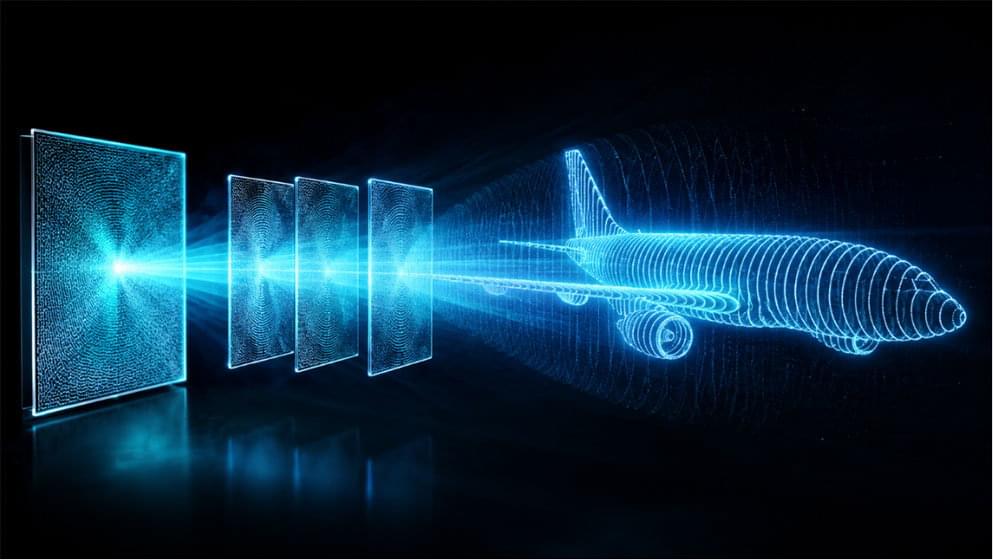
A new 3D image projection system from researchers at the UCLA Samueli School of Engineering and the California NanoSystems Institute (CNSI) marks a major step toward overcoming a longstanding problem for holographic technology.
Professor Aydogan Ozcan led the work reported in a recent paper published in Light Science and Applications, which describes the team’s new snapshot 3D image projection system, solving one of the technology’s most daunting issues.
“These results establish the diffractive 3D display system as a compact and scalable framework for depth-resolved snapshot 3D image projection, with potential applications in holographic displays, AR/VR interfaces, and volumetric optical computing,” the authors write.
Matt White is the AI CTO at the Linux Foundation. He just got back from visiting DeepSeek, Moonshot, Zhipu, Qwen, and Minimax in China.
In this episode:
What he saw inside China’s top AI labs that the West doesn’t know.
4 Chinese breakthroughs US labs are quietly building on.
Why export controls backfired and forced China to innovate faster.
150 humanoid robot startups, China builds the body, America builds the brain.
The biggest mistake enterprises make with AI
Where he’d put $1M in AI right now.
Chapters.
00:00 — Intro.
00:54 — Inside China’s AI Labs.
09:43 — DeepSeek’s Culture & the Distillation Debate.
17:03 — Open Source Models vs Commercial APIs.
27:28 — How Startups Should Choose Their AI Stack.
41:17 — Agentic AI Safety & Multi-Agent Systems.
53:08 — Enterprise AI Mistakes & Where to Start.
01:08:26 — The Future of Agentic Commerce & One-Person Companies.
Follow Matt White: / mdwdata.
Follow Anthony Sar: / anthonysar.