Douglas Hofstadter, the Pulitzer Prize–winning author of Gödel, Escher, Bach, voices his concerns about how the current wave of rapid advancements in AI may endanger humanity.
CHAPTERS 0:00 Introduction. 0:34 When I started out, computers were rigid. 1:29 I thought Artificial Intelligence would take hundreds of years. 1:59 I never imagined computers would rival humans so soon. 2:53 It feels like humans are about to be eclipsed. 4:01 I feel diminished, inferior. 5:01 AI pioneer Geoff Hinton may regret part of his life’s work. 6:07 Conclusion: what do you think?
WATCH THE FULL INTERVIEW • Gödel, Escher, Bach author Doug Hofstadter…
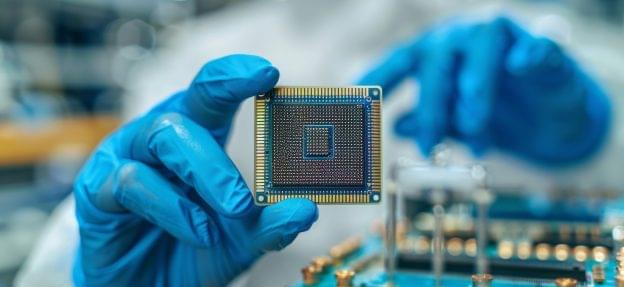
Researchers at the Korea Advanced Institute of Science and Technology (KAIST) have developed a technique to carve microscopic liquid-cooling channels directly inside silicon semiconductor chips.
Interestingly, the computer architecture slashed the energy required for cooling by pumping ordinary, room-temperature water straight through the chip’s internal structure.
“As the performance of AI semiconductors and advanced electronic packaging becomes increasingly limited by heat, we expect this technology to serve as a foundational cooling solution for future high-performance computing systems,” said Professor Sung Jin Kim.
A research team led by the The University of Tokyo has fabricated the world’s smallest semiconductor nanotube, according to a study published in the latest issue of Science. Using boron nitride (BN) nanotubes as a template, the researchers successfully synthesized single-walled molybdenum disulfide (MoS₂) nanotubes with a diameter of just 1 nanometer—roughly one hundred-thousandth the width of a human hair.
The achievement not only validates theoretical predictions about the electronic properties of ultrafine materials made decades ago, but also opens new possibilities for the development of next-generation miniaturized electronic devices.
Carbon nanotubes have long attracted attention for their exceptional mechanical and electrical properties. However, slight variations in their atomic structure can significantly alter their conductivity, posing challenges for transistor applications. In contrast, MoS₂ is an intrinsically semiconducting material with promising potential for semiconductor electronics, high-sensitivity sensing, and quantum-scale physics research. Yet producing ultrathin, structurally controlled MoS₂ nanotubes has remained a major challenge, as stability and fabrication complexity increase dramatically as nanotube diameters shrink.
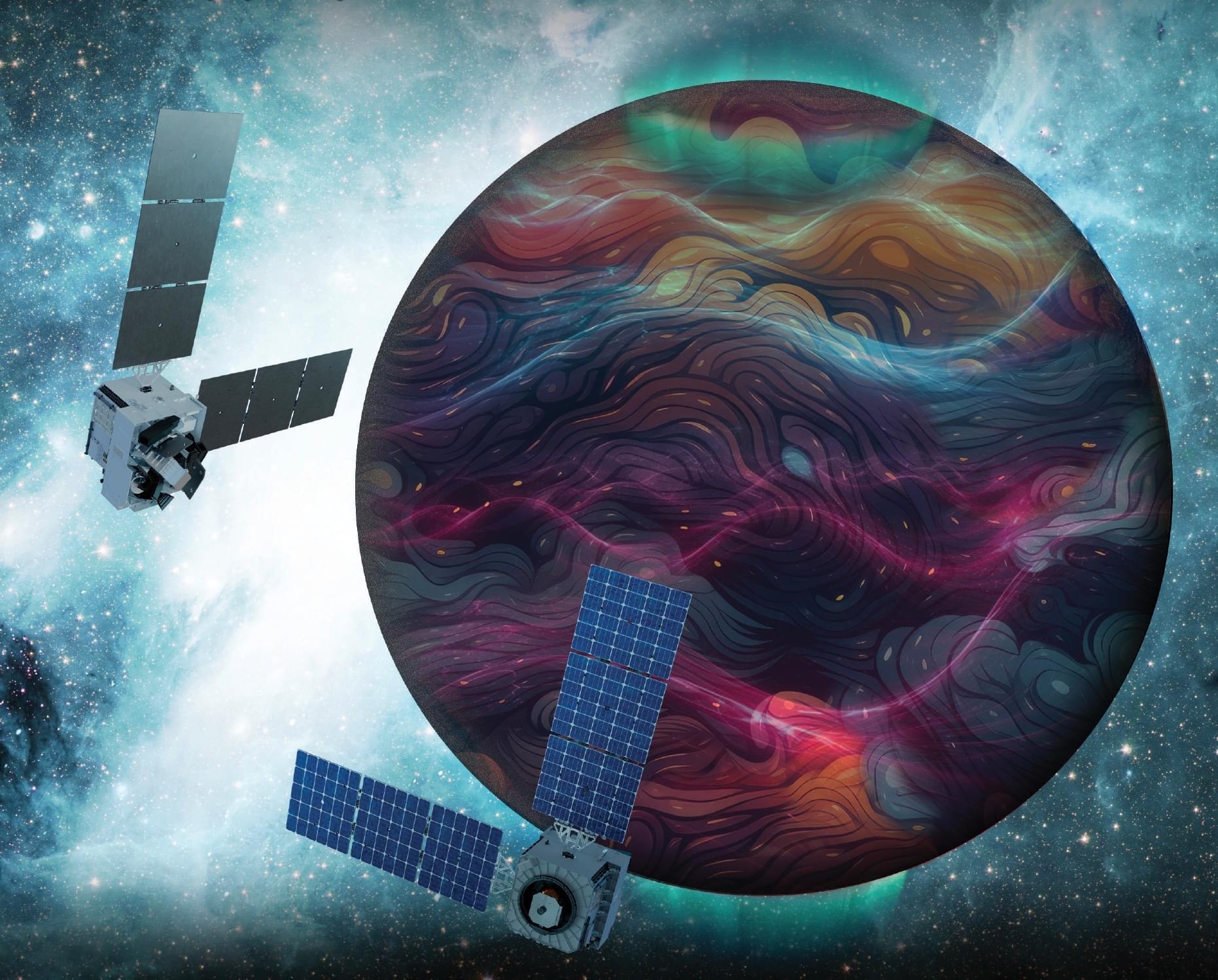
WASHINGTON — NASA has selected for development a space science mission that will study how space weather interacts with Earth’s atmosphere.
NASA announced June 18 that the Dynamic Atmosphere-Ionosphere Explorer, or DAPHNE, mission will proceed into the next phase of development, with a launch planned for no earlier than 2029.
DAPHNE was one of three concepts selected by NASA for study in 2024 for a mission concept called Dynamical Neutral Atmosphere-Ionosphere Coupling, or DYNAMIC, that was recommended by the heliophysics decadal survey in 2013 to examine the coupling between regions of the atmosphere and space weather.
I recorded this debate 14 years ago, and the question has only gotten sharper.
Lincoln Cannon is a software engineer with degrees in philosophy and business. He is also president of the Mormon Transhumanist Association. So when he argues that science and religion are complementary, he is not speaking from ignorance of either side.
I disagree with him. I think they are mutually exclusive. He thinks they complete each other.
So we sat down and argued it out. Friendly, but real.
This was a special edition of Singularity. FM, and it remains one of the more honest conversations I have had about belief, reason, and what transhumanism owes to both. The questions we wrestled with sit right at the heart of #transhumanism and the #futureofreligion in an age of accelerating #technology.
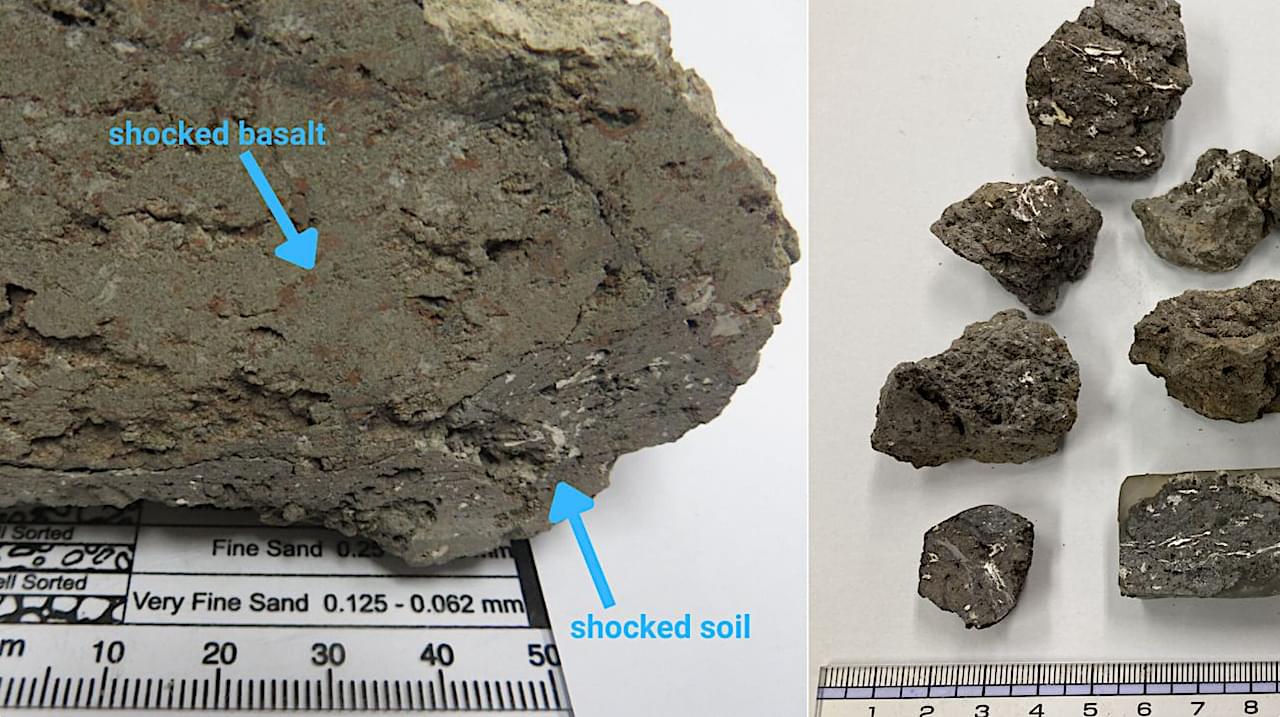
When a meteoroid strikes, it generates a wave of energy that moves faster than the speed of sound. When all that energy propagates through material in seconds or less before being quickly cooled and resolidified by a secondary wave, it produces glass.
Planetary Science Institute Senior Scientist Shawn Wright was looking for such glassy material while doing field work among the basaltic volcanic rock of Lonar crater in the Deccan region of India, when he found something unexpected.
“Some glassy samples were fluffy and light, like popcorn,” he said. “It had a really low density, it was airy, and it crumbled in my fingers. It looked different than all the other samples I’d seen and collected, so I aimed to find out what it was by trying to figure out what it used to be.”
When the magnitude 9.0 Tōhoku earthquake struck off the coast of Japan in 2011, its seismic shivers did more than ripple through the planet.
At least one wave traveled 2,900 kilometers (1,800 miles) down to the boundary between Earth’s mantle and liquid outer core, where it was reflected right back to the surface.
And there, according to a new analysis of earthquake data from across Japan, it may have done something scientists have never identified before.
I think this was one of my most enjoyable dialogues in our What’s new series. Maybe Sabine and I are getting more used to each other’s cadence and interests or maybe it was the subject matter. Either way, I think you will find this to be a fascinating and provocative discussion of science at the forefront, and at the not-so-forefront, because that science is interesting too! We began our discussion describing a new finding of a Giant Ring of galaxies billions of light years across in the sky. The key questions are: Is it real? And is it surprising? We both have slightly different takes on this. Next we described a new measurement of the strength of gravity on scales from 80 to 800 million light years in distance. And guess what? Gravity falls off just like Newton predicted! This may seem like a big yawn, but one of the most popular models that claims to do away with dark matter would imply that Gravity would fall off differently on these scales. Does this new result kill that idea? Stay tuned. Microsoft, which has cried wolf a number of times so far when it comes to something called Majorana qubits as the basis of a new viable quantum computer just published a new paper claiming they finally have it. Sabine and I discuss why we are both still skeptical, but why the effort is worth it. Next, CERN, the large European particle physics laboratory, and the world particle physics community seem to have converged on plans for building a huge new accelerator in the current CERN site… this time involving an underground ring 91 km in circumference, in which electrons and positrons would collide to explore the detailed properties of the Higgs particle. Is the effort worth it? Again, Sabine and I have slightly different takes on this. Fusion power, which we have talked about in a number of earlier episodes, continues to tempt humanity with the promise of unlimited energy. Many people, myself included, have tended to argue that fusion seems to be 25 years in the future, and may always be 25 years in the future. But many new efforts are underway, so who knows. Unfortunately, a group of economists has analyzed fusion in the context of other large energy programs and have argued that even if we can achieve it, it may not be as economically viable as many claim. Finally, one day Richard Feynman went to a Thai restaurant with his young companion Ralph Leighton, and wondered what he should order. Should it be the same old dish he loved or something new. An equation filled napkin later, and he had the answer. Fifty years later some cognitive scientists resurrected Feynman’s napkin and explained it, and argued it might have important implications in other social situations. Such is the power of science. Consider supporting the podcast and the Origins Project Foundation at https://www.originsproject.org/ To see commercial-free, full HD video episodes, join us at lawrence krauss.substack.com Thank you for your support! iTunes: https://podcasts.apple.com/us/podcast… https://TheOriginsPodcast.com Twitter: / theoriginspod Instagram: / theoriginspod Facebook: / theoriginspod The Origins Podcast, a production of The Origins Project Foundation, features in-depth conversations with some of the most interesting people in the world about the issues that impact all of us in the 21st century. Host, theoretical physicist, lecturer, and author, Lawrence M. Krauss, will be joined by guests from a wide range of fields, including science, the arts, and journalism. The topics discussed on The Origins Podcast reflect the full range of the human experience — exploring science and culture in a way that seeks to entertain, educate, and inspire. Full Episodes Playlist: • Ricky Gervais — The Origins Podcast with L…
The Path to Robust deAGI asks what it would take to build artificial general intelligence that is both powerful and structurally aligned with human flourishing—not just steered by after‑the‑fact safety patches. Ben Goertzel, CEO of SingularityNET and a founding member of the Artificial Superintelligence (ASI) Alliance, will outline how a decentralized, token‑coordinated ecosystem—combining ASI: Chain, Hyperon AGI, and community‑owned GPU clouds—can prevent AGI from being captured by any single corporation or state.
Goertzel will contrast centralized AGI roadmaps with a deAGI approach that bakes openness, diversity of values, and economic inclusion into the architecture itself, drawing on ideas like pluralistic training data, interoperable agent networks, and on‑chain governance of key system upgrades. He will also discuss technical milestones toward “robust” deAGI—modular cognitive architectures, decentralized marketplaces for AI services, and verification mechanisms that let communities audit and constrain AGI behavior—framing them as concrete steps toward an AGI that advances joy, growth, and choice for all rather than amplifying existing power imbalances.