Toggle light / dark theme

Get the latest international news and world events from around the world.

Log in for authorized contributors

Using Grover’s algorithm to efficiently prepare collective quantum states in optical cavities

The reliable engineering of quantum states, particularly those involving several particles, is central to the development of various quantum technologies, including quantum computers, sensors and communication systems. These collective quantum states include so-called Dicke and Greenberger-Horne-Zeilinger (GHZ) states, multipartite entangled states that can be leveraged to collect precise measurements, to correct errors made by quantum computers and to enable communication between remote devices leveraging quantum mechanical effects.

A new crystal that ‘breathes’ oxygen expands possibilities for clean energy and electronics

A team of scientists from Korea and Japan has discovered a new type of crystal that can “breathe”—releasing and absorbing oxygen repeatedly at relatively low temperatures. This unique ability could transform the way we develop clean energy technologies, including fuel cells, energy-saving windows, and smart thermal devices.

Long-term transcranial magnetic stimulation plus language therapy may slow aphasia progression

Hospital Clínico San Carlos in Madrid-led research reports that intermittent theta-burst transcranial magnetic stimulation (TMS) paired with language therapy over six months was associated with positive outcomes in primary progressive aphasia (PPA). Improvements included less decline in regional brain metabolism and improvements in language abilities, functional independence, and neuropsychiatric symptoms.

Primary progressive aphasia is a neurodegenerative clinical syndrome with insidious onset characterized by prominent speech and/or . It is a syndrome that can be the mode in which common causes of dementia, Alzheimer’s disease and frontotemporal degeneration are initially present.

According to current international consensus criteria, three variants are recognized: nonfluent/agrammatic, semantic, and logopenic. Speech-language intervention has proven to be beneficial.

Visual thalamus reshapes information beyond simple relay function, study finds

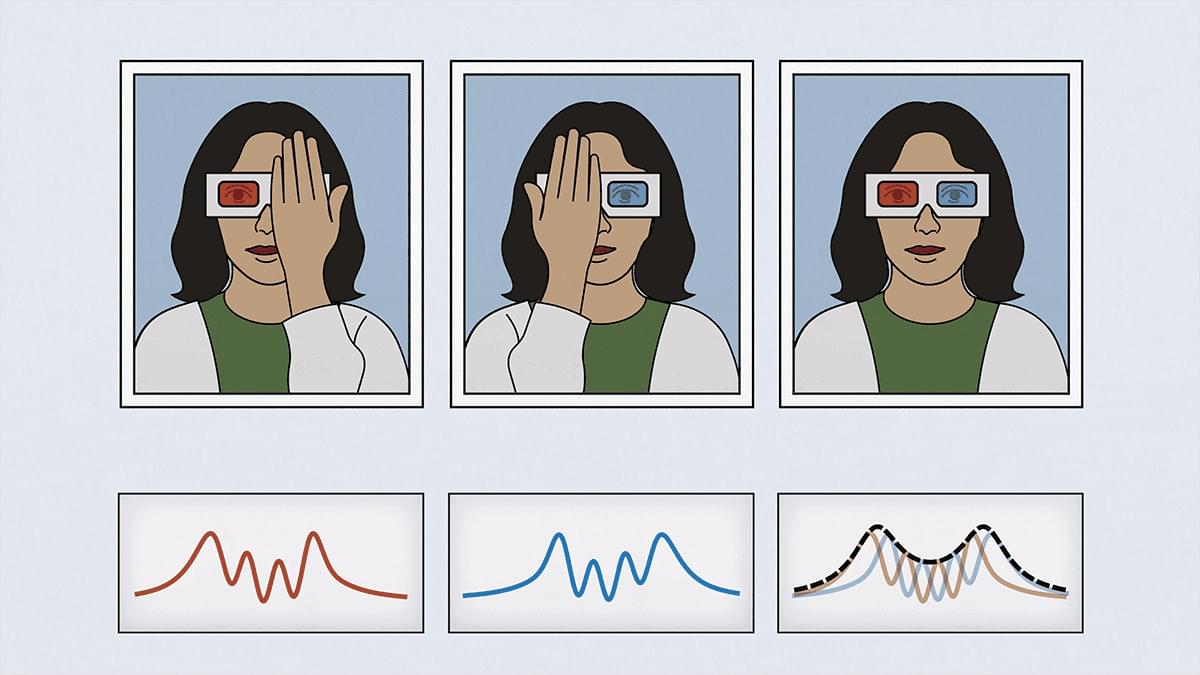
When you see something—a tree in your backyard, say, or the toy your toddler hands you—that visual information travels from your retinas to your brain. And like a train stopping at stations along its route, the information pauses at particular regions of the brain where it’s processed and sent along to its next location.

A region called the visual thalamus has been thought to be primarily a relay, simply directing to its next area. But a new study published in Neuron finds that the thalamus actually integrates additional information from other and reshapes the information it sends along to the brain cortex.

Liang Liang, Ph.D., assistant professor of neuroscience at Yale School of Medicine (YSM) and senior author of the study, suspected the thalamus might be doing more than it had been given credit for.

Using lasers to bring crystal vibrations to their quantum ground state

Using new techniques, Yale researchers have demonstrated the ability to use lasers to cool quantized vibrations of sound within massive objects to their quantum ground state, the lowest energy allowable by quantum mechanics. This breakthrough could benefit communications, quantum computing, and other applications. The results are published in Nature Physics.

/* */