Age-related chromatin remodeling includes shared and specific signatures across cell types, sex, and organs


JWST just found evidence that some “super-Jupiters” may have formed like planets, not failed stars. A distant star system with four super-sized gas giants has revealed a surprise. Thanks to JWST’s powerful vision, astronomers detected sulfur in their atmospheres — a chemical clue that they formed like Jupiter, by slowly building solid cores. That’s unexpected because these planets are far bigger and orbit much farther from their star than models once allowed.
Gas giants are enormous planets made primarily of hydrogen and helium. They may contain dense central cores, but unlike Earth, they do not have solid surfaces you could stand on. In our solar system, Jupiter and Saturn are classic examples. Beyond our neighborhood, astronomers have identified many gas giant exoplanets, some far larger than Jupiter. The most massive of these worlds begin to resemble brown dwarfs, substellar objects sometimes called “failed stars” because they do not fuse hydrogen.
This overlap raises a major question in astronomy. How exactly do these massive planets form? One possibility is core accretion, the same process believed to have created Jupiter and Saturn. In this scenario, a solid core slowly builds up inside a disk of dust and ice, gathering rocky and icy material until it becomes massive enough to pull in surrounding gas. Another possibility is gravitational instability, where a swirling cloud of gas around a young star collapses quickly under its own gravity, forming a large object more like a brown dwarf.
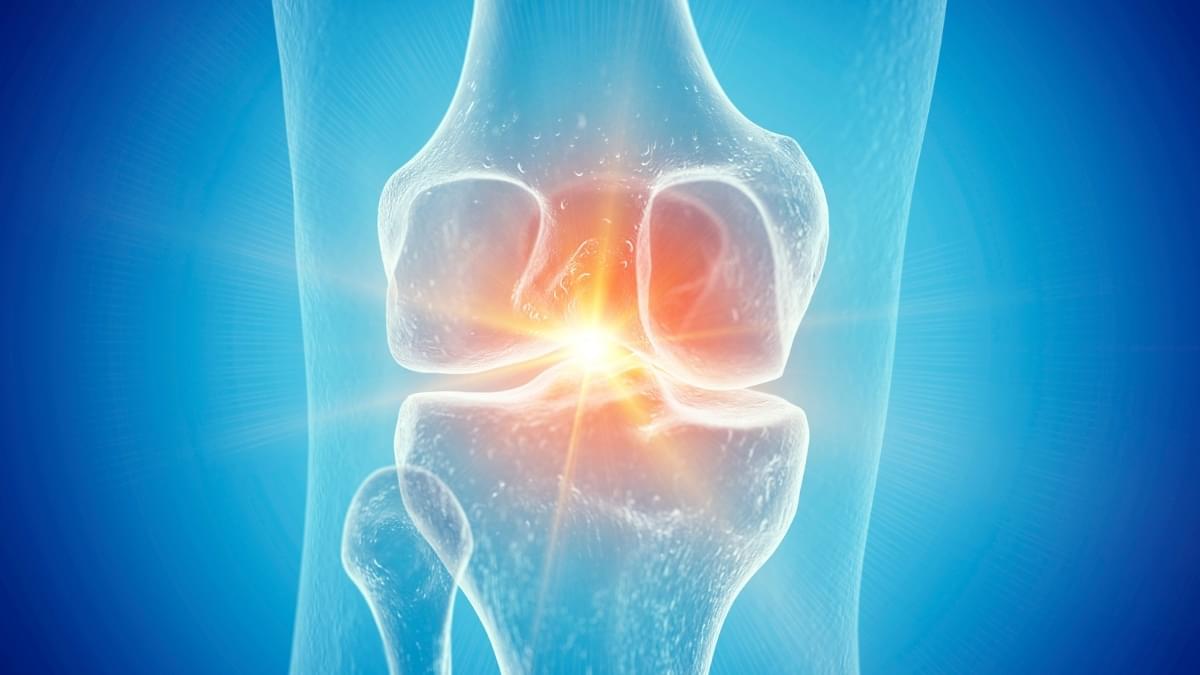
Medical researchers have discovered that semaglutide may reverse the debilitating tissue damage caused by osteoarthritis, the world’s most common form of arthritis.
The drug behind Ozempic and Wegovy is best known for treating type 2 diabetes and helping people lose weight. But the new study found semaglutide appears to protect joints in mice through a mechanism that’s not about easing pressure through weight loss.
Instead, the drug reprograms the metabolism of cells that synthesize and maintain healthy cartilage, allowing them to generate more energy.
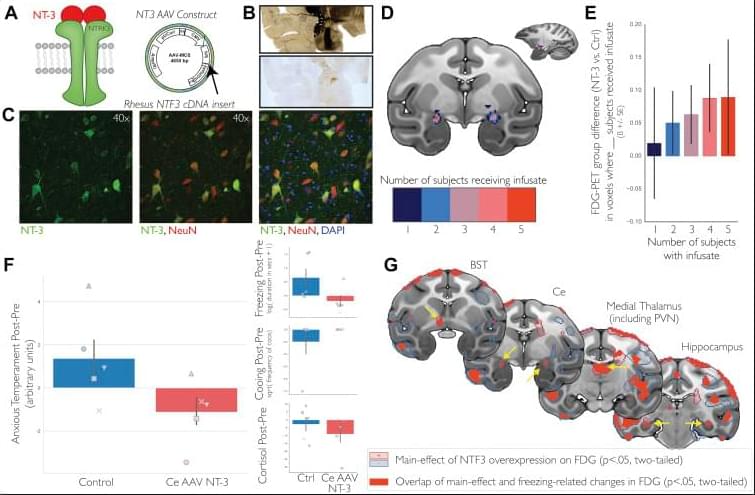
An early-life anxious temperament (AT) is a risk factor for the development of anxiety, depression, and comorbid substance abuse. We validated a nonhuman primate model of early-life AT and identified the dorsal amygdala as a core component of AT’s neural circuit. Here, we combine RNA sequencing, viral-vector gene manipulation, functional brain imaging, and behavioral phenotyping to uncover AT’s molecular substrates.
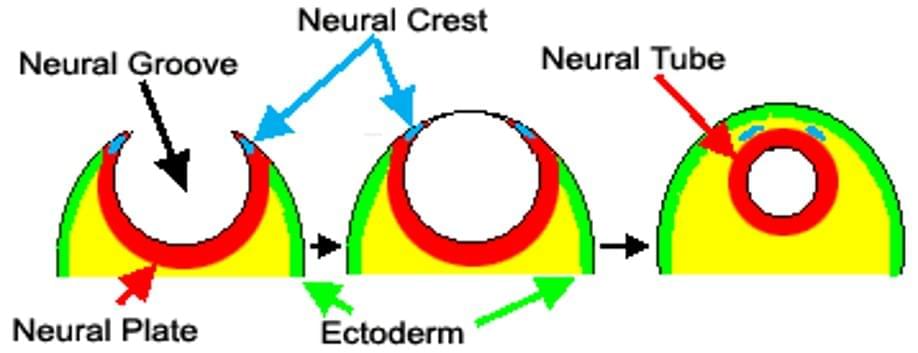
Neural development is the complex, lifelong process of forming and refining the nervous system, beginning with embryonic neurulation (neural tube formation) and continuing through maturation and remodeling.
The brain starts forming weeks after conception, with development continuing through childhood and adolescence.
Signaling molecules like Sonic hedgehog (SHH) and TGF-beta regulate this process.
Brain architecture is shaped by experiences and environmental factors.
Disruptions can cause neural tube defects like spina bifida.
Fore more information, click on the link below: https://sciencemission.com/Neural-Development
Sciencenewshighlights ScienceMission

A Dartmouth study challenges the conventional view that the amygdala—the two-sided structure deep in the brain involved in emotion, learning, and decision making—is simply the brain’s primitive “fear center,” reflexively driving us to avoid the things we fear, from high places and tight spaces to spiders and large crowds. The researchers report in Nature Communications that the amygdala is far more complex, acting as a sophisticated arbiter to help the brain choose between competing strategies for learning and decision-making.
“Historically, the amygdala has been studied from the perspective of fear learning, and it has been generalized to reward learning,” says Jae Hyung Woo, a Ph.D. candidate in the psychological and brain sciences and the study’s first author. “Our main hypothesis was that it must have other functions given its extensive connections to the rest of the brain.”
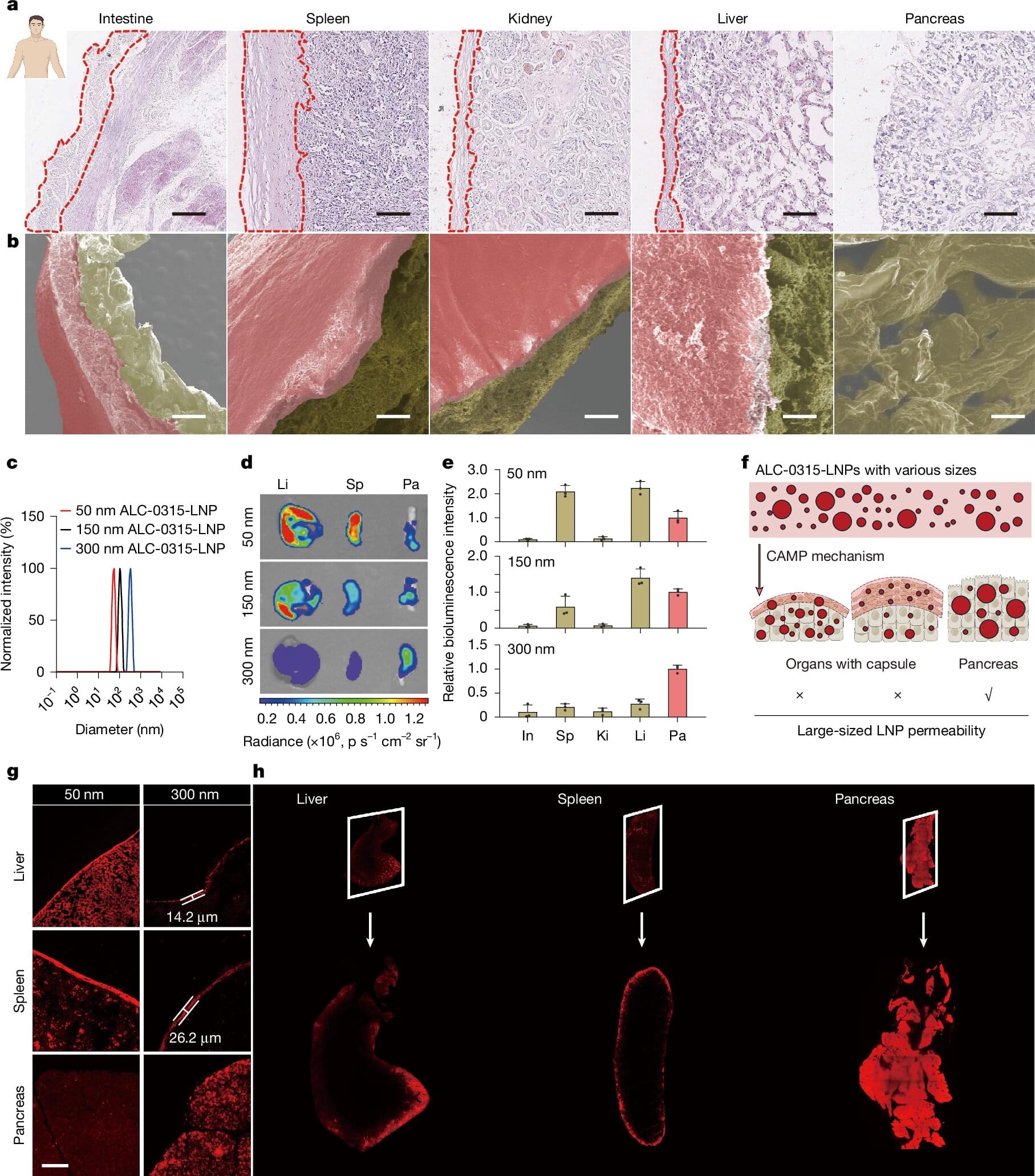
In recent years, mRNA in lipid nanoparticles (mRNA–LNPs) has emerged as a promising strategy for treating numerous conditions, including COVID-19, various cancers and chronic genetic disorders. To date, this technology has not been successfully used for pancreatic diseases, but that could be about to change. In a paper published in Nature, scientists from China report the development of a new lipid nanoparticle drug-delivery system specifically designed for the pancreas.
Lipid nanoparticles are a special class of fat-based carriers that encapsulate and deliver nucleic acids such as messenger RNA into cells. Among the reasons they have not worked for the pancreas until now is that most LNPs naturally accumulate in the liver and spleen. That means the therapeutic molecules they carry can’t accumulate to high enough levels to be beneficial.
However, the research team realized that while the liver and spleen are wrapped in a dense, protective outer layer called a capsule, the pancreas is only covered by a thin layer of connective tissue. They wondered if these organ capsules act as a biological filter. If so, they could perhaps design nanoparticles large enough to be physically blocked by the walls of the spleen and liver, leaving the pancreas as the only place to go. They named this discovery the capsule-filter-mediated pancreatic-targeted (CAMP) mechanism.

One of the least examined—but most consequential—dimensions of intelligence is not merely what a mind can represent, but the temporal resolution at which cognition unfolds. Intelligence is inseparable from subjective time: the rate at which experiences, d