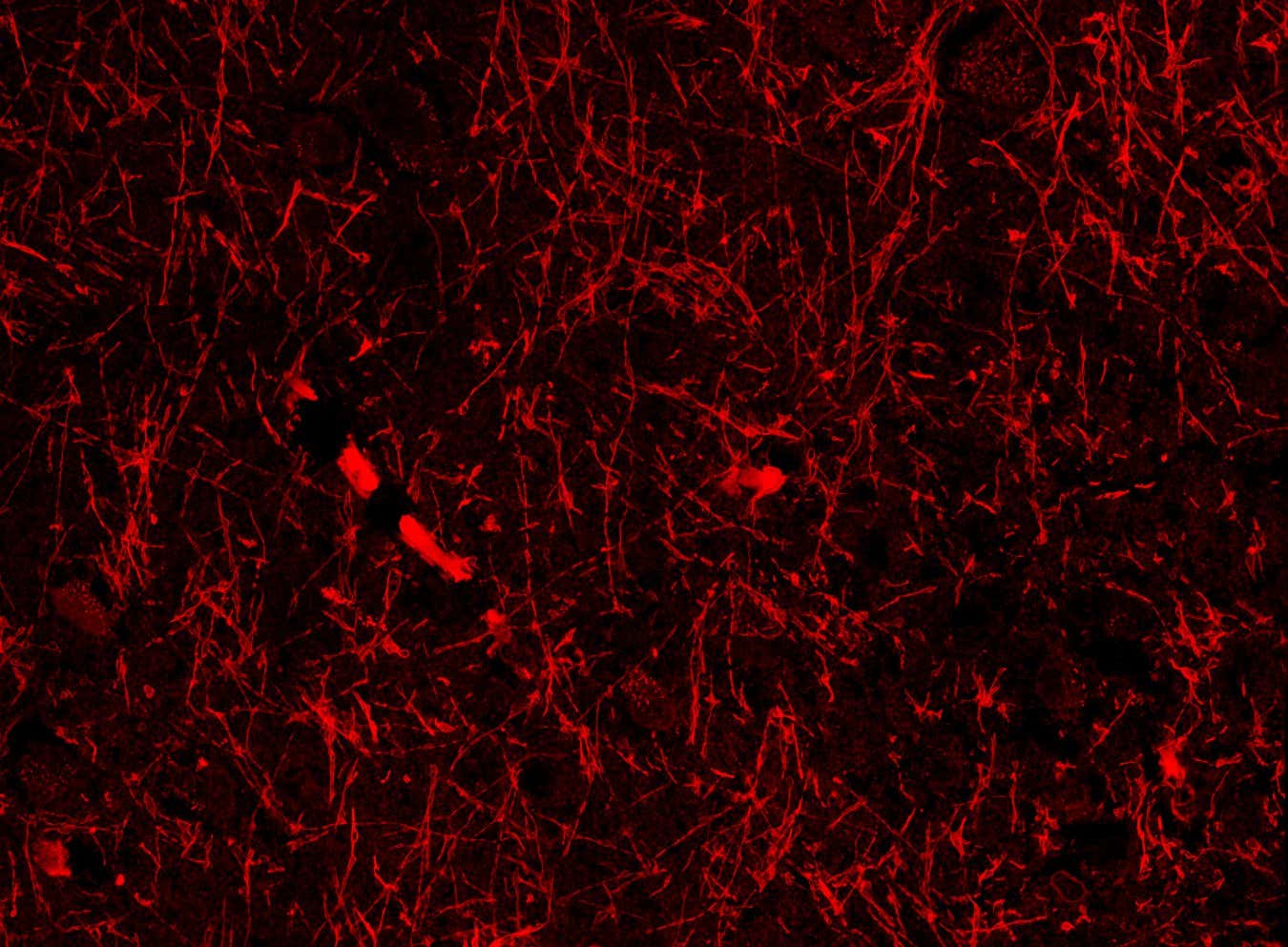
What’s going on? In this video, you’ll see a CA device that is capable of replicating itself. The device creates a child device which creates a child device… and the process continues indefinitely. The CA is a variant of Wireworld which allows genes and construction signals to be sent around the device.
Get the latest international news and world events from around the world.
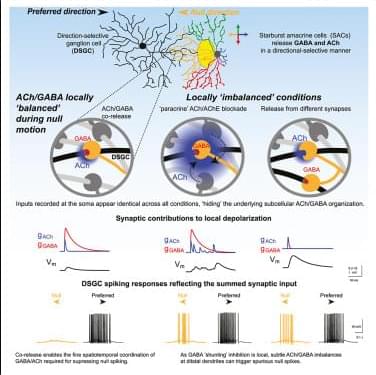
Lessons learned in linking PROTACs from discovery to the clinic
Proteolysis targeting chimeras (PROTACs) are an emerging platform in drug discovery with the potential to unlock novel pharmacology and tackle undruggable targets. This Review highlights learnings from the first cohort of clinical-stage PROTACs, which use short, ring-rich linkers, often complemented with one basic centre, to achieve good bioavailability and metabolic stability.
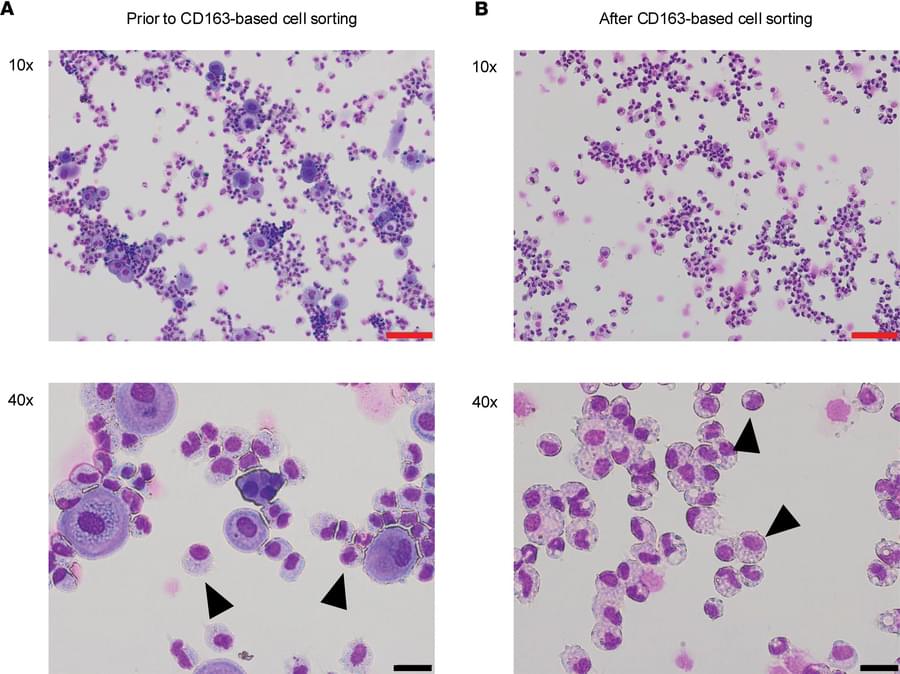
Endothelial IL-36 receptor activation promotes vascular stability to limit pathological microvessel permeability in the CNS
Only a small number of barrier-enhancing factors have been discovered to specifically increase barrier integrity, enhance vessel stability, and make vessels resistant to fluid leakage. Here, Fahey et al. present DEVDIL-36β as a cytokine promoter of vascular integrity in the CNS, with barrier-enhancing properties through upregulation of junctional components.
Hacker claims to leak WIRED database with 2.3 million records
A hacker claims to have breached Condé Nast and leaked an alleged WIRED database containing more than 2.3 million subscriber records, while also warning that they plan to release up to 40 million additional records for other Condé Nast properties.
On December 20, a threat actor using the name “Lovely” leaked the database on a hacking forum, offering access for approximately $2.30 in the site’s credits system. In the post, Lovely accused Condé Nast of ignoring vulnerability reports and claimed the company failed to take security seriously.
“Condé Nast does not care about the security of their users’ data. It took us an entire month to convince them to fix the vulnerabilities on their websites,” reads a post on a hacking forum.
Heavy-tailed update distributions arise from information-driven self-organization in nonequilibrium learning
Like human decision-making under real-world constraints, artificial neural networks may balance free exploration in parameter space with task-relevant adaptation. In this study, we identify consistent signatures of criticality during neural network training and provide theoretical evidence that such scaling behavior arises naturally from information-driven self-organization: a dynamic balance between the maximum entropy principle that promotes unbiased exploration and mutual information constraint that relates updates with task objective. We numerically demonstrate that the power-law exponent of updates remains stable throughout training, supporting the presence of self-organized criticality.
Why Control Alone Will Fail: The Structural Limits of Top-Down AI Alignment
The problem is not that top-down AI alignment strategies are wrong; it is that they are structurally insufficient once intelligence crosses certain thresholds of autonomy, generality, and self-reflection. Control is necessary in the early stages of artifi