Swiss company Transmutex will use particle-accelerator technology to make uranium that produces less nuclear waste when used in fission reactions.
Mann, J., Meshkin, H., Zirkle, J. et al. Mechanism-based organization of neural networks to emulate systems biology and pharmacology models. Sci Rep 14, 12,082 (2024). https://doi.org/10.1038/s41598-024-59378-9
The public’s appetite for inexpensive and powerful electronic devices continues to grow. While silicon-based semiconductors have been key to satiating this demand, a superior alternative could be wide-bandgap semiconductors. These materials, which operate at higher temperatures and handle increased power loads, are unfortunately very expensive.
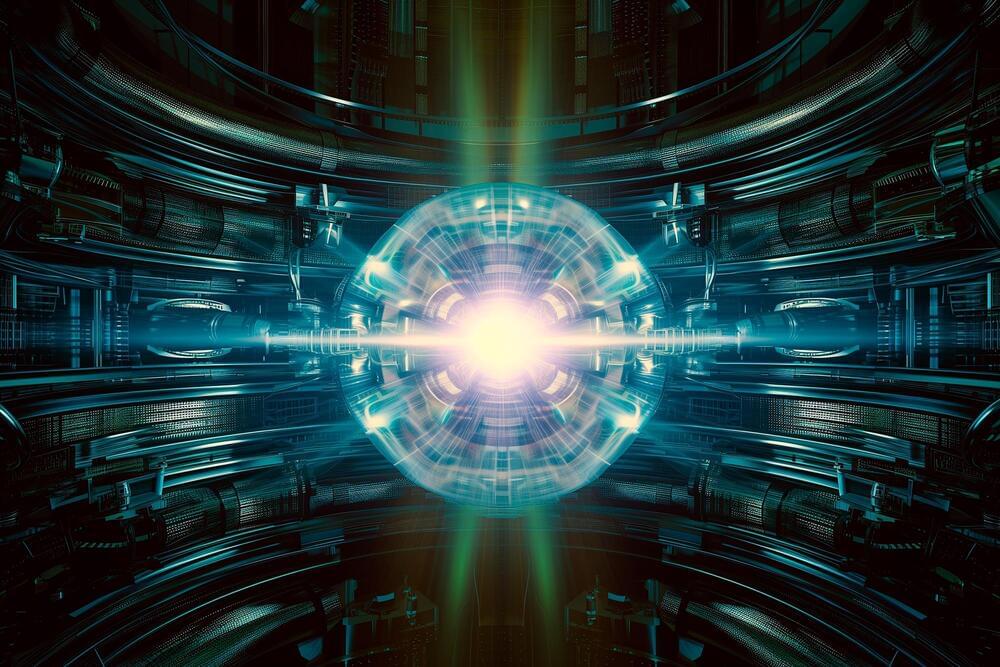
Researchers at the Princeton Plasma Physics Laboratory are harnessing artificial intelligence and machine learning to enhance fusion energy production, tackling the challenge of controlling plasma reactions. Their innovations include optimizing the design and operation of containment vessels and using AI to predict and manage instabilities, significantly improving the safety and efficiency of fusion reactions. This technology has been successfully applied in tokamak reactors, advancing the field towards viable commercial fusion energy. Credit: SciTechDaily.com.
The intricate dance of atoms fusing and releasing energy has fascinated scientists for decades. Now, human ingenuity and artificial intelligence are coming together at the U.S. Department of Energy’s (DOE) Princeton Plasma Physics Laboratory (PPPL) to solve one of humankind’s most pressing issues: generating clean, reliable energy from fusing plasma.
Unlike traditional computer code, machine learning — a type of artificially intelligent software — isn’t simply a list of instructions. Machine learning is software that can analyze data, infer relationships between features, learn from this new knowledge, and adapt. PPPL researchers believe this ability to learn and adapt could improve their control over fusion reactions in various ways. This includes perfecting the design of vessels surrounding the super-hot plasma, optimizing heating methods, and maintaining stable control of the reaction for increasingly long periods.
Dr. Hyeon-woo Son and his research team from the Department of Aluminum in the Advanced Metals Division at KIMS have successfully developed an aluminum alloy for electric vehicles that dramatically improves thermal stability. The paper is published in the Journal of Materials Research and Technology.
One tool, called Find My Understudied Genes (FMUG), emerged from a study published in March1, which first explores why interesting, but relatively under-researched, genes are not highlighted in genetic surveys, and then offers FMUG as a remedy.
The second tool is the Unknome database, created by a team led by Matthew Freeman at the University of Oxford, UK, and Sean Munro at the MRC Laboratory of Molecular Biology, Cambridge, UK, that was described2 in 2023.
“We are in the lucky position to know what we don’t know,” says Thomas Stoeger, a biologist at Northwestern University in Chicago, Illinois, and co-author of the FMUG study.