Toggle light / dark theme

Get the latest international news and world events from around the world.

Log in for authorized contributors

The “impossible” LED breakthrough that changes everything

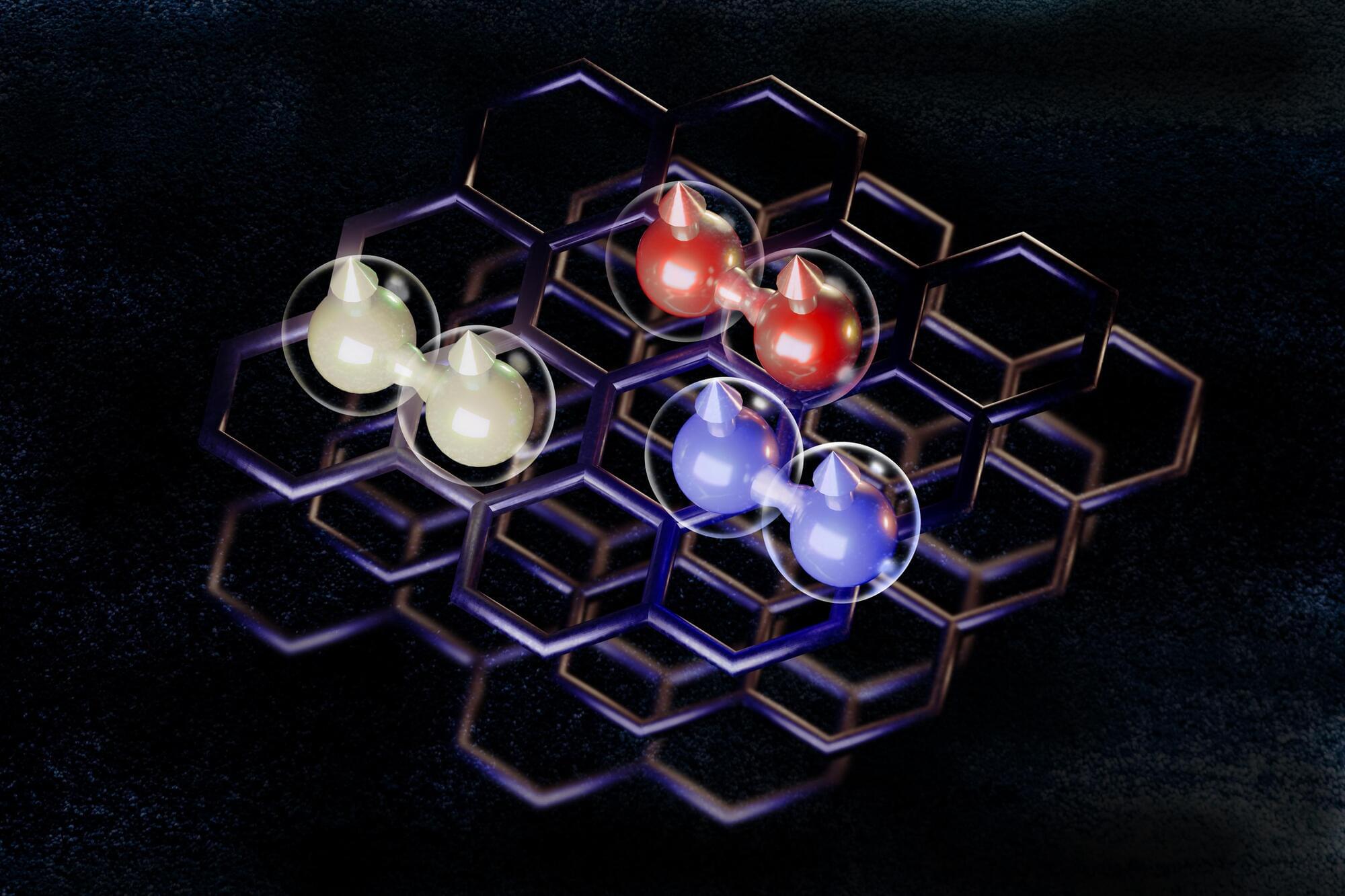
Scientists have unveiled a technique that uses ‘molecular antennas’ to direct electrical energy into insulating nanoparticles. This approach creates a new family of ultra-pure near-infrared LEDs that could be used in medical diagnostics, optical communication systems, and sensitive detectors.

Researchers at the Cavendish Laboratory, University of Cambridge have discovered how to drive electrical current into materials that normally do not conduct, a feat previously thought impossible under normal conditions. By attaching carefully chosen organic molecules that act like tiny antennas, they have built the first light-emitting diodes (LEDs) from insulating nanoparticles. Their work, reported in Nature, points toward a new generation of devices for deep-tissue biomedical imaging and high-speed data transmission.

The Next Giant Leap For AI Is Called World Models

Only world models respond to the user’s input as they navigate around the world by moving the camera, or interacting with people and objects it contains, rather than just interpreting prompts to decide what video should be generated.

Using this method, the entire world is continuously generated, frame-by-frame, based on the model’s internal understanding of how the environment and objects should behave.

This method allows the creation of highly flexible, realistic and unique environments. Imagine a video game world, for example, where literally anything can happen. The possibilities aren’t limited to situations and choices that have been written into the code by a game programmer, because the model generates visuals and sounds to match any choice the player makes.

Gene therapy improves movement in kids with spinal muscular atrophy

A single-dose gene replacement therapy is found to improve movement ability in children over 2 years of age and teenagers with spinal muscular atrophy, according to research published in Nature Medicine. The results of this phase 3 clinical trial, involving 126 children and adolescents, could support an alternative to lifelong, repeat-dose treatments for people living with spinal atrophy beyond the age of 2 years.

Spinal muscular atrophy is a rare genetic condition that causes muscle weakness and loss of movement over time. It develops because the body cannot make enough of a protein, called survival motor neuron, needed for healthy nerve cells.

Onasemnogene abeparvovec is a gene therapy that restores production of this missing protein in a single treatment. However, it is currently approved in the U.S. and Europe only as a single intravenous treatment for children under 2 years of age. Therefore, those older than 2 years of age can receive treatments only to slow the disease, and these must be taken regularly, either by injection or orally.

Mice Generated with Induced Pluripotent Stem Cells Derived from Mucosal-Associated Invariant T Cells

The function of mucosal-associated invariant T (MAIT) cells, a burgeoning member of innate-like T cells abundant in humans and implicated in many diseases, remains obscure. To explore this, mice with a rearranged T cell receptor (TCR) α or β locus, specific for MAIT cells, were generated via induced pluripotent stem cells derived from MAIT cells and were designated Vα19 and Vβ8 mice, respectively. Both groups of mice expressed large numbers of MAIT cells. The MAIT cells from these mice were activated by cytokines and an agonist to produce IFN-γ and IL-17. While Vβ8 mice showed resistance in a cancer metastasis model, Vα19 mice did not. Adoptive transfer of MAIT cells from the latter into the control mice, however, recapitulated the resistance.

Inequalities exist in even the most egalitarian societies, anthropologists find

There is no such thing as a society where everyone is equal. That is the key message of new research that challenges the romantic ideal of a perfectly egalitarian human society.

Anthropologist Duncan Stibbard-Hawkes and his colleague Chris von Rueden reviewed extensive evidence, such as ethnographic accounts and detailed field observation from contemporary groups often viewed as egalitarian, that is, where everyone is equal in power, wealth and status.

These included the Tanzanian Hadza, the Malay Batek and the Kalahari!Kung. They were prompted by general confusion over how to define “egalitarianism” and the desire to debunk the idea of the “noble savage,” which suggests that non-primitive people live moral, peaceful lives close to nature.

/* */