During the second day of Pwn2Own Berlin 2026, competitors collected $385,750 in cash awards after exploiting 15 unique zero-day vulnerabilities in multiple products, including Windows 11, Microsoft Exchange, and Red Hat Enterprise Linux for Workstations.
The Pwn2Own Berlin 2026 hacking competition takes place at the OffensiveCon conference from May 14 to May 16 and focuses on enterprise technologies and artificial intelligence.
Security researchers can earn over $1,000,000 in cash and prizes by hacking fully patched products in the web browser, enterprise applications, cloud-native/container environments, virtualization, local privilege escalation, servers, local inference, and LLM categories.
Hackers have injected credential-stealing malware into newly published versions of node-ipc, a popular inter-process communication package, in a new supply chain attack targeting npm.
The node-ipc package is a Node.js module that enables various processes to communicate through all forms of sockets, including Unix, Windows, UDP, TLS, and TCP.
Despite the maintainer publishing in March 2022 weaponized versions that targeted Russia and Belarus-based systems with a data-overwriting module, in protest to the Russian invasion of Ukraine, the package still has more than 690,000 weekly downloads on npm.
Two vulnerabilities in the Avada Builder plugin for WordPress, with an estimated one million active installations, allow hackers to read arbitrary files and extract sensitive information from the database.
One of the flaws is tracked as CVE-2026–4782 and can be exploited in all versions of the plugin through 3.15.2 by an authenticated users with at least subscriber-level access to read the contents of any file on the server.
The other security issue received the identifier CVE-2026–4798 and is an SQL injection that can be leveraged without authentication. However, exploitation is possible only if the WooCommerce e-commerce plugin for WordPress has been enabled and then deactivated.
Microsoft is updating the Edge web browser to ensure it no longer loads saved passwords into process memory in clear text at startup after previously stating it was “by design.”
This behavior was disclosed on May 4 by security researcher Tom Jøran Sønstebyseter Rønning, who demonstrated that all credentials stored in the Edge built-in password manager were decrypted on launch and kept in memory even when not in use.
Rønning also released a proof-of-concept (PoC) tool that would allow attackers with Administrator privileges to dump passwords from other users’ Edge processes (without admin privileges, the PoC only allows accessing Edge processes launched by the same user).
A routine experiment with a new single-cell DNA sequencing method turned into a surprising scientific twist when researchers stumbled upon a bizarre genetic code in a microscopic pond organism. Instead of following the near-universal “rules” of life, this newly identified protist rewrites how genes signal their end. This unexpected discovery challenges long-held assumptions about how genetic translation works and hints that nature may be far more flexible—and mysterious—than scientists realized.
Go to https://ground.news/sabine to see through media bias and know where your news is coming from. Take advantage of their Holiday Sale to get 40% OFF unlimited access this month only.
Everyone loves to talk about complex problems and complex systems, but no one has any idea what it means. I think that understanding complexity is THE biggest gap in science today. What do we even mean by complexity? What do we know about it? And what’s the problem with trying to explain it? That’s what we’ll talk about in this video.
00:00 Intro. 00:28 What is complexity? 02:57 Measures for complexity. 07:41 Properties of complex systems. 13:33 Recent Approaches. 16:20 Stay up-to-date with Ground News.
In the 1960s the Hungarian-born American mathematician John von Neumann wrote about machines that could make exact copies of themselves. He envisaged a kind of robot equipped with a computer brain that could be programmed to reproduce itself from raw materials taken from its surroundings. It wasn’t long before some people suggested that von Neumann machines, in the form of robot spacecraft, would be a great way for us to explore the Galaxy.
Yann LeCun, Turing Award winner and former Chief AI Scientist at Meta, joins Jacob Effron. The conversation centers on Yann’s contrarian thesis that LLMs are a dead-end on the path to human-level intelligence, despite being useful products — because they can’t predict the consequences of their actions, can’t plan, and fundamentally can’t model the messy, high-dimensional real world. He unpacks his alternative architecture, JEPA (Joint Embedding Predictive Architecture), which learns abstract representations rather than generating pixel-level predictions, and explains why this approach is essential for robotics, industrial applications, and any system that needs to operate beyond the substrate of language. Yann also reveals the real story behind his departure from Meta (he had zero technical influence on Llama, contrary to public narrative), the genesis of his Tapestry project for sovereign open-source AI, why he believes LLMs are intrinsically unsafe, where he diverges from his fellow Turing laureates Hinton and Bengio, and why he predicts the industry will recognize the paradigm shift by early 2027. Throughout, he offers candid reflections on the tension between research and product at major labs, and why he intentionally headquartered AMI Labs in Paris with zero Silicon Valley VC money.
0:00 Intro. 01:45 Why LLMs Aren’t the Path to Intelligence. 07:51 AMI and World Models. 12:07 The JEPA Architecture Explained. 15:55 Problems with Robotics Models Today. 20:37 Silicon Valley Herd Behavior. 28:18 Tapestry: Sovereign AI for the Rest of the World. 35:49 OpenAI Is the Next Sun Microsystems. 40:51 Why Yann’s Views Diverged from Hinton & Bengio. 44:32 LLMs Are Intrinsically Unsafe. 58:00 Why Yann Left Meta. 1:00:26 Reflections on FAIR 1:12:11 Advice for PhD Students.
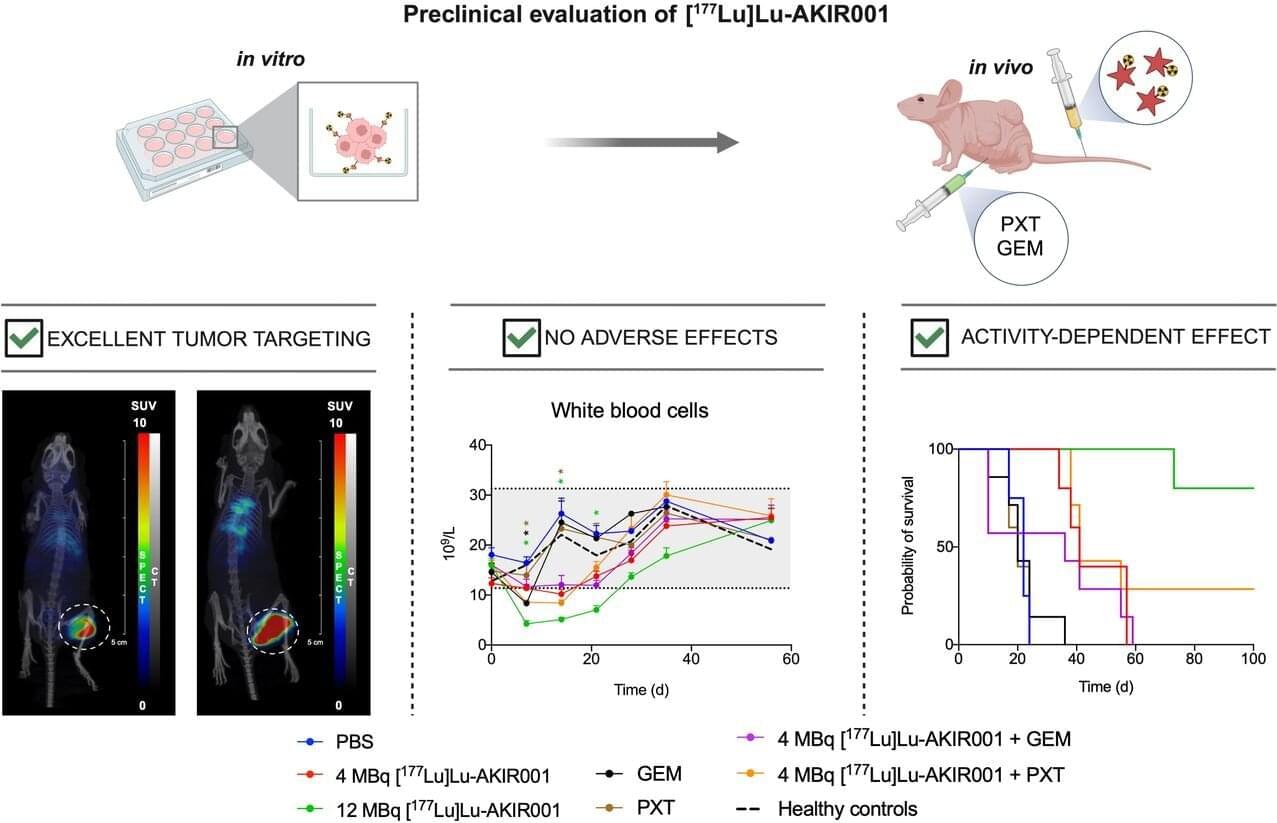
A newly developed targeted radiopharmaceutical treatment can effectively slow tumor growth in pancreatic ductal adenocarcinoma (PDAC), according to new research published in the May issue of The Journal of Nuclear Medicine. In preclinical models, the treatment achieved complete remission of the disease, highlighting its potential to transform care for this highly aggressive cancer.
PDAC accounts for more than 90% of pancreatic cancer cases and remains one of the most lethal malignancies, with a five-year survival rate of less than 5% in patients with metastatic disease. Although surgery is the only curative approach, it is feasible only in 10%–20% of patients with localized disease.
“PDAC is very difficult to treat, and new options are urgently needed,” said Marika Nestor, professor in the Department of Immunology, Genetics and Pathology at Uppsala University in Sweden. “Our previous findings suggest a possible new targeted treatment approach for pancreatic cancer patients whose tumors express CD44v6, which may help make treatment more precise and effective.”
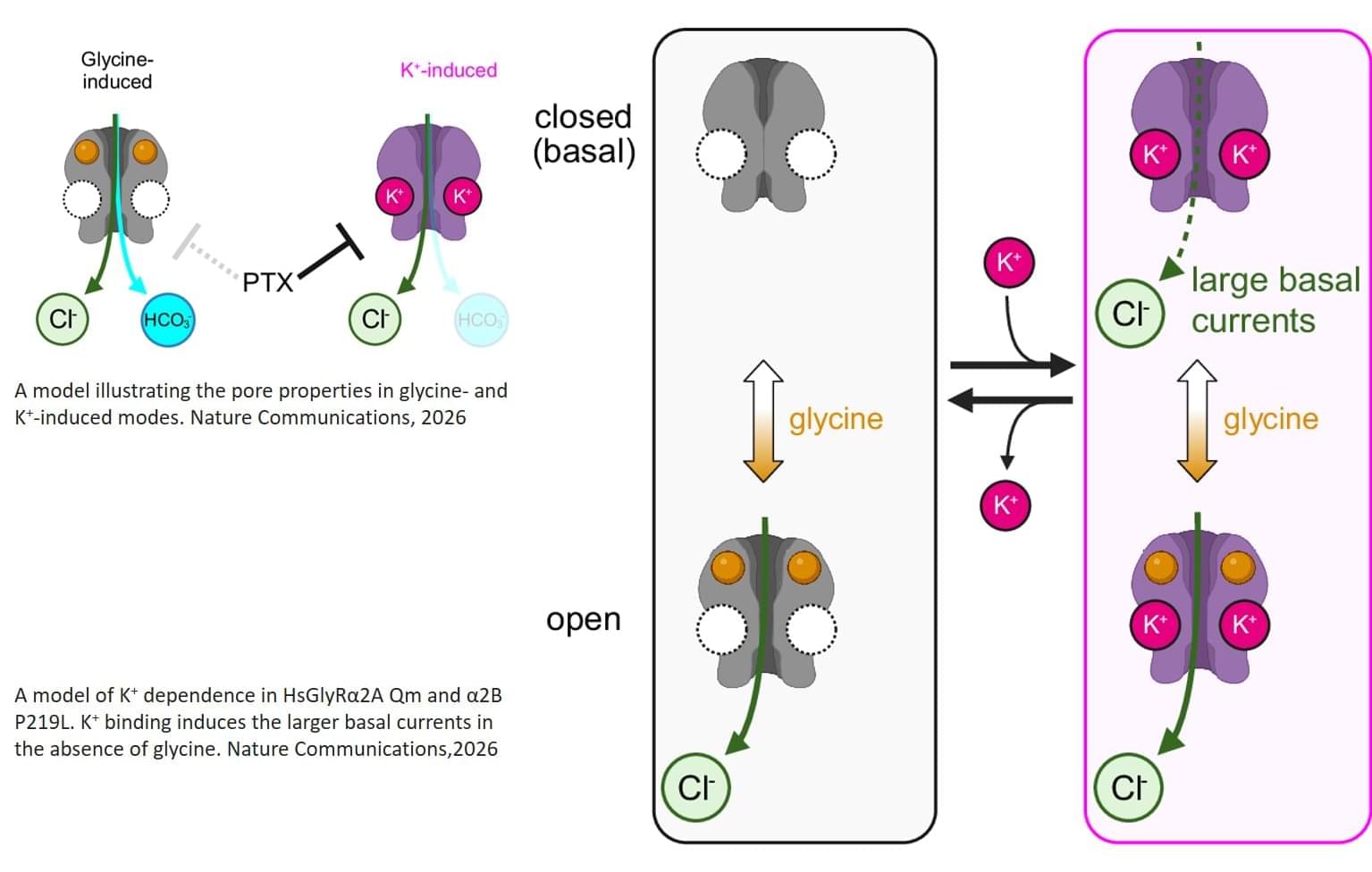
Potassium ions (K⁺) are essential for all cells and living organisms. Scientists have long believed that K⁺ merely passes through ion channels and transporters, rather than acting as an extracellular ligand or molecular “switch.” Indeed, there had been no clear evidence that K⁺ functions as a ligand for membrane proteins in animals or plants—until now.
“Unexpectedly, we made this discovery serendipitously while testing the effect of aspartic acid, with K⁺ added as a counter cation, on Alka, an ion channel located in the brain of Drosophila melanogaster,” said the author. “The compound was effective. At first, we thought the effect was due to aspartic acid, but we ultimately realized that it was caused by K⁺, meaning that Alka functions as a membrane receptor that detects extracellular K⁺ as a ligand.”
Ion channel currents in Alka-expressing cells changed significantly in response to K⁺ levels. The researchers combined electrophysiological analysis with AlphaFold3, an AI-based protein structure prediction tool. This allowed them to identify the K⁺-binding site in Alka. This site creates a chemical environment favorable for K⁺, similar to that found in aqueous solution or in the well-known selectivity filter of K⁺ channels.