As a new generation insists on being heard, California-based somatic coach Sarah Lane explains how primal scream therapy is part of a broader reckoning with how we express our emotions.


Experimental attosecond science is built around the ability to generate and control light flashes lasting billionths of a billionth of a second. Such extreme pulses can be created through high harmonic generation (HHG), where an intense laser field drives electrons out of atoms or solids and then forces them back, releasing bursts of extreme ultraviolet radiation. Techniques like this have transformed our ability to observe electron motion on its natural timescale.
To extract information from such ultrafast processes, physicists often rely on attosecond interferometry. By combining a strong laser field with a weaker second colour, different electron trajectories are made to interfere, imprinting timing and phase information onto the emitted harmonics. Over recent years, these schemes have become standard tools for attosecond metrology and spectroscopy.

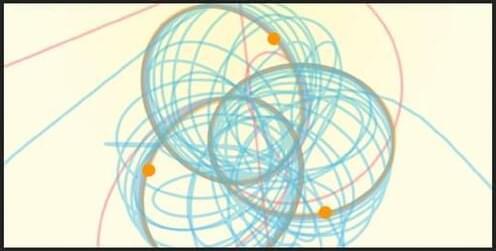
It’s often the case that a dynamical system’s constituents move orders of magnitude more quickly than the collective motion that interests researchers. That disparity in scale frustrates modelers. So many computationally intensive time steps are needed to reach the final state that the computation becomes infeasible. Now Filippo Bigi of the Swiss Federal Institute of Technology in Lausanne (EPFL) and his colleagues have extended and tested an approach that uses a machine-learning model to extend the time steps in an atomic-scale simulation by an order of magnitude or more while obeying physical constraints [1]. Their method is general and could be applied to planetary systems, molecular machines, and other dynamical systems.
The EPFL researchers’ starting point was a formulation of classical mechanics that describes the evolution of a system in terms of the positions and momenta of its constituents and an energy term, the Hamiltonian. In general, these and other equations of classical mechanics satisfy fundamental geometric constraints. What’s more, approximate solutions of those equations can be made to satisfy the same constraints. Bigi and his colleagues realized that machine learning could leapfrog over many time steps while also respecting those same geometric constraints.
The researchers tested their approach on several systems, including the three-body problem of celestial dynamics and the transition of germanium telluride to a glassy state. Their simulations reproduced trusted benchmarks but with time steps ten or so times longer. Currently, enforcing the physical constraints undoes most of the computational advantage of the longer time steps. However, the team is optimistic that it can find more computationally efficient implementations.
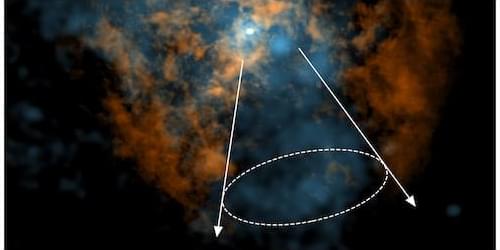
Astronomers may have solved a long-standing puzzle surrounding the giant black hole lurking at the center of our Galaxy, Sagittarius A* (Sgr A•. Using observations from the Atacama Large Millimeter/submillimeter Array (ALMA) radio observatory in Chile, Mark Gorski and Lena Murchikova of Northwestern University in Illinois have obtained signatures of a previously elusive wind from Sgr A* [1]. Such a wind had long been predicted but was never convincingly observed. If confirmed, the discovery could offer a rare glimpse into how the majority of supermassive black holes interact with their surroundings.
Supermassive black holes grow by accreting dust, stars, and gas in their vicinity. Nothing can escape the event horizon, but the turbulent environment outside of the horizon can propel gas outward in the form of jets and winds. Giant jets of plasma—such as the one emerging from M87*, the first black hole ever imaged—can be launched by twisted magnetic fields acting like cosmic slingshots. The same environment can drive less collimated outflows, or winds, through a combination of magnetic forces, thermal pressure, and radiation. Loosely speaking, “jets are to winds what laser pointers are to flashlights,” Gorski says.
Much of our understanding of these phenomena comes from the most extreme objects, such as quasars and active galactic nuclei, where winds and jets have been extensively documented. But most supermassive black holes, including Sgr A*, are thought to display less fireworks, living in quiescent, low-luminosity states that are far more difficult to study. Theory still predicts that these “quiet” black holes should fuel winds, but decades of observations of the closest black hole in the sky could not confirm such predictions. “The absence of a wind was one of the most uncomfortable things about our own Galaxy’s black hole,” Murchikova says.
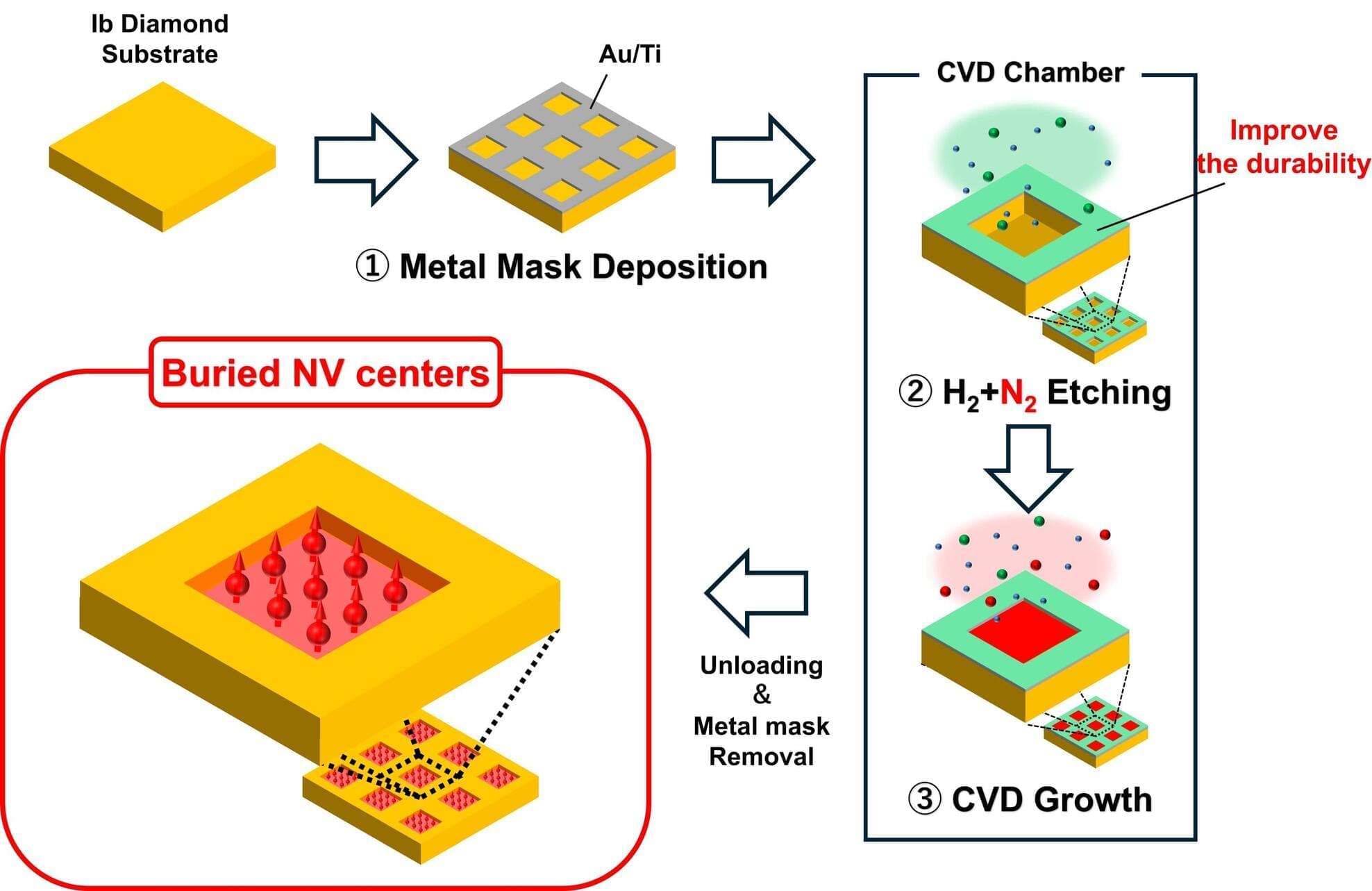
Researchers at Kanazawa University, in collaboration with Diamond and Carbon Applications (Germany), have developed a buried-growth process for nitrogen–vacancy (NV) centers in diamond using microwave plasma chemical vapor deposition (MPCVD). By employing nitrogen-radical selective etching, which simultaneously enhances metal-mask durability through nitridation, the team enabled a continuous etching–growth sequence within a single MPCVD process.
The work is published in the journal Carbon.
Optical measurements confirmed highly aligned NV centers selectively buried in predefined regions. This integrated approach provides a stable and scalable platform for orientation-controlled diamond qubits and future room-temperature quantum technologies.
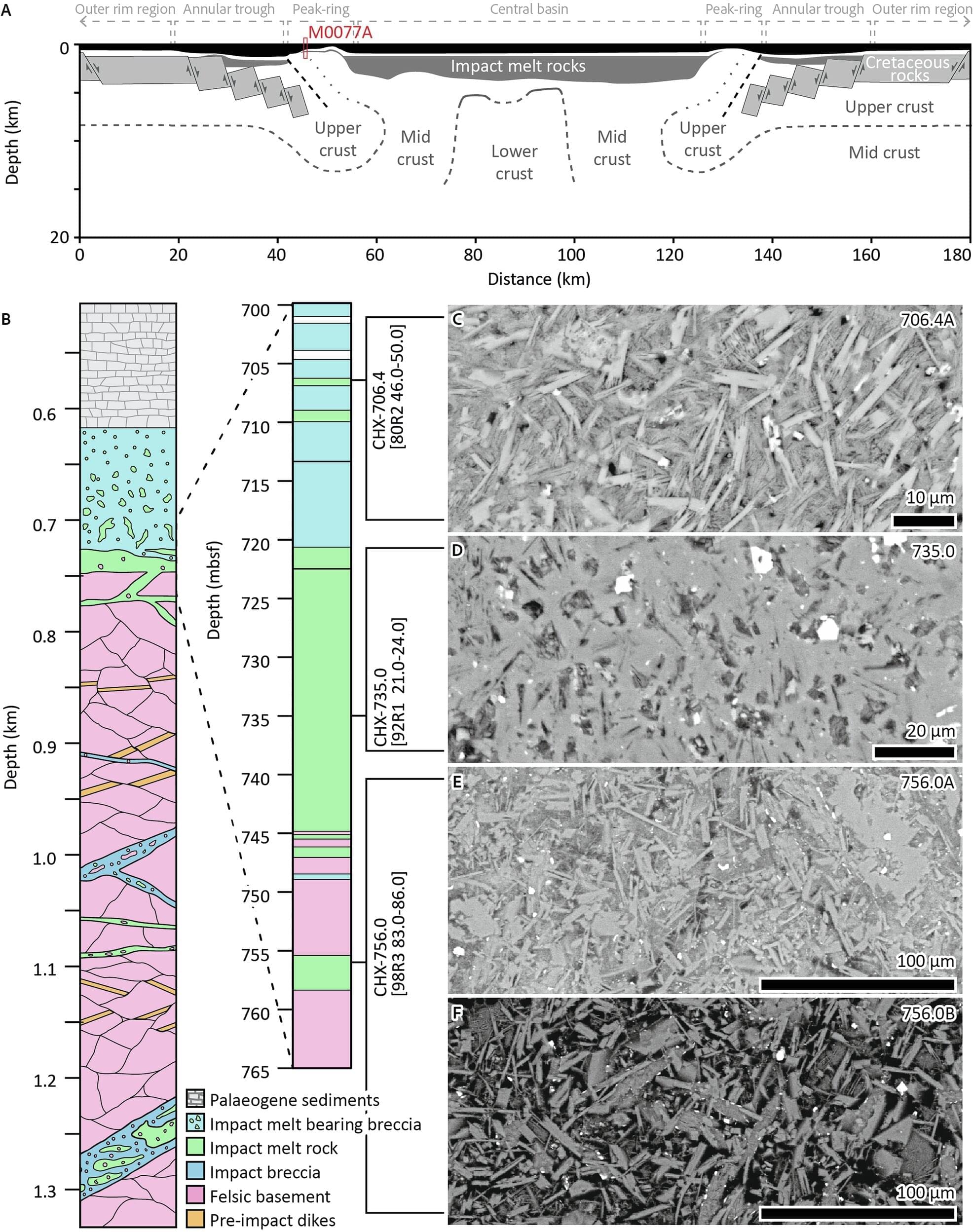
The asteroid that caused the extinction of the dinosaurs also created an underground environment suited to supporting new life, and new research suggests it lasted for millions of years longer than previously suspected.
The finding has surprised the international team of researchers behind it, who came to their conclusions by pairing sophisticated new analysis of samples taken from the Chicxulub crater in Mexico with computer modeling of the geological effects of the asteroid impact that formed the crater 66 million years ago.
The research, published in the journal Communications Earth & Environment, casts new light on how life may have first been incubated in hydrothermal systems in the earliest chapters of Earth’s history and could help direct the search for life on other planets.
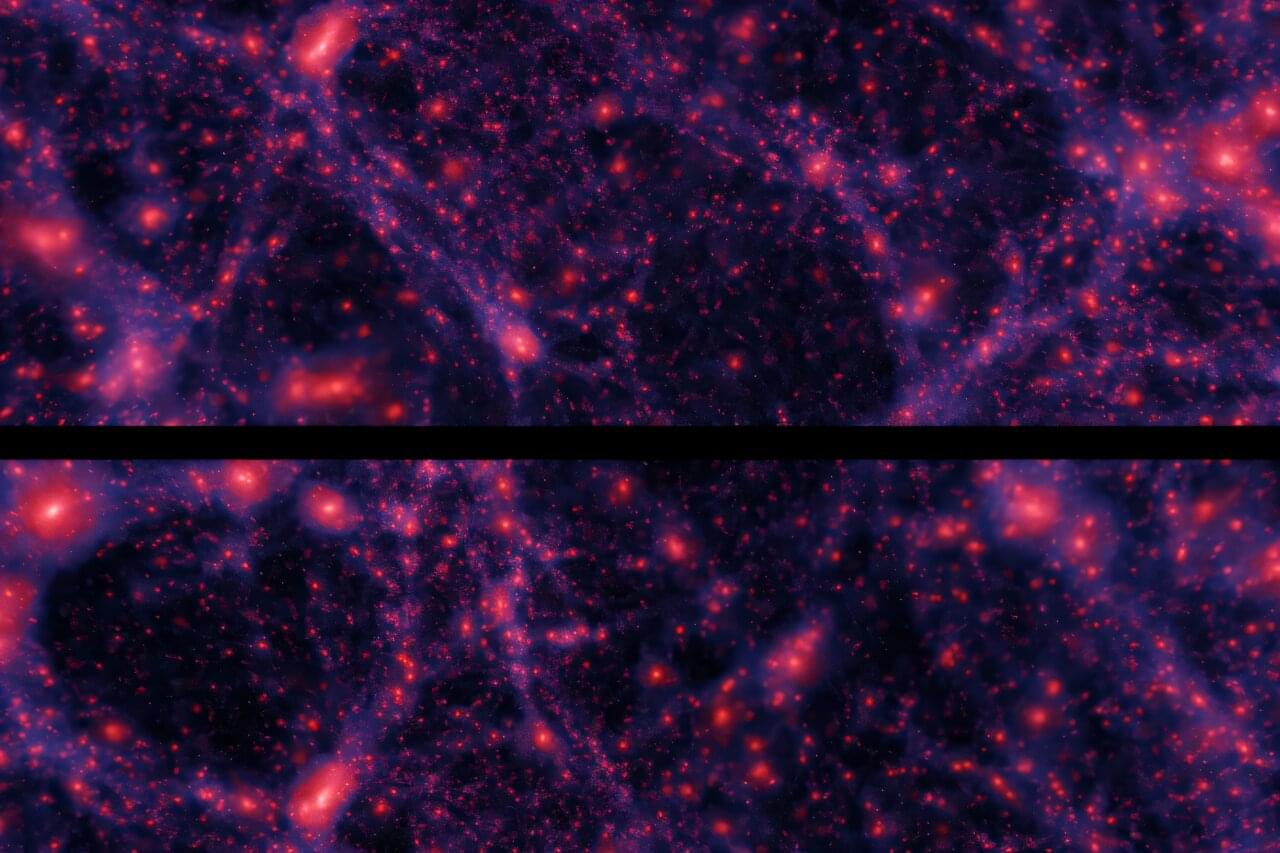
A study in the Journal of Cosmology and Astroparticle Physics explores how a machine-learning strategy known as transfer learning could dramatically reduce the computational cost of searching for new physics beyond the standard cosmological model—while also revealing an unexpected risk: Sometimes AI systems can become too reliant on what they already know.
Artificial intelligence is widely used in cosmology to analyze the universe. But testing theories beyond the standard cosmological model, known as ΛCDM, remains extremely computationally demanding.
Although ΛCDM successfully describes many properties of the universe—from its expansion to the distribution of galaxies—physicists know it is probably incomplete. Recent observations hint that phenomena such as massive neutrinos, modified gravity or evolving dark energy could point toward new physics beyond the current model.
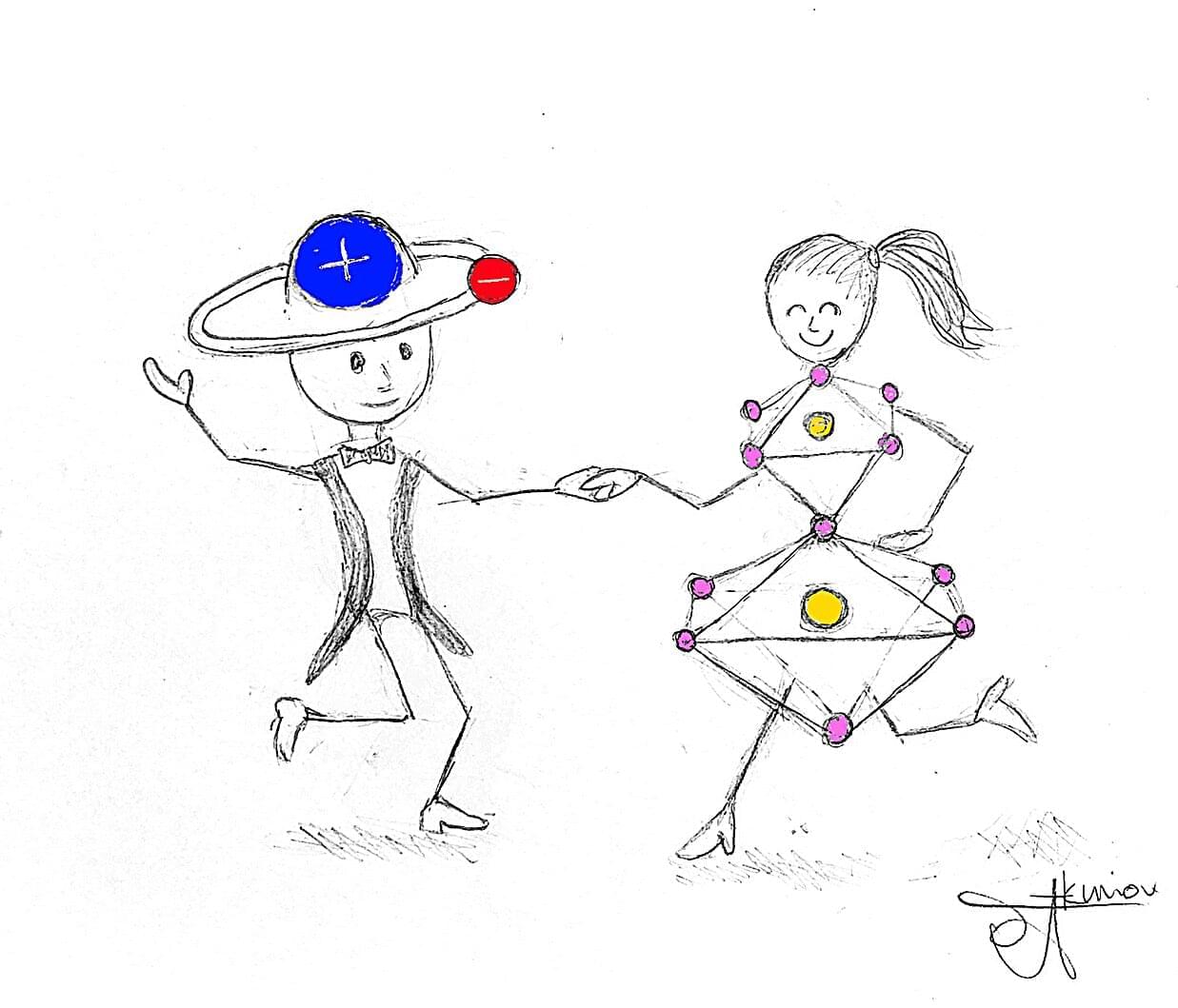
An international team of researchers has reported a major advance in understanding quantum dynamics in semiconductor materials. They directly observed how excitons and phonons evolve together in perovskite nanocrystals, revealing a fully coherent quantum dance between light-induced electronic excitations and crystal lattice vibrations. They published their findings in Nature Communications.
An exciton is created when light excites an electron inside a semiconductor. The electron absorbs energy and leaves behind a positively charged “hole”; the two bind together and move through the crystal as a single quantum object. A phonon is a different kind of quantum object, as it is a quantum of crystal lattice vibration. Though fundamentally different objects, in perovskites they are strongly linked and evolve together as a coupled quantum system.
Perovskite nanocrystals are miniature crystals only a few nanometers in size, a thousand times smaller than the thickness of a hair. Each crystal forms a nanoscale “box” that traps both excitons and phonons. This confinement makes the interaction between them especially strong: An exciton inside the nanocrystal is tightly coupled to vibrations of the surrounding crystal lattice.
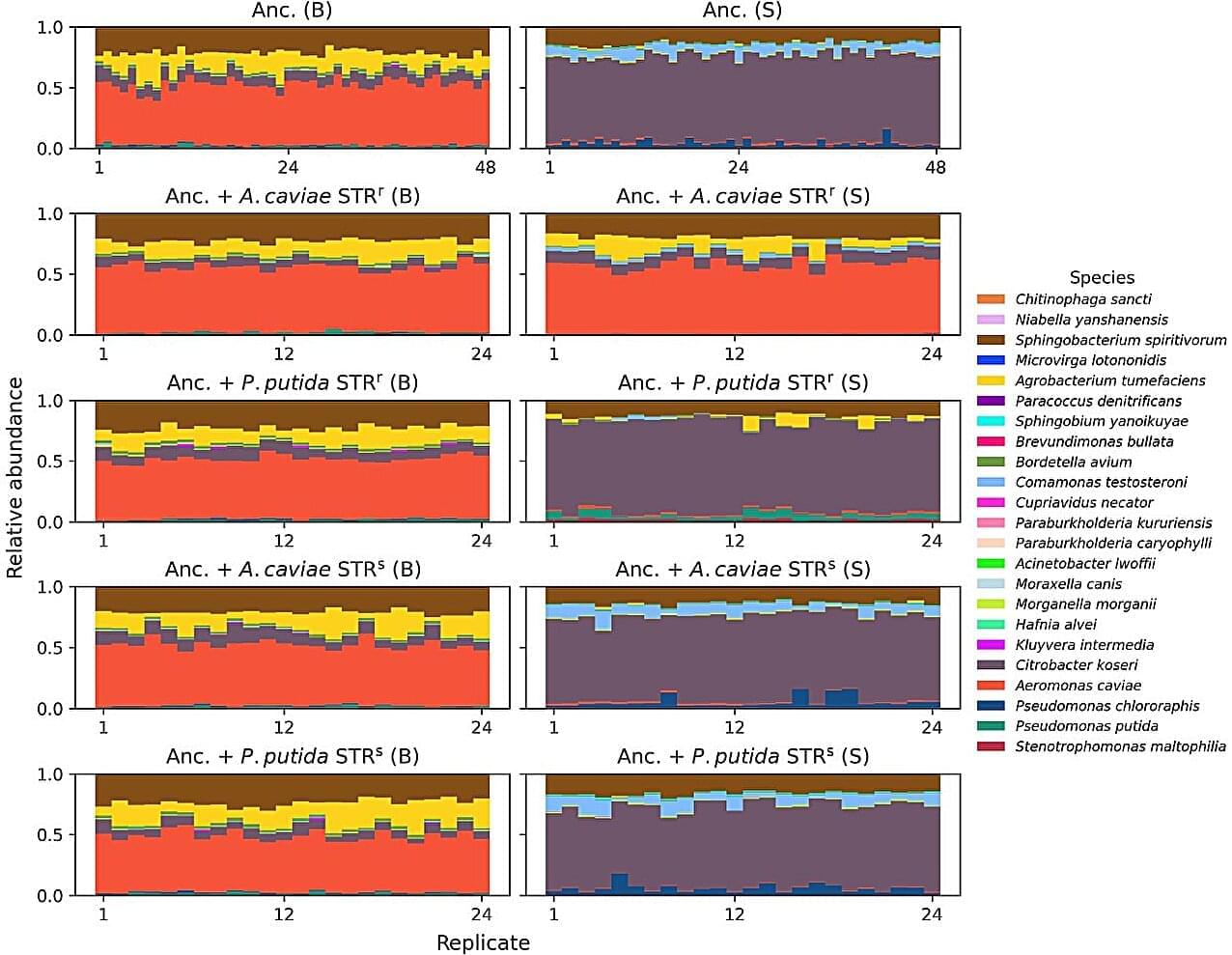
The time-development of species communities cannot be understood solely through ecological interactions or environmental factors, as evolution can also alter community dynamics. This observation helps to understand, among other things, the consequences of antibiotic resistance.
Evolution can alter the composition of communities, but its effects are difficult to investigate in nature, as they begin to manifest only after long periods of time. However, the rapid pace of microbial reproduction makes it possible to observe evolution in the laboratory “in real time,” from one generation to the next.
“In studies focusing on the microbiome, using synthetic microbial communities, as we did in this study, has opened up new avenues for investigating key questions related to complex communities,” says Professor Teppo Hiltunen from the University of Turku.