Toggle light / dark theme

Get the latest international news and world events from around the world.

Log in for authorized contributors

Tumour–brain crosstalk restrains cancer immunity via a sensory–sympathetic axis

Tumor–brain crosstalk worsens lung cancer.

It is not clear how the brain senses and responds to tumors in peripheral organs, although tumors are innervated by different branches of the peripheral nervous system and increased tumor innervation is associated with poor cancer outcomes.

Authors in this study identify an immuno-suppressive tumor microenvironment established by a tumor–brain axis that promotes oncogenesis.

The researchers demonstrate that lung adenocarcinoma induces innervation and functional engagement of vagal sensory neurons. Mechanistically, the vagal sensory nerves transmit signals from lung tumors to brainstem nuclei, driving elevated sympathetic efferent activity in the tumor microenvironment. This, in turn, suppresses β2 adrenergic signalling in alveolar macrophage and anti-tumor immunity.

Disruption of this sensory-to-sympathetic pathway significantly inhibited lung tumor growth by enhancing immune responses against cancer. sciencenewshighlights sciencemissionn https://sciencemission.com/Tumour%E2%80%93brain-crosstalk


Mouse models demonstrate that vagal sensory neurons transmit signals from lung adenocarcinoma to the brain, increasing sympathetic efferent activity in the tumour microenvironment and thereby creating a immunologically permissive environment for tumour growth.

Researchers pioneer next-generation AI semiconductors with ‘thermal constraining’ technique

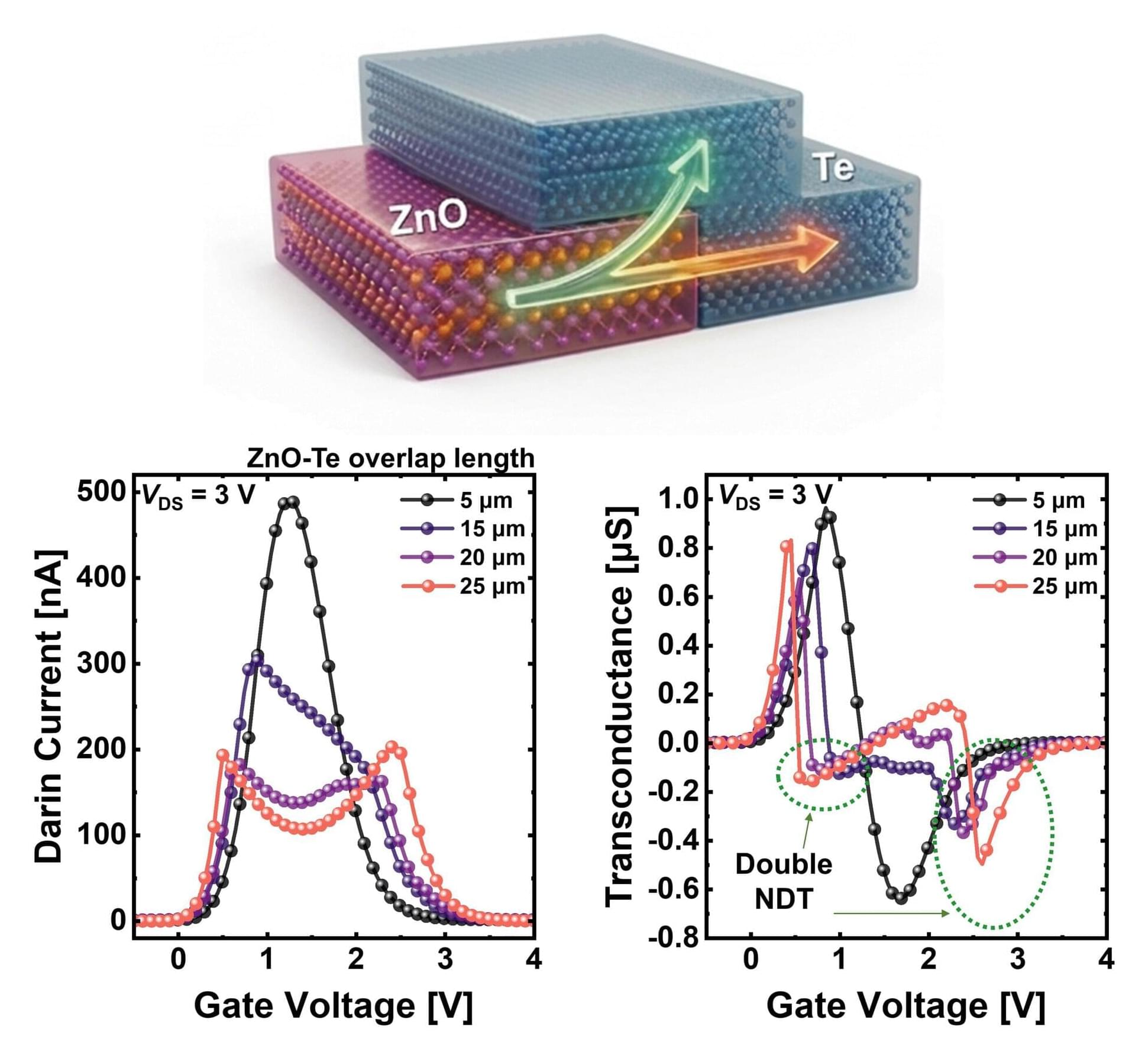
A research team led by Professor Taesung Kim from the School of Mechanical Engineering at Sungkyunkwan University has developed a technology that precisely controls the internal structure of semiconductors using heat, much like stamping out “bungeoppang” (fish-shaped pastry) in a mold. The team report that this approach improves the performance of next-generation artificial intelligence (AI) hardware. With this technology, complex AI computations can be processed more quickly using significantly less electricity than before. The findings are published in the journal ACS Nano.

Most computers and smartphones we use today operate based on the “von Neumann architecture.” This structure is similar to having a desk (the processor) and a bookshelf (the memory) placed far apart.

Each time you study, you have to go back and forth to get a book, which takes time and effort. To solve this problem, a method called “in-memory computing” has been proposed, in which computation is carried out directly inside the memory. The key component that enables this approach is the “ferroelectric transistor,” which is the focus of this study.

Feedback neurons based on perovskite memristor with nickel single-atom engineered reduced graphene oxide cathode

Scientists have long looked to the human brain as the ultimate blueprint for computing, seeking to build “neuromorphic” systems that process information with the same efficiency and flexibility as our own neurons. However, replicating the brain’s complex ability to both excite and inhibit signals—essentially “talking” and “listening” simultaneously—has proven difficult with standard hardware.

The problem? Perovskites are often too chaotic. Tiny charged particles called ions tend to zip around inside the material too quickly, making the device’s behavior hard to control. Additionally, the “bottlenecks” (barriers) where the electricity enters the device often cause lopsided performance, preventing the smooth, bidirectional communication required for advanced brain-like tasks.


Li et al. report feedback neurons based on perovskite memristors with a nickel single-atom modified reduced graphene oxide cathode. The device successfully implements an unsupervised learning network with over 50% clustering accuracy and cooperative learning for solving NP-hard combinatorial optimisation problem.

Nobel Prize in Physics 1903

The Nobel Prize in Physics 1903 was divided, one half awarded to Antoine Henri Becquerel “in recognition of the extraordinary services he has rendered by his discovery of spontaneous radioactivity”, the other half jointly to Pierre Curie and Marie Curie, née Skłodowska “in recognition of the extraordinary services they have rendered by their joint researches on the radiation phenomena discovered by Professor Henri Becquerel”

How dietary restriction rewires immunity to protect against infection

To understand the complex interactions involved in an immune response during scarcity, the team put mice on a 50% restricted-calorie diet and then exposed the animals to bacteria that infect the gut. The mice that were fed a standard diet experienced a metabolic crash— their blood glucose levels and body weight plummeted.

The researchers had expected this would happen to all the animals because mounting an immune response can consume up to 30% of the entire body’s fuel reserves. But in the calorie-restricted mice, the immune system appeared to be functioning perfectly well without using much glucose.

To unravel this enigma, the researchers inventoried the immune cells of the infected animals and discovered that T cells, which normally target invading microbes, were depleted in the calorie-restricted mice. Instead, short-lived neutrophils, which serve as the body’s first responders to infection, were ramped up to twice the normal amount and had measurably enhanced pathogen-killing abilities. The cells seemed to be operating in energy-saving mode, consuming much less glucose than neutrophils from well-fed animals.

The researchers are breaking new ground by outlining how a sudden fall in food intake triggers glucocorticoid levels to rise, resulting in two major shifts. First, the body repositions certain immune cells—especially naïve T cells—into the bone marrow, which becomes a kind of “safe house” for when the cells are needed. Second, during an infection, glucocorticoids tilt the immune response away from energy-intensive T cells toward neutrophils, abundant cells that act as immediate, short-lived defenders.

Beyond clearing a current infection, glucocorticoids prepare the immune system for repeat encounters with infectious agents. While the hormones direct killer T cells to stand down and neutrophils to step up, they also ensure memory T cells are preserved for future confrontations.


When food is scarce, stress hormones direct the immune system to operate in “low power” mode to preserve immune function while conserving energy, according to researchers. This reconfiguration is crucial to combating infections amid food insecurity.

NAD+ sensing by PARP7 regulates the C/EBPβ-dependent transcription program during adipogenesis

Stokes et al. demonstrate that PARP7 “senses” the levels of nuclear NAD+ during early adipogenic differentiation via an ADP-ribosylation-ubiquitin-proteasome pathway to regulate C/EBPβ-dependent proadipogenic gene expression through p300-mediated H3K27 acetylation. Stabilized PARP7 promotes the binding of C/EBPβ to chromatin genome-wide, enhancing lipid synthesis and adipogenesis in vivo.

A neuron subtype-specific role of MEK-ERK signaling in axon survival via transcriptional regulation of Nmnat2

Yue et al. find the subtype-specific regulation of Nmnat2 transcription by Raf-MEK-ERK in DRG neurons, while cortical and spinal neurons use a MEK-independent mechanism. This context-dependent axon survival paradigm helps explain differential MEKi vulnerability of PNS and CNS neurons, indicating Nmnat2 as a potential target to counteract MEKi-induced neuropathy.

Genetic defect that weakens esophageal lining identified!

But the molecular factors responsible for the onset of Barrett’s esophagus remain poorly understood.

The findings, published in Nature Communications, combined family studies, laboratory experiments and genetically engineered mouse models to identify and understand how genetic defects contribute to disease development.

The team sequenced and analyzed genetic material of 684 people from 302 families where multiple members developed Barrett’s esophagus or esophageal cancer. They discovered that a subset of affected family members carry inherited mutations in a gene called VSIG10L.

“We found that this gene acts like a quality control system for the esophageal lining,” said the lead researcher. “When it’s defective, the cells do not mature properly and the protective barrier in the esophageal lining becomes weak, allowing stomach bile acid to cause tissue changes that enhances the risk of developing Barrett’s esophagus.”

When researchers genetically engineered mice with human-equivalent VSIG10L mutations, they found that the esophageal lining became disrupted structurally and molecularly, according to the author. The study found that when the mice were exposed to bile acid, they developed Barrett’s-like disease over time, effectively replicating the disease’s progression in humans.

These genetically engineered mice also represent the first animal model for Barrett’s esophagus based directly on human genetic predisposition to the disease, the author said.

With VSIG10L shown to be a key gene in maintaining esophageal health, family members can now be screened for genetic variants to identify those at a high-risk of developing Barrett’s esophagus or esophageal cancer. ScienceMission sciencenewshighlights.

/* */