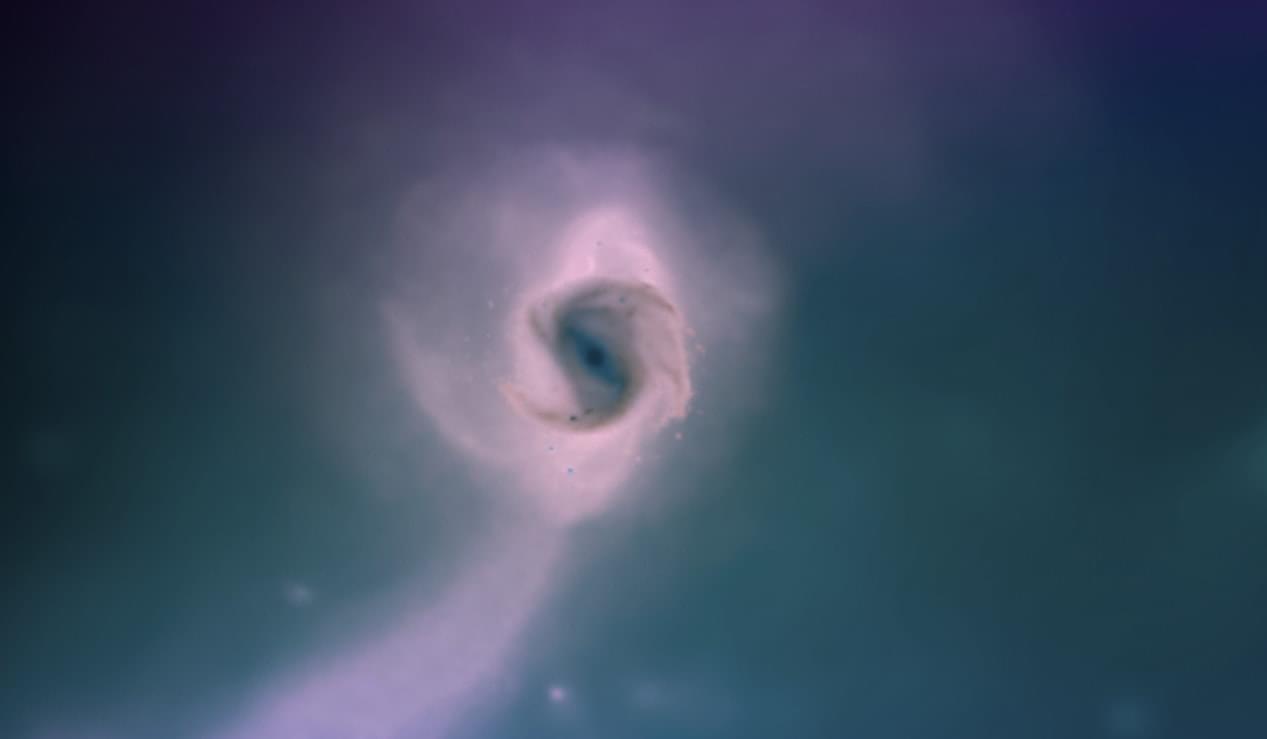
Thanks to the James Webb Space Telescope, the Big Bang’s replacement theory is gaining traction in the scientific community.

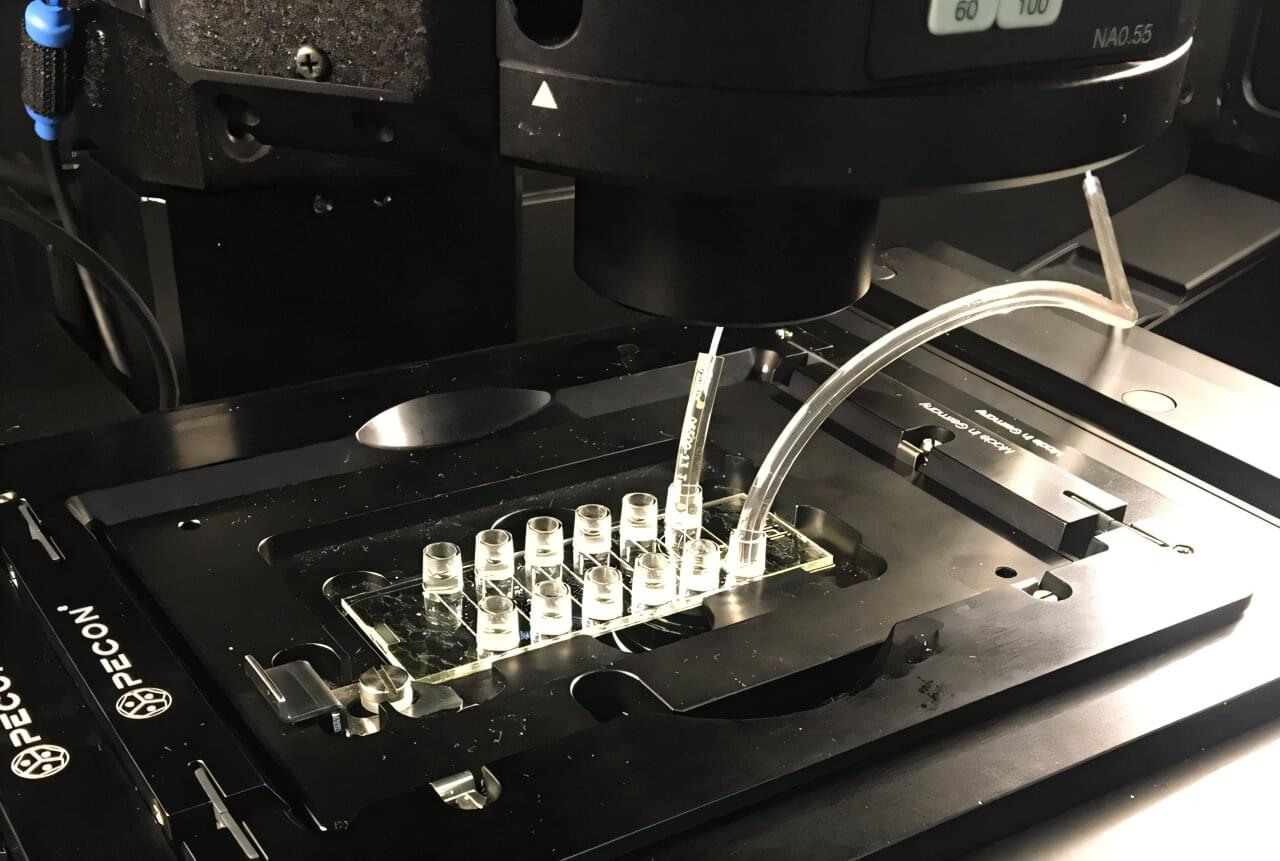
A new single-protein analysis technique gives researchers an unprecedented ability to study proteins called scramblases, which have critical roles in biology. The development of the new technique, in a study led by investigators at Weill Cornell Medicine and Ruhr University Bochum in Germany, expands the toolkit available to cell biologists and biophysicists and could someday be useful in devising new strategies against multiple diseases.
Scramblases operate within cell membranes to rearrange the fat-related molecules, known as lipids, that make up those membranes. Their disruption of the usual layered organization of the membrane is essential for many important biological processes. In the study, published in Nature Structural & Molecular Biology, the researchers developed a fluorescence imaging-based technique—the first of its kind—for measuring the activity rates of individual scramblase proteins. Their demonstrations of the technique uncovered new findings on key scramblases and showcased the technique’s broad applicability.
“I’m excited about this new platform as it is versatile and provides unprecedented information on exactly how fast a single scramblase works,” said study co-senior author Dr. Anant Menon, professor of biochemistry and biophysics at Weill Cornell Medicine.

How does a physical system such as the brain produce the ineffable phenomenon of conscious experience? Philosopher David Chalmers famously named this the “Hard Problem of Consciousness” in 1995. Proponents argue that, while cognitive functions such as categorisation or information integration might be explained mechanistically in the central nervous system, the origins of subjective experience resist such explanation. Detractors suggest that the Hard Problem is merely a collection of lesser puzzles that have yet to be solved through greater material understanding of the brain.
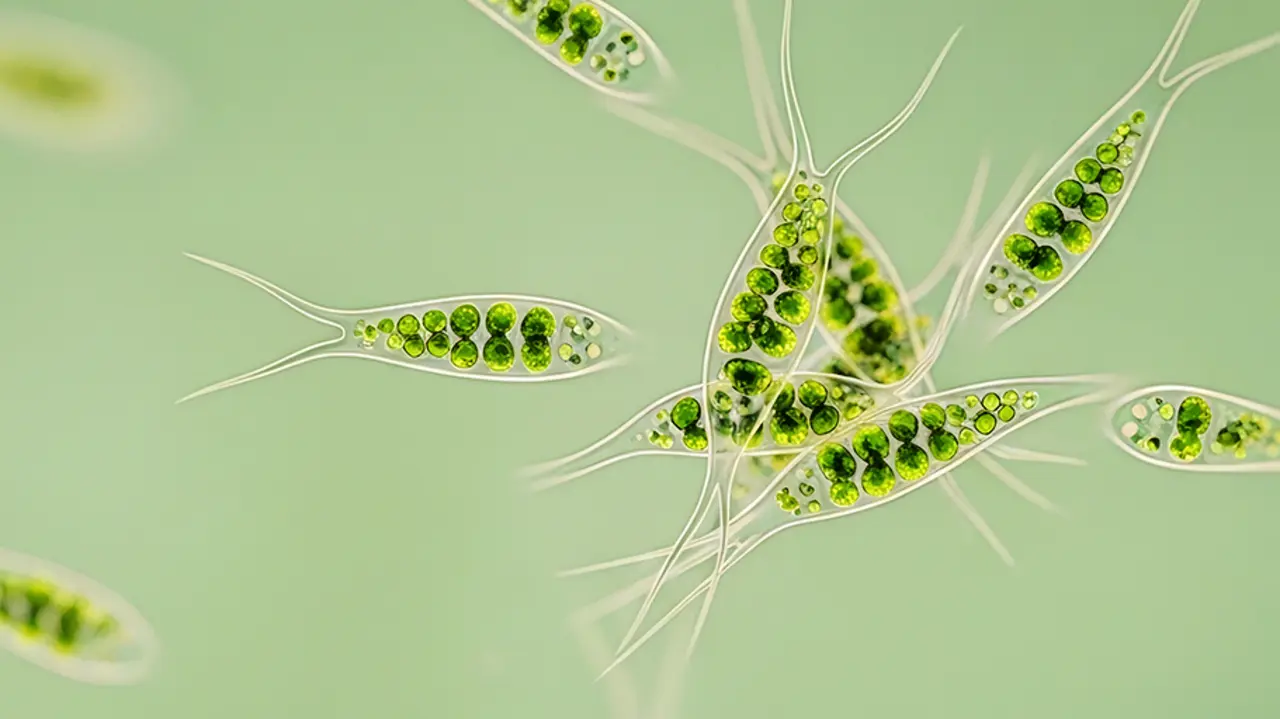
The heart of this controversy may lie in its core premise: that consciousness arises from a neuronal system organized around a brain. The deep entrenchment of this preconception isn’t surprising, given that our own consciousness is the only one we have access to. But this “brain-centrism” pervades the cognitive sciences, shaping our understanding of other beings and approaches to research. It’s one of several kinds of scientific chauvinism that currently limit the field of enquiry and hamper our scientific approach to other kinds of minds.
Are we on the verge of outrunning aging entirely? Renowned futurist and inventor Ray Kurzweil shares his data-driven predictions on the exponential trajectory of artificial intelligence and its near-term impact on human health.
Speaking to a Cosmos conference from his studio, Kurzweil charts the predictable, uninterrupted 80-year history of computing power from early wartime codebreaking machines to modern cloud processors. He explains why the sudden emergence of massive neural networks and \.
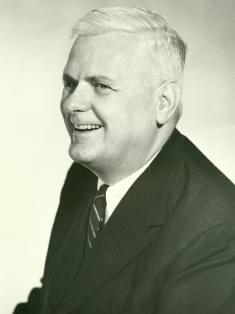
His revolutionary idea? Before “computer science” was even a field, Church invented the lambda calculus (λ-calculus)—an elegant, abstract system for expressing computation through pure mathematical functions. In 1936, he used it to prove that no universal algorithm could ever decide the truth of all mathematical statements, solving Hilbert’s famous Entscheidungsproblem in the negative. This became known as Church’s Theorem, and it revealed something profound: there are hard limits to what any machine can compute.
That same year, Church articulated what we now call the Church–Turing thesis: any problem that can be “effectively calculated” can be computed by a Turing machine—or equivalently, expressed in lambda calculus. When Alan Turing learned of Church’s work, he traveled to Princeton to study under him. Together, they proved their two seemingly different models of computation were fundamentally equivalent, laying the bedrock for all future computer science.
Alonzo Church was born on June 14, 1903, in Washington, D.C., where his father, Samuel Robbins Church, was a justice of the peace [ 5 ] and the judge of the Municipal Court for the District of Columbia. He was the grandson of Alonzo Webster Church (1829−1909), United States Senate Librarian from 1881 to 1901, and great-grandson of Alonzo Church, a professor of Mathematics and Astronomy and 6th President of the University of Georgia. [ 6 ] As a young boy, Church was partially blinded by an air gun accident. [ 7 ] The family later moved to Virginia after his father lost his position at the university because of failing eyesight. With help from his uncle, also named Alonzo Church, the son attended the private Ridgefield School for Boys in Ridgefield, Connecticut. [ 8 ] After graduating from Ridgefield in 1920, Church attended Princeton University, where he was an exceptional student. He published his first paper on Lorentz transformations [ 9 ] in 1924 and graduated the same year with a degree in mathematics. He stayed at Princeton for graduate work, earning a Ph. D. in mathematics in three years under Oswald Veblen.
He married Mary Julia Kuczinski in 1925. The couple had three children: Alonzo Jr. (1929), Mary Ann (1933), and Mildred (1938).
After receiving his Ph.D., he taught briefly as an instructor at the University of Chicago. [ 10 ] He received a two-year National Research Fellowship that enabled him to attend Harvard University in 1927–1928, and the University of Göttingen and University of Amsterdam the following year.
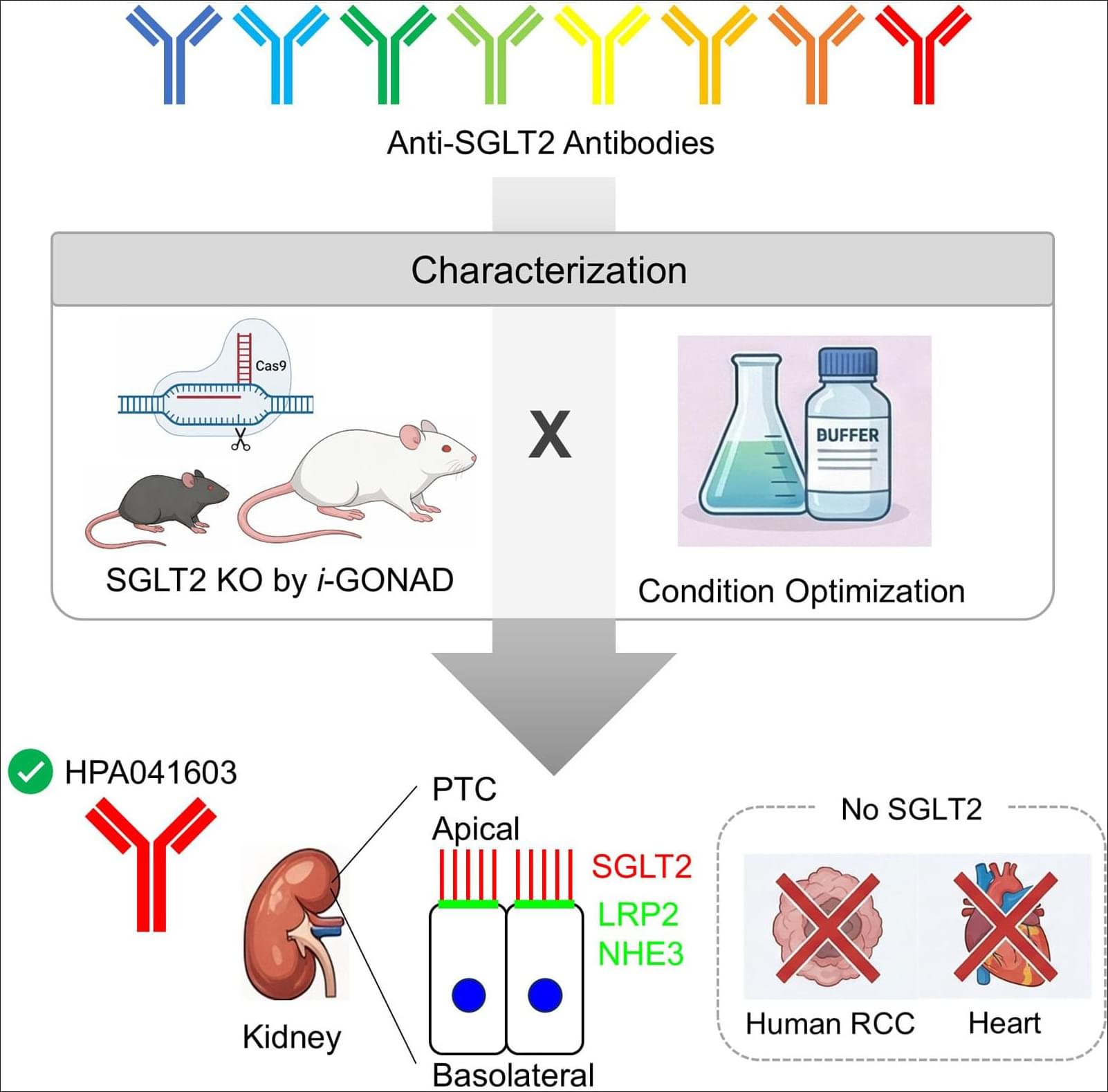
BACKGROUND: SGLT2 (sodium-glucose cotransporter 2) mediates renal glucose reabsorption, and its pharmacological inhibition exerts cardio-and renoprotective benefits. Despite widespread clinical interest, reliable detection of SGLT2 protein remains challenging due to concerns regarding antibody specificity. METHODS: Eight commercially available anti-SGLT2 antibodies were evaluated by immunohistochemistry and Western blotting using kidneys and hearts from genetically engineered Sglt2-deficient mice and rats. Human kidney tissues, including renal cell carcinoma samples, were also examined. RESULTS: Among the antibodies tested, ab306558 and HPA041603 showed specific immunostaining in rodent kidneys, with minimal background in wild-type tissues and complete absence of staining in Sglt2-deficient samples. However, ab306558 was unsuitable for human samples because of nonspecific staining.