Get the latest international news and world events from around the world.
The First Brain Upload Just Made Simulation Theory Real
The first real brain upload just happened — and it might be the strongest evidence yet that simulation theory isn’t just philosophy anymore. A startup called Eon Systems copied a complete biological brain (139,255 neurons, 54 million synapses) into a physics simulation, and the digital fly started walking, grooming, and feeding on its own. No training. No AI. Just the copied wiring on a laptop.
We break down how they did it, why a billion euros in previous brain simulation projects failed, what Nick Bostrom’s simulation argument actually says, and why a fruit fly on a laptop just moved the needle on whether our own reality could be simulated. We also look hard at the limitations — this work is not yet peer reviewed — and what it would actually take to scale this to a human brain.
Eon Systems announcement: https://theinnermostloop.substack.com… model paper: Shiu et al. (2024) Nature 634 — https://www.nature.com/articles/s4158… FlyWire connectome paper: Dorkenwald et al. (2024) Nature 634 — https://www.nature.com/articles/s4158… #simulationtheory #brainupload #consciousness.
Brain model paper: Shiu et al. (2024) Nature 634 — https://www.nature.com/articles/s4158…
FlyWire connectome paper: Dorkenwald et al. (2024) Nature 634 — https://www.nature.com/articles/s4158…
#simulationtheory #brainupload #consciousness
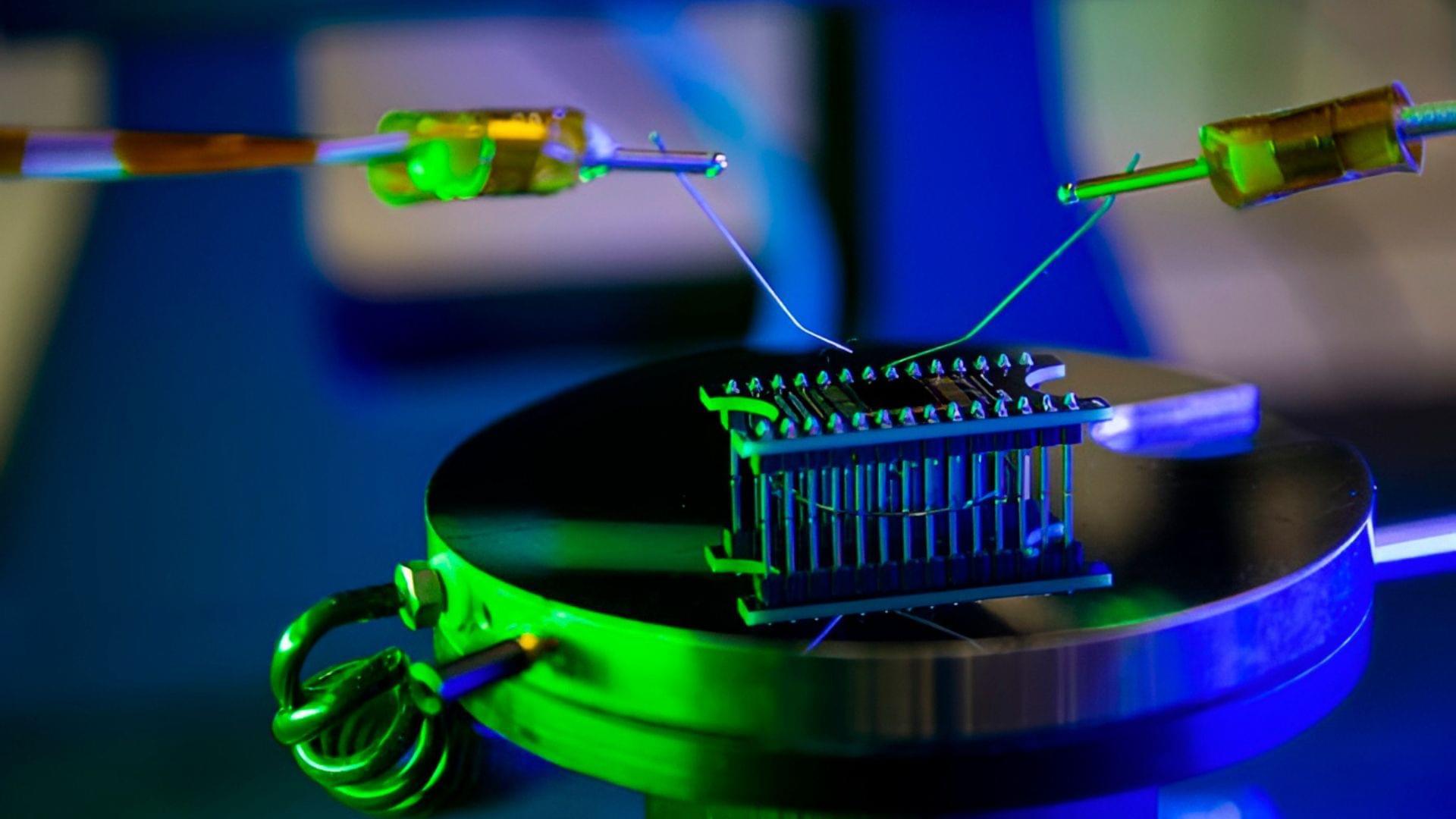
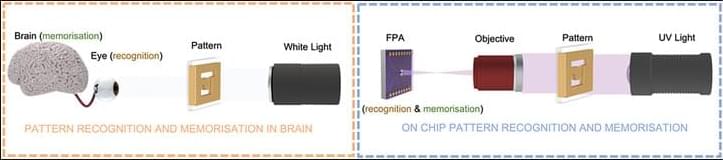
Brain-inspired chip fuses vision, memory, and processing in real time
Team leader Professor Sumeet Walia said the goal was to remove the delay and energy cost of transferring data between separate systems. “We’ve made real-time decision making a possibility with our invention, because it doesn’t need to process large amounts of irrelevant data and it’s not being slowed down by data transfer to separate processors.”
The device also showed the ability to retain visual information for longer periods without frequent electrical refresh signals, which reduces energy use and improves efficiency.
First author and RMIT PhD researcher Aishani Mazumder said the system draws inspiration from how the brain processes information. “Neuromorphic vision systems are designed to use similar analog processing to the human brain, which can greatly reduce the amount of energy needed to perform complex visual tasks compared with today’s technologies.”
Quantum Computing Edges Closer to Reality
Quantum computing has long been viewed as one of the most promising technologies of the future, and 2026 is bringing new signs of progress. Major technology companies and research institutions continue to invest billions into developing more stable and scalable quantum systems capable of solving problems beyond the reach of traditional computers. Recent advances have focused on improving error correction, increasing qubit reliability, and developing practical applications in fields such as drug discovery, materials science, logistics, and financial modelling. While widespread commercial adoption remains years away, experts believe the pace of innovation is accelerating as competition intensifies across the industry.
‘TRANSFORM human history’: Doctor issues BOLD stance on anti-aging shot
Board-certified family physician Dr. Gabrielle Lyon discusses groundbreaking anti-aging research during ‘America’s Newsroom,’ including a gene therapy that could reverse biological aging.
China’s 1.4nm Breakthrough Terrifies America and Taiwan
Check out Plaud using my code ANASTASI for 17% OFF.
Official Website: Note Pro: https://bit.ly/4uyShdF
NotePin S: https://bit.ly/4e7yFZe.
Amazon Note Pro: https://amzn.to/4el3Hvx.
NotePin S: https://amzn.to/4ekWrji.
#Plaud.
Timestamps:
00:00 — Chinese New Chip.
08:26 — Real Breakthrough Behind It.
My Podcast on Apple: https://podcasts.apple.com/at/podcast…
My Podcast on Spotify: https://open.spotify.com/show/3drr7A8… Let’s connect on LinkedIn: / anastasiintech Newsletter: https://anastasiintech.substack.com Instagram:
/ anastasi.in.tech Patreon:
/ anastasiintech.
Let’s connect on LinkedIn: / anastasiintech.
Newsletter: https://anastasiintech.substack.com.
Instagram: / anastasi.in.tech.
Patreon: / anastasiintech.
Scientists Just Found A Quantum Computer Hiding Inside You
FREE GUIDE: 📘 The Content Creator’s AI Blueprint – https://FirstMovers.ai/blueprint/
For 100 years the rule was absolute: to see quantum behavior, you freeze your machine to near absolute zero. In August 2025, a team at the University of Chicago broke it inside a living cell.
They turned enhanced yellow fluorescent protein from the same family that makes jellyfish glow into a working qubit, and detected the signal inside living mammalian cells and bacteria. Published in *Nature*, named a top-ten breakthrough of the year.
What you’ll learn:
✅ How a glowing protein became a real qubit.
✅ Why nature solved this before our best labs did.
✅ What genetically encoded quantum sensors mean by 2030.
There’s quantum machinery glowing inside you right now — and it’s more elegant than anything we’ve engineered.
#QuantumPhysics #Consciousness #Science.
Brian Greene Explained
What did the James Webb Space Telescope just discover that challenges modern physics? In this fascinating breakdown, Brian Greene explores a cosmic finding that appears to defy our current understanding of the universe. From early galaxy formation to mysterious structures that shouldn’t exist so soon after the Big Bang, this discovery could reshape cosmology. Is our standard model incomplete? Are we missing hidden physics? Join us as we unpack the science, the data, and the mind-bending implications behind one of the most shocking astronomical discoveries ever observed by the James Webb Space Telescope.
Explore the mysteries of the universe with Brian Greene Explained.
From quantum physics and spacetime to black holes and the multiverse, this channel brings complex ideas into fascinating long-form science content.
Subscribe for more videos about physics, cosmology, and the nature of reality.
#BrianGreene #Universe #PhysicsExplained #QuantumPhysics #BrianGreeneExplained