“In his final months on the job, US Secretary of Transportation Anthony Foxx has been vocal about the pressing need to repair America’s broken infrastructure, and all the ways in which technology will fundamentally change the way we move.”
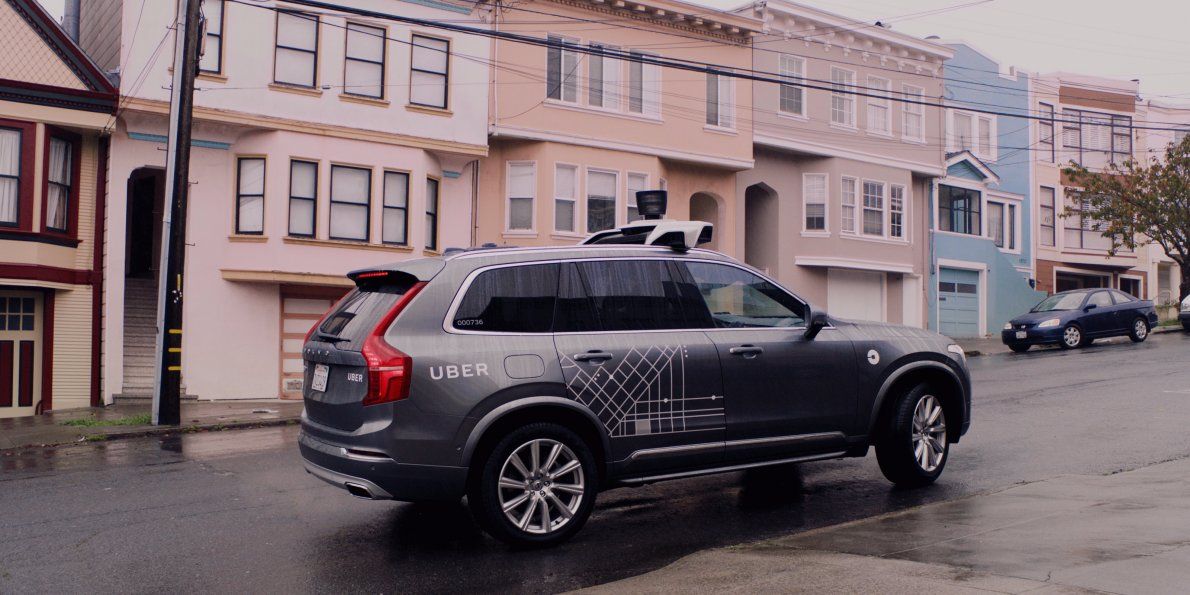
Your Tesla can drive itself. Not just on the highway, not under strict guidance, but everywhere. Or at least, it will have all the necessary gadgets to do so soon.
We are excited to announce that, as of today, all Tesla vehicles produced in our factory – including Model 3 – will have the hardware needed for full self-driving capability at a safety level substantially greater than that of a human driver.
Soon, we see Legos that self assemble from 4D printers, printers that can recycle robots & devices and produce a more improved robot and/ or devices. The days of manually working on equipment, autos, etc. will be gone except for the eccentric hobbyist.
Open-source hardware could democratize the future of robots.
Energy independent housing. Here you go.
Filmed on Oct 28, 2016.
So I thought up the Zaxon, a tactical vehicle that uses that turbojet technology to deploy special forces on the ground to a target less than 100 clicks away, possibly after dropping from a Lockheed Martin C-5 Galaxy.
The size of a standard touring motorcycle, the single-seat Zaxon would use two larger engines up front, and two smaller ones in back. The jets could tilt slightly for liftoff, landing, or full-speed flying. The large fuel tank would sit inside the bike, taking the space usually occupied by a motorcycle engine.
Two jet nozzles would help with lateral stability, making small adjustments when necessary. An onboard flying system would help stabilize the vehicle automatically, although the pilot would need to be trained to properly feel the bike and learn how to react to its movements.
Mercedes-Benz is trying to cut down on hearing damage caused by the deafening crunch of a car crash, and it’s doing so by blasting pink noise through the stereo when you’re about to hit something, to trigger a fascinating physical response.
Mercedes-Benz has done a lot to push automotive safety forward over its long history. In 1978, the S-class offered the first (or one of the first, depending on who you ask) 4-wheel ABS systems on a production car. In 1987, along with BMW and Toyota, Mercedes put the first traction control systems into production cars.
More recently, in 2003, the company introduced its Pre-Safe system, a series of measures that kick in when the vehicle detects what it decides is an inevitable crash. Seat belts quickly tension to an optimum point, windows and sunroofs close, the seats puff up to stabilize the bodies in them, and in some cases they even move slightly toward the center of the car before impact.
On October 19 in 1982, John DeLorean, the man behind one of the most sought after cars ever made, was arrested with 55 pounds of cocaine worth $24 million.
However, what could have been the end for his DMC-12 was only the beginning of a journey that literally stood the test of time and 1985 brought this car _Back to the Future_.
Ten years later, in 1995, the new DeLorean Motor Company (DMC) started to restore and repair the originals using the leftover parts. They also streamlined designs based on the original engineering drawings. But these days, DMC is finally trying to produce new, but very familiar DMC-12s.
Tough times lay ahead for human workers. With the advent of automation comes a much smaller job market and an ever-shrinking work force. Jobs traditionally held by humans are now being taken over by robots and computer software. Now, another job sector is being threatened by automation: the public sector.
A study conducted by Oxford University and Deloitte, a business advisory firm, found that 850,000 public sector jobs in the UK are at risk of being lost by 2030 due to automation. The report also mentions how more than 1.3 million administrative jobs in the public sector have a 77% probability of being automated. These jobs include highly repetitive jobs like clerical work and transportation work.
–This report comes as good news to fiscal policy makers who wish to cut costs. It shows the government can save up to £12 billion in public sector wages by 2030.