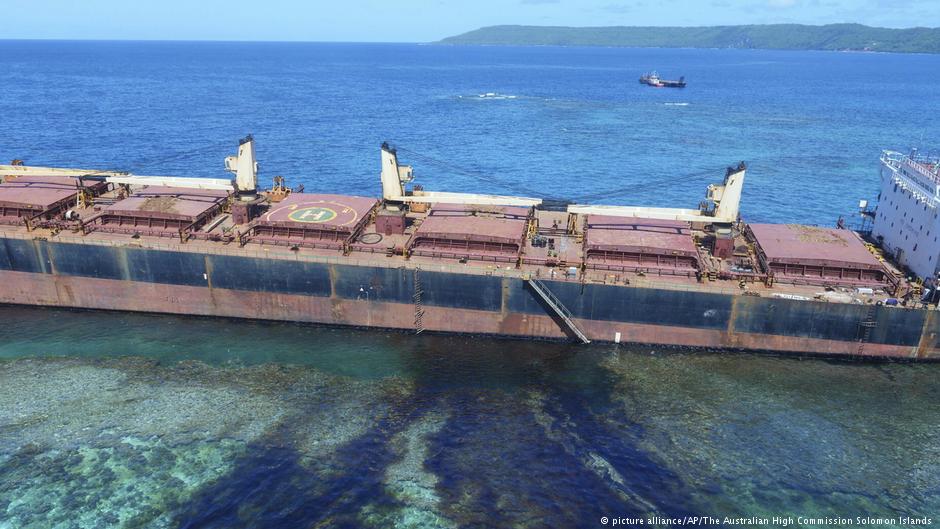
Three weeks after a cargo ship ran aground, efforts are being made to prevent an oil leak onto the world’s largest raised coral atoll becoming an ecological disaster in the Solomon Islands. The area is a UNESCO site.
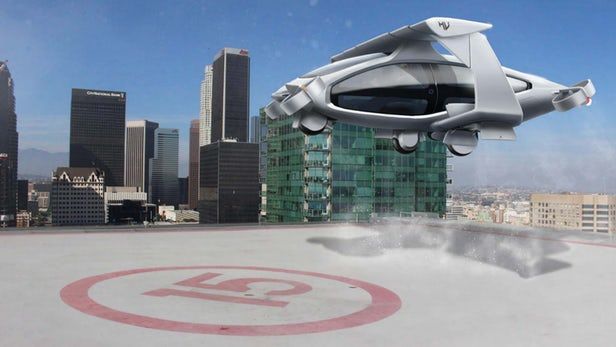
Another flying car company is preparing to join the race to the skies, as Australia’s Macchina Volantis gears up to build a prototype of its road-drivable 5-seat electric aircraft. With VTOL capability, winged flight mode and a diesel range extender, this thing promises to fly at three times highway speed and offer some serious range.
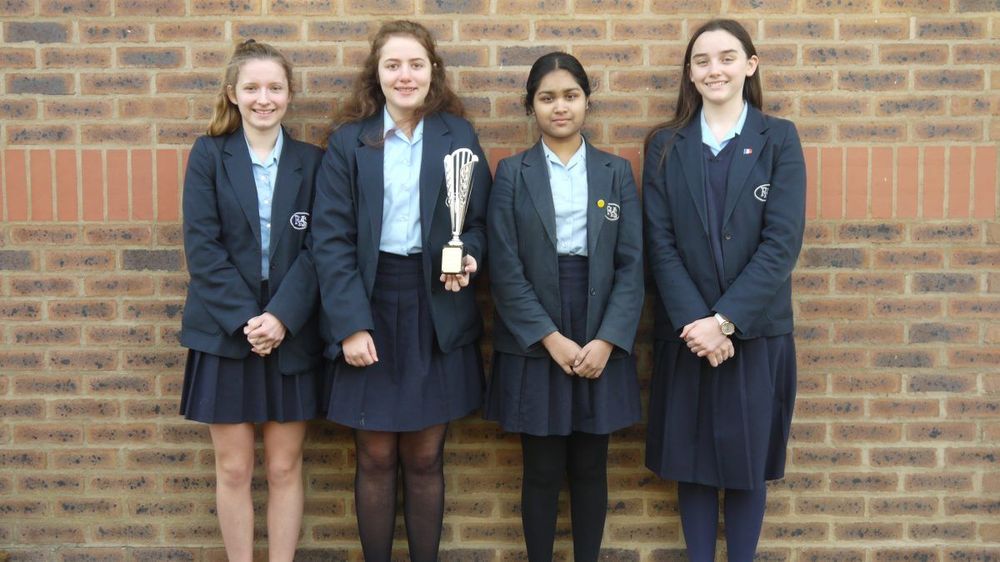
A DAY of science challenges and investigations run by the Institute of Physics was hosted by Rugby High School.
Teams from 12 schools from across the West Midlands came to take part in Super Physics Day.
The teams of four used their knowledge of science to conduct three timed investigations including ‘Air Drop’, an RAF challenge to drop relief packages from a plane to the desired location.
Created by Rod Serling, The Twilight Zone aired for five seasons from 1959 to 1964. The science fiction anthology series entertained audiences with mind-bending narratives and clever twists — as well as some pretty scary stories. The iconic theme was composed by Bernard Herrman, who bookended his feature film career with Orson Welles’ Citizen Kane and Martin Scorsese’s Taxi Driver. In American pop culture, The Twilight Zone is synonymous with high concept television.
We break down everything you need to know about Jordan Peele’s reboot of The Twilight Zone.
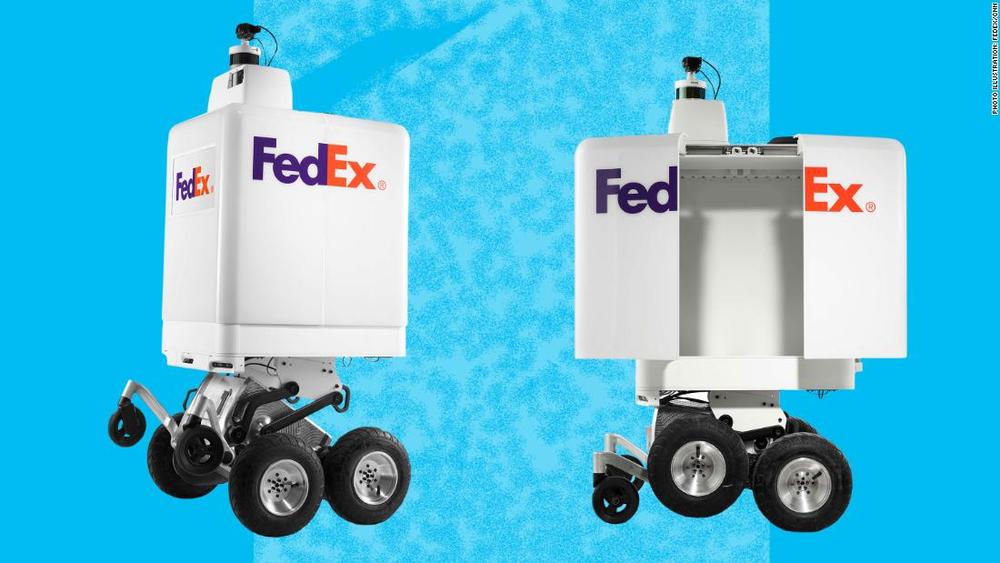
FedEx is the latest company to join the delivery robot craze.
The company said Wednesday it will test a six-wheeled, autonomous robot called the SameDay Bot in Memphis, Tenn. this summer and plans to expand to more cities.
It’s partnering with major brands, including Walmart, Target, Pizza Hut and AutoZone, to understand how delivery robots could help other businesses.
A team of researchers at The University of Cambridge has recently introduced a unique experimental testbed that could be used for experiments in cooperative driving. This testbed, presented in a paper pre-published on arXiv, consists of 16 miniature Ackermann-steering vehicles called Cambridge Minicars.
“Using true-scale facilities for vehicle testbeds is expensive and requires a vast amount of space,” Amanda Prorok. “Our main objective was to build a low-cost, multi-vehicle experimental setup that is easy to maintain and that is easy to use to prototype new autonomous driving algorithms. In particular, we were interested in testing and tangibly demonstrating the benefits of cooperative driving on multi-lane road topographies.”
Studies investigating cooperative driving are often expensive and time consuming due to a lack of available low-cost platforms that researchers can use to test their systems and algorithms. Prorok and her colleagues thus set out to develop an effective and inexpensive experimental testbed that could ultimately support research into cooperative driving and multi-car navigation.
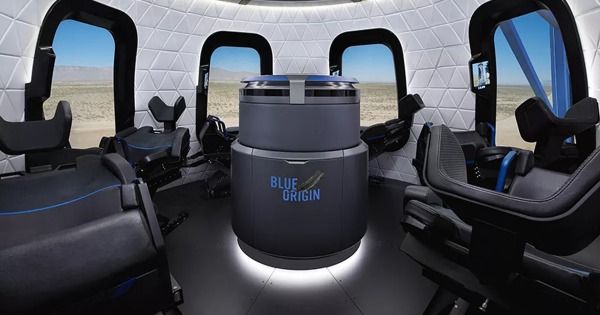
Amazon CEO Jeff Bezos wants to send its first passengers to space as soon as this year. Bezos spoke during a private event at the Yale Club in New York City, Business Insider reports.
“This year. This is the first time I’ve ever been saying, ”this year.” For a few years, I’ve been saying, ”next year,” Bezos told Jeff Foust, senior staff writer at Space News, during the event.
The billionaire’s private space tourism company Blue Origins has been making some big strides towards that goal in recent years. Its flagship suborbital vehicle New Shepard reached the so-called Kármán line (62 miles or 100 km), widely agreed to be the edge of outer space, for the first time during a test flight in 2015.