Toggle light / dark theme

The world’s volcanoes are waking up — And they’re erupting pure technology

One of Earth’s most unique geological formations is volcanoes, as they can be located either on land or underwater. They are even found on other planets. These formations come in all shapes and sizes, varying from shields to composites and cinder cones. When they erupt, they spew lava. As more and more of the world’s volcanoes are waking, they are also erupting pure technology. That’s right, within these unique geological formations, there are valuable elements that could revolutionize the renewable industry.

The world is gradually transitioning to renewable energy sources as alternatives to burning fossil fuels. This transition forms part of a greater goal to reduce the total greenhouse gas emissions that contribute to climate change. Unfortunately, the renewable technologies that we rely on to harness energy from renewable sources are not as environmentally friendly as we want to believe.

According to the SPIE Digital Library, renewable energy technology needs particular elements for production, and obtaining these elements has proven to be challenging. Without these elements, we cannot address other challenges that these technologies face, which are intermittency and storage. For example, solar panels and wind turbines are both dependent on specific weather conditions, which result in intermittency in power supply.

Chemists develop four-charge storage molecule to advance artificial photosynthesis

A research team from the University of Basel, Switzerland, has developed a new molecule modeled on plant photosynthesis: under the influence of light, it stores two positive and two negative charges at the same time. The aim is to convert sunlight into carbon-neutral fuels.

Plants use the energy of sunlight to convert CO2 into energy-rich sugar molecules. This process is called and is the foundation of virtually all life: animals and humans can “burn” the carbohydrates produced in this way again and use the energy stored within them. This once more produces carbon dioxide, closing the cycle.

This model could also be the key to environmentally friendly fuels, as researchers are working on imitating natural photosynthesis and using sunlight to produce high-energy compounds: solar fuels such as hydrogen, methanol and synthetic gasoline. If burned, they would produce only as much carbon dioxide as was needed to produce the fuels. In other words, they would be carbon-neutral.

Increasing efficiency in artificial photosynthesis

Chemical engineers at EPFL have developed a new approach to artificial photosynthesis, a method for harvesting solar energy that produces hydrogen as a clean fuel from water.

“Artificial is the holy grail of all chemists,” says Astrid Olaya, a at EPFL’s Institute of Chemical Sciences and Engineering (ISIC). “The goal is to capture sunlight, on the one hand to oxidize water to generate oxygen and protons, and on the other to reduce either protons to hydrogen or CO2 to chemicals and fuels. This is the essence of a circular industry.”

With global energy demands increasing, we are in need of viable alternatives to fossil fuels, whose negative environmental impact has also become all too apparent. One of those alternatives is hydrogen, which can be consumed in simple fuel cells for energy, leaving behind only water.

Your household gadgets could soon be battery-free — scientists create tiny solar cells that can be powered by indoor light

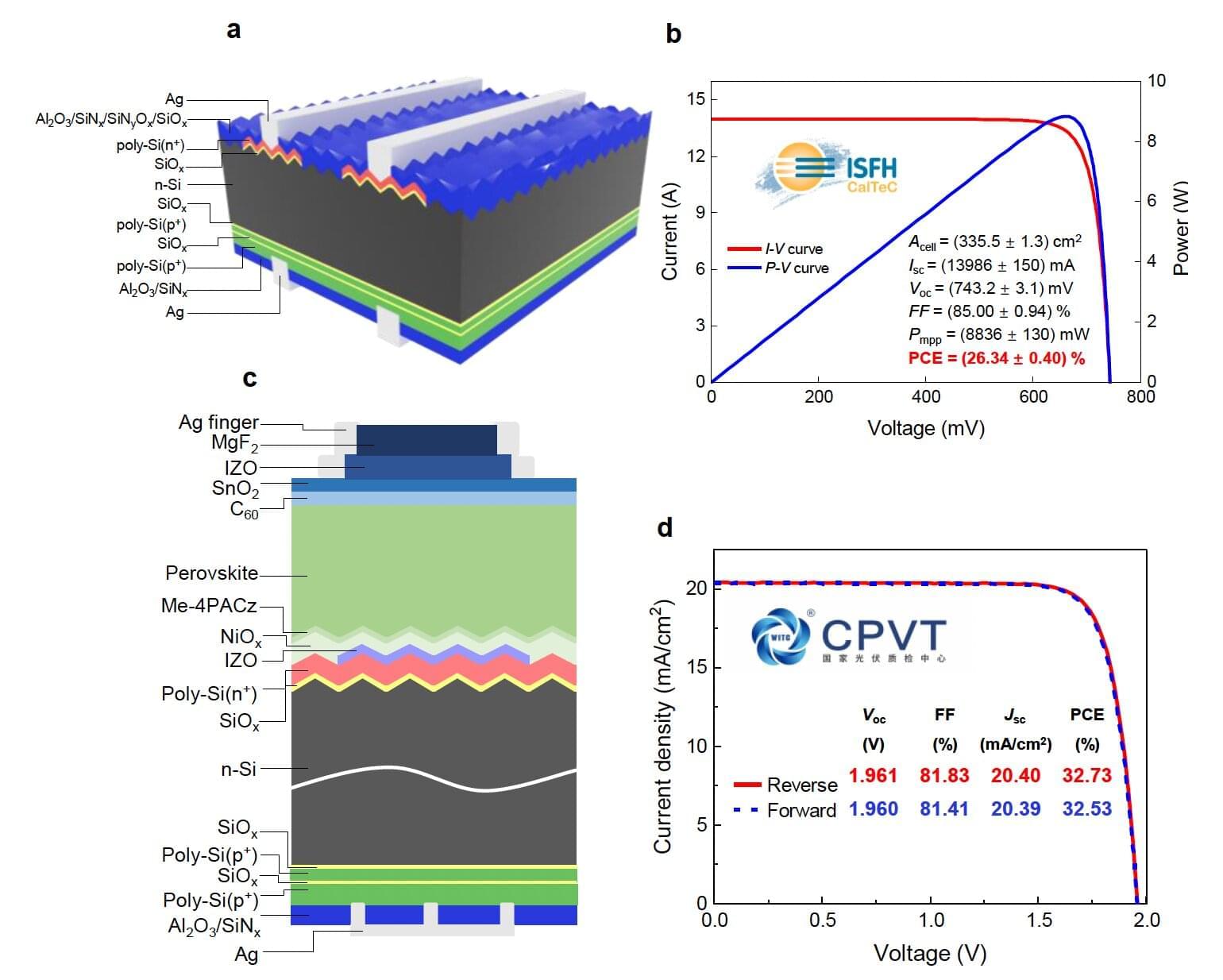
“Currently, solar cells capturing energy from indoor light are expensive and inefficient. Our specially engineered perovskite indoor solar cells can harvest much more energy than commercial cells and is more durable than other prototypes. It paves the way for electronics powered by the ambient light already present in our lives.”

Perovskite is already becoming a popular material for use in solar panels, with marked benefits compared with silicon-based materials.

Solar trees provide opportunity to meet renewable energy targets without deforestation

With the right technology, solar energy has the potential to meet all of the world’s electricity needs, but we are still a long way off from that point. Still, governments around the world are setting high objectives for renewable energy. Many world leaders have set commitments to phase out coal power and transition away from fossil fuels, and solar panel installations are currently one of the top contenders for implementing these plans.

However, solar energy has a bit of a dark secret. In some places, putting up these massive solar panel installations requires cutting down hundreds or even thousands of hectares of forests over time. In South Korea, deforestation caused by solar installations affected 529 hectares of in 2016, 1,435 hectares in 2017, and 2,443 hectares in 2018.

Of course, there are some solar installations located in deserts or other treeless landscapes that don’t have this issue. But those that do end up cutting out an incredibly important carbon sink, first worsening the problem they are attempting to alleviate. This deforestation then causes further issues with erosion and the destruction of natural habitats.

Building energy model offers cities decarbonization roadmap

A new software tool developed by Cornell researchers can model a small city’s building energy use within minutes on a standard laptop, then run simulations to help policymakers prioritize the most cost-effective approaches to decarbonization.

Using the City of Ithaca, New York, as a , the urban building energy model quickly mapped more than 5,000 residential and and their baseline energy use. Simulated investments in weatherization, electric heat pumps and rooftop solar panels, while also factoring in financial incentives, generated insights that are informing city efforts to achieve carbon neutrality by 2030.

The tool’s automated workflow, accessibility and accuracy—without advanced computing power—could be particularly valuable for smaller cities that lack resources and expertise dedicated to decarbonization, the researchers said. But they said the new model—now also supporting the county that surrounds Ithaca—could be further scaled up to serve big cities or an entire state.

/* */