Toggle light / dark theme

Are You Ready for the Future of Transhumanism?

Are you ready for the future? A Transhumanist future? One where everyone around you—friends, family, and neighbors—has dipped into the transhumanist punch bowl. A future of contact lenses that see in the dark, endoskeleton attached artificial limbs that lift a half-ton, and brain chip implants that read your thoughts and instantly communicate them to others. Sound crazy? Indeed, it does. Nevertheless, it’s coming soon. Very soon. In fact, much of the technology already exists. Some of it’s being sold commercially at your local superstore or being tested in laboratories right now around the world.

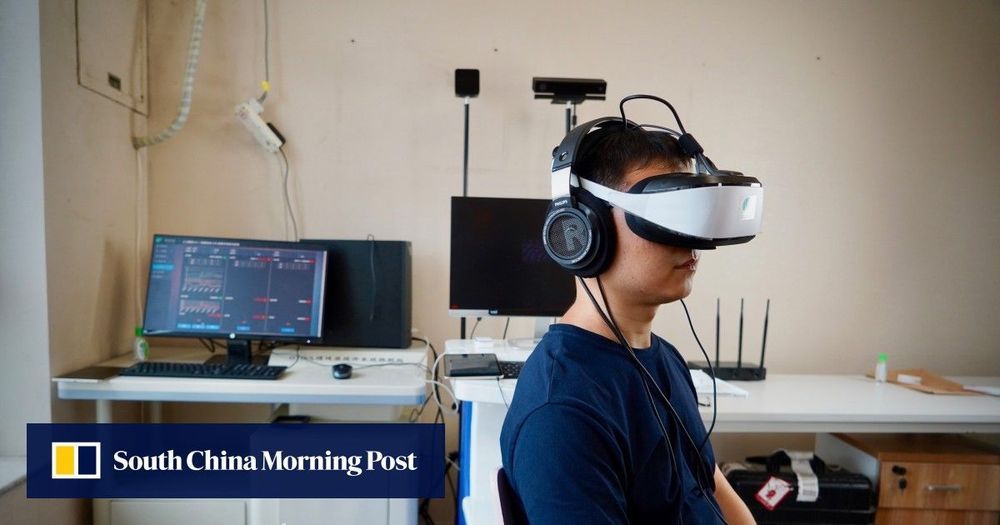
We’ve all heard about driverless test cars on the roads and how doctors in France are replacing people’s hearts with permanent robotic ones, but did you know there’s already a multi-billion dollar market for brain wave reading headsets? Using electroencephalography (EEG) sensors that pick up and monitor brain activity, NeuroSky’s MindWave can attach to Google Glass and allow you to take a picture and post it to Facebook and Twitter just by thinking about it. Other headsets allow you to play video games on your iPhone just with your thoughts too. In fact, well over a year ago now, the first mind-to-mind communication took place. A researcher in India projected a thought to a colleague in France, and using their headsets, they understood each other. Telepathy went from science fiction to reality.

The history of transhumanism—the burgeoning field of science and radical tech used to describe robotic implants, prosthetics, and cyborg-like enhancements in the human being and its experience—has come a long way since scientists began throwing around the term a half century ago. What a difference a generation or two makes. Today a thriving pro-cyborg medical industry is setting the stage for trillion-dollar markets that will remake the human experience. Five million people in America suffer from Alzheimer’s, but a new surgery that involves installing brain implants is showing promise in restoring people’s memory and improving lives. The use of medical and microchip implants, whether in the brain or not, are expected to surge in the coming years. Some experts surmise as many as half of Americans will have implants by 2020. I already have one in my hand. It’s truly a new age for humans.

Army bio-inspired theoretical research may make robots more effective on the future battlefield

In an effort to make robots more effective and versatile teammates for Soldiers in combat, Army researchers are on a mission to understand the value of the molecular living functionality of muscle, and the fundamental mechanics that would need to be replicated in order to artificially achieve the capabilities arising from the proteins responsible for muscle contraction.

Bionanomotors, like myosins that move along actin networks, are responsible for most methods of motion in all life forms. Thus, the development of artificial nanomotors could be game-changing in the field of robotics research.

Researchers from the U.S. Army Combat Capabilities Development Command’s Army Research Laboratory have been looking to identify a design that would allow the artificial nanomotor to take advantage of Brownian motion, the property of particles to agitatedly move simply because they are warm.

5 + 1 Myths about Artificial Intelligence

Maybe interesting.


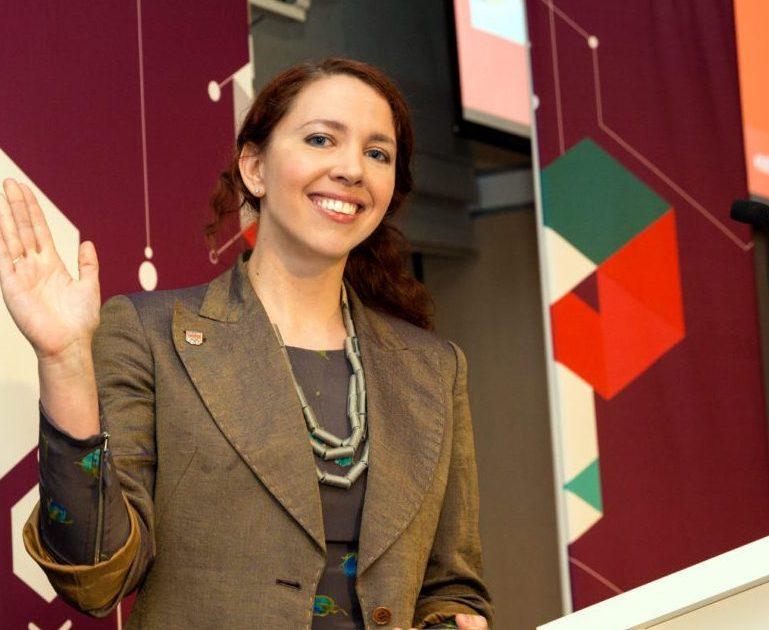
Few subjects in business and technology are causing as much interest and excitement – or fear and distrust – right now as artificial intelligence. Aalto Leaders’ Insight talked with Teemu Roos, Associate Professor at the Department of Computer Science, University of Helsinki, about a few common myths about AI.

Otso Alasko

Insilico signs $200M AI drug discovery partnership with China’s CTFH

Shortly after publishing a paper demonstrating how its artificial intelligence programs could generate viable lead compounds in just a few weeks, Insilico Medicine has signed a dual-program discovery collaboration with Jiangsu Chia Tai Fenghai Pharmaceutical worth up to $200 million.

Focused on previously undruggable targets in triple-negative breast cancer, the deal includes an upfront payment along with potential milestones and sales-based royalties pegged to any eventual products.

“We are very pleased to establish the partnership with Insilico Medicine, entering the new era of AI-enabled drug development,” Wenyu Xia, general manager of the China-based pharma company, said in a statement. “We look forward to a long-term partnership with Insilico Medicine.”

At Tech’s Leading Edge, Worry About a Concentration of Power

The research scientists’ warnings come amid rising concern about the power of the big tech companies. Most of the focus has been on the current generation of technology — search, online advertising, social media and e-commerce. But the scientists are worried about a barrier to exploring the technological future, when that requires staggering amounts of computing.


Each big step of progress in computing — from mainframe to personal computer to internet to smartphone — has opened opportunities for more people to invent on the digital frontier.

But there is growing concern that trend is being reversed at tech’s new leading edge, artificial intelligence.

Computer scientists say A.I. research is becoming increasingly expensive, requiring complex calculations done by giant data centers, leaving fewer people with easy access to the computing firepower necessary to develop the technology behind futuristic products like self-driving cars or digital assistants that can see, talk and reason.

Qingsong Zhu at Ending Age-Related Diseases 2019

Dr. Qingsong Zhu, the COO of Insilico Medicine, discussed the use of deep learning in creating biomarkers for aging. Initially discussing existing clocks and the problems with animal translation, he went on to discuss what sorts of markers are ideal for age-related research and the details of training and testing a model that works with these markers, showing that a deep model compares favorably to other models.

He also used his model to show that smoking does, in fact, cause accelerated aging.

/* */