Toggle light / dark theme

Dynamic DNA material with emergent locomotion behavior powered by artificial metabolism

Interesting research paper on a new nanobot technology. I’m watching for ways in which suitable substrates for mind uploading can be constructed, and DNA self-guided assembly has potential.

Here are some excerpts and a weblink to the paper:

“…Chemical approaches have opened synthetic routes to build dynamic materials from scratch using chemical reactions, ultimately allowing flexibility in design…”

… As a realization of this concept, we engineered a mechanism termed DASH—DNA-based Assembly and Synthesis of Hierarchical materials—providing a mesoscale approach to create dynamic materials from biomolecular building blocks using artificial metabolism. DASH was developed on the basis of nanotechnology that uses DNA as a generic material ranging from nanostructures to hydrogels, for enzymatic substrates, and as linkers between nanoparticles…”

“…Next, to illustrate the potential uses of self-generated materials, we created various hybrid functional materials from the DASH patterns. The DASH patterns served as a versatile mesoscale scaffold for a diverse range of functional nanomaterials beyond DNA, ranging from proteins to inorganic nanoparticles, such as avidin, quantum dots, and DNA-conjugated gold nanoparticles (AuNPs) (Fig. 4D, figs. S37 and S38, and Supplementary Text). The generated patterns were also rendered functional with catalytic activity when conjugated with enzymes (figs. S39 and S40 and Supplementary Text). We also showed that the DNA molecules within the DASH patterns retained the DNA’s genetic properties and that, in a cell-free fashion, the materials themselves successfully produced green fluorescent proteins (GFPs) by incorporating a reporter gene for sfGFP (Fig. 4E and figs. S9 and S41) (40). The protein production capability of the materials established the foundation for future cell-free production of proteins, including enzymes, in a spatiotemporally controlled manner.

…” Our implementation of the concept, DASH, successfully demonstrated various applications of the material. We succeeded in constructing machines from this novel dynamic biomaterial with emergent regeneration, locomotion, and racing behaviors by programming them as a series of FSAs. Bottom-up design based on bioengineering foundations without restrictions of life fundamentally allowed these active and programmable behaviors. It is not difficult to envision that the material could be integrated as a locomotive ele-ment in biomolecular machines and robots. The DASH patterns could be easily recognized by naked eyes or smartphones, which may lead to better detection technologies that are more feasible in point-of-care settings. DASH may also be used as a template for other materials, for example, to create dynamic waves of protein expression or nanoparticle assemblies. In addition, we envision that further expansion of artificial metabolism may be used for self-sustaining structural components and self-adapting substrates for chemical production pathways. Ultimately, our material may allow the construction of self-reproducing machines through the production of enzymes from generated materials that, in turn, reproduce the material. Our biomaterial powered by artificial metabolism is an important step toward the creation of “artificial” biological systems with dynamic, life-like capabilities.”…


Zume Pizza closes down, cuts 172 jobs in Mountain View

Zume Pizza, the Mountain View company that used robots to make its pizzas, has made its last delivery.

In filings with the state Employment Development Department, Zume said it is cutting 172 jobs in Mountain View, and eliminating another 80 jobs at its facility in San Francisco. Zume Chief Executive Alex Garden made the annoucement about Zume in an email to company employees on Wednesday.

“With admiration and sadness, we are closing Zume Pizza today,” Garden said in his email “Over the last four years this business has been our invention test bed and has been our inspiration for many of the growth businesses we have at Zume today.”

Wave physics as an analog recurrent neural network

Analog machine learning hardware offers a promising alternative to digital counterparts as a more energy efficient and faster platform. Wave physics based on acoustics and optics is a natural candidate to build analog processors for time-varying signals. In a new report on Science Advances Tyler W. Hughes and a research team in the departments of Applied Physics and Electrical Engineering at Stanford University, California, identified mapping between the dynamics of wave physics and computation in recurrent neural networks.

The map indicated the possibility of training physical wave systems to learn complex features in temporal data using standard training techniques used for neural networks. As proof of principle, they demonstrated an inverse-designed, inhomogeneous medium to perform English vowel classification based on raw audio signals as their waveforms scattered and propagated through it. The scientists achieved performance comparable to a standard digital implementation of a recurrent neural network. The findings will pave the way for a new class of analog machine learning platforms for fast and efficient information processing within its native domain.

The recurrent neural network (RNN) is an important machine learning model widely used to perform tasks including natural language processing and time series prediction. The team trained wave-based physical systems to function as an RNN and passively process signals and information in their native domain without analog-to-digital conversion. The work resulted in a substantial gain in speed and reduced power consumption. In the present framework, instead of implementing circuits to deliberately route signals back to the input, the recurrence relationship occurred naturally in the time dynamics of the physics itself. The device provided the memory capacity for information processing based on the waves as they propagated through space.

How Drone Delivery will change the landscape of Global Logistics

A drone is an autonomous unmanned aerial vehicle (UAV) that can be programmed for automatic routing and delivery. These come handy in delivery medicines which is easier to carry and can add value to the pharma supply chain. Drone helps to deliver to places with the high expense involved or poor infrastructure and thereby plays a significant role in last-mile delivery.

The pace with which they are now being used for delivery, even Amazon is experimenting with the delivery mechanism offered by drone as its logistics and transport market is forecast to grow 20% in coming times.

Voice-controlled robot can morph into a car that races around the room

Originally a bunch of children’s toys, then comic books, cartoons and movies, robot action figures than morph into vehicles and back again have proved immensely popular over the years. After a successful Kickstarter last year, Robosen Robotics has launched the T9, a robot that transforms into a vehicle through voice commands or via an app.

There are many Transformer-like robot toys already available, but most require the user to manually change the thing from action figure to vehicle, animal, device or whatever, and back again. Like the bots from the cartoons and movies, the T9 is an actual transforming robot designed to stimulate a child’s interest in programming, robotics and artificial intelligence.

The T9 is claimed to be the first robot in the consumer space that can automatically move from vehicle to robot and back again, can walk on two legs when in robot form, race on its wheels when in vehicle form, involves coding and program development, and can be controlled by voice commands or through a mobile app. It can even bust some funky dance moves if you want it to.

We all will experience it at some point, unfortunately: The older we get the more our brains will find it difficult to learn and remember new things

What the reasons underlying these impairments are is yet unclear but scientists at the Center for Regenerative Therapies of TU Dresden (CRTD) wanted to investigate if increasing the number of stem cells in the brain would help in recovering cognitive functions, such as learning and memory, that are lost during ageing.”

https://tu-dresden.de/tu-dresden/newsportal/news/verjuengung…en-maeusen

For the latest news on neuroscience, psychology, and artificial intelligence please like and follow our Facebook page:

https://www.facebook.com/383136302314720/posts/508764083085274/


Ein jeder wird es irgendwann erleben: Je älter wir werden, desto schwieriger wird es für unser Gehirn, neue Dinge zu lernen und sich an sie zu erinnern. Die Gründe hinter diesen Beeinträchtigungen sind oft unklar. Nun haben Wissenschaftler des Zentrums für Regenerative Therapien der TU Dresden (CRTD) untersucht, ob eine Erhöhung der Anzahl von Hirnstammzellen helfen würde, kognitive Funktionen wie Lernen und Gedächtnis wiederzuerlangen, die im Laufe des Alterns verloren gehen.

Die Forschungsgruppe von Prof. Federico Calegari hat dazu eine im eigenen Labor entwickelte Methode verwendet: Im Gehirn alter Mäuse stimulierten die Wissenschaftler den dort vorhandenen kleinen Pool neuronaler Stammzellen so, dass sich die Menge dieser Stammzellen und damit auch die Anzahl der aus ihnen erzeugten Gehirnzellen erhöhte. Das Team beobachtete, dass diese zusätzlichen Neuronen überleben und sogar neue Kontakte zu benachbarten Zellen knüpfen können. In einem nächsten Schritt untersuchten die Wissenschaftler eine wichtige Aufgabe des Gehirns, die ähnlich wie bei der Maus auch beim Menschen im Laufe des Alterns verloren geht: die Navigationsfähigkeit.

Satellite AI: Seeking solutions in high resolution

Satellites have been flying around the earth for decades — scanning landscapes and capturing images of our fast-changing planet. Remote sensing has been around since even before the first flight of the Wright brothers. It was restricted to hot air balloon flights back then. Systematic aerial photography and satellite remote sensing reached an inflection point during the Cold War, when the need for surveillance led to modification of combat aircraft for the purpose of spying. The space race also gave a fillip to satellite launches. The first satellite photographs of the earth were taken on August 14, 1959 and satellite image processing techniques evolved in 1960s and 1970s.

Till late 1990s, the primary consumer of remote sensing data was either governments bodies or defence agencies. This was because of the strategically sensitive nature of technology, which gave birth to the fear that it can be used for spying. However, after the fall of the Soviet Union commercial satellite imagery market began to evolve and IKONOS became the first commercial, very-high resolution satellite to be launched in 1999. Another factor in play was the growing use of computer software for analysis of data and satellite data consumption benefited from this growth in the 1990s.

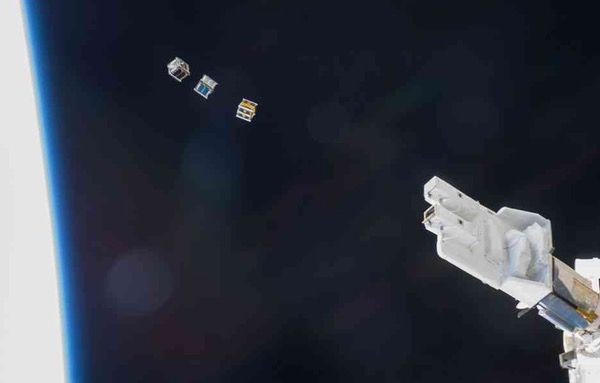
The 21st century saw rapid changes in the remote sensing industry. Data consumption continued to increase. This was accelerated by the fall in costs of satellite imagery. Moreover, open data sources emerged with Landsat data becoming publicly available in 2009. Copernicus Hub followed in 2014 when the European Space Agency launched Sentinel 1. Another inflection point occurred in the industry when Planet launched a constellation of 88 Dove satellites abroad the PSLV-C37 of ISRO. These are shoe-box sized satellites leveraging the power of off-the-shelf consumer electronics to reduce costs. Further innovation in satellite launching by a slew of startups led by SpaceX has reduced costs of launching satellites.

Creating Better Drugs With Deep Learning, 3D Technology and Improved Protein Modeling

Proteins are often called the working molecules of the human body. A typical body has more than 20,000 different types of proteins, each of which is involved in many functions essential to human life.

Now, Purdue University researchers have designed a novel approach to use deep learning to better understand how proteins interact in the body – paving the way to producing accurate structure models of protein interactions involved in various diseases and to design better drugs that specifically target protein interactions. The work is released online in Bioinformatics.

“To understand molecular mechanisms of functions of protein complexes, biologists have been using experimental methods such as X-rays and microscopes, but they are time- and resource-intensive efforts,” said Daisuke Kihara, a professor of biological sciences and computer science in Purdue’s College of Science, who leads the research team. “Bioinformatics researchers in our lab and other institutions have been developing computational methods for modeling protein complexes. One big challenge is that a computational method usually generates thousands of models, and choosing the correct one or ranking the models can be difficult.”

/* */