Toggle light / dark theme

New Research Exposes the Biological Basis of Empathy

Summary: The brain’s reward system plays a key role in helping behaviors and empathy.

Source: Tel Aviv University.

Are mammals at all able to demonstrate empathy for one another, engage in pro-social behavior, and help others in distress? New research from the Tel Aviv University examined the issue based on an animal model (rats) and found that just as with humans, rats are also split into various groups with different indicators, to the point that they only come to the aid of members of their group but do not help rats from other groups.

CRISPR Gene Therapy Restores Color Vision in Small Trial

Genetic diseases are a compelling target for viral gene therapy. One condition that scientists are investigating to see if they can treat with gene therapy is a rare genetic disease called Leber congenital amaurosis, or LCA is a progressive condition that disables critical cells within the retina. The damage begins at birth: it eventually robs patients of central vision and color perception, often rendering them legally blind. But there may be another way. On Wednesday, researchers presented evidence from a breakthrough gene-editing experiment that restored some color vision to patients with LCA vision loss.

CRISPR is already under investigation as a gene therapy for blood disorders like sickle cell disease and beta-thalassemia. It may well have other uses, such as treating cancer by editing mutated DNA. But the process is not without its hurdles. Treatments for blood disorders like these involve taking cells from the patient’s body, changing them in vitro in the lab, and then re-infusing them back into the patient’s body. That works great for blood, which you can take out, filter, and put back in with relatively few consequences.

But because LCA is a disease of the retina, you can’t just take out cells and then infuse them back in. The retina is a delicate, multilayered membrane that resents any disturbance. The eye also has a system of physical defenses not unlike the blood-brain barrier. Furthermore, the immune system sometimes responds with extreme prejudice to eye injuries or infections, to the point of causing an actual autoimmune disease where the body attacks its own eyes. How, then, could researchers get the CRISPR treatment into the retina, past the body’s ferocious defenses and without further damage?

Preparing for Exascale: Argonne’s Aurora Supercomputer to Drive Brain Map Construction

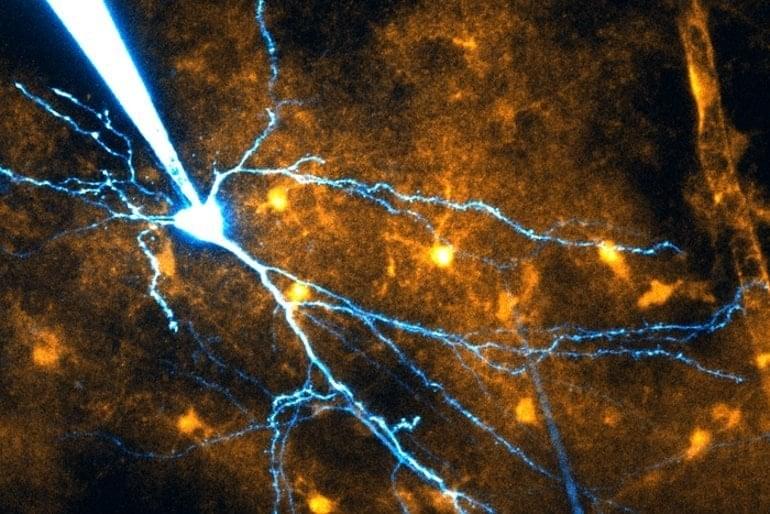
Using far more advanced imaging techniques than those of their earlier contemporaries, researchers at the DOE’s Argonne National Laboratory are working to develop a brain connectome — an accurate map that lays out every connection between every neuron and the precise location of the associated dendrites, axons, and synapses that help form the communications or signaling pathways of a brain.


Sept. 24 2021 — As part of the Aurora Early Science Program, Nicola Ferrier of Argonne National Laboratory is leading a project that will use exascale computing power to help advance efforts to develop a brain connectome.

The Scientific Problem of Consciousness

Anil Seth wants to understand how minds work. As a neuroscientist at the University of Sussex in England, Seth has seen firsthand how neurons do what they do — but he knows that the puzzle of consciousness spills over from neuroscience into other branches of science, and even into philosophy.

Warning: This video may potentially trigger seizures for people with photosensitive epilepsy. Viewer discretion is advised.

New clues hint that young boys who get serious viral infections might be more likely to develop autism

The mouse study even offers a possible explanation as to why: Childhood infections may cause the body to over-express genes that code for microglia, the central nervous system’s primary immune cells. That, in turn, can affect brain development, which could be at play in some traits commonly associated with autism, such as difficulty communicating verbally or recognizing familiar faces.

So the researchers experimented with drugs that target microglia, and found that they not only prevented those social issues in adult mice — they might have reversed them.


Among boys genetically predisposed to autism, a severe childhood infection could make that diagnosis more likely.

Distinct electrophysiological signatures of task-unrelated and dynamic thoughts

Our minds rarely stay still when left alone. Such trains of thought, however, may unfold in vastly different ways. Here, we combined electrophysiological recording with thought sampling to assess four types of thoughts: task-unrelated, freely moving, deliberately constrained, and automatically constrained. Parietal P3 was larger for task-related relative to task-unrelated thoughts, whereas frontal P3 was increased for deliberately constrained compared with unconstrained thoughts. Enhanced frontal alpha power was observed during freely moving thoughts compared with non-freely moving thoughts. Alpha-power variability was increased for task-unrelated, freely moving, and unconstrained thoughts. Our findings indicate these thought types have distinct electrophysiological signatures, suggesting that they capture the heterogeneity of our ongoing thoughts.

Humans spend much of their lives engaging with their internal train of thoughts. Traditionally, research focused on whether or not these thoughts are related to ongoing tasks, and has identified reliable and distinct behavioral and neural correlates of task-unrelated and task-related thought. A recent theoretical framework highlighted a different aspect of thinking—how it dynamically moves between topics. However, the neural correlates of such thought dynamics are unknown. The current study aimed to determine the electrophysiological signatures of these dynamics by recording electroencephalogram (EEG) while participants performed an attention task and periodically answered thought-sampling questions about whether their thoughts were 1) task-unrelated, 2) freely moving, 3) deliberately constrained, and 4) automatically constrained.

Consciousness & Information | Part II of the Documentary Consciousness: Evolution of the Mind

Quantum physics is directly linked to consciousness: Observations not just change what is measured, they create it… Here’s the next episode of my new documentary Consciousness: Evolution of the Mind (2021), Part II: CONSCIOUSNESS & INFORMATION

*Subscribe to our YT channel to watch the rest of documentary (to be released in parts): https://youtube.com/c/EcstadelicMedia.

**Watch the documentary in its entirety on Vimeo ($0.99/rent; $1.99/buy): https://vimeo.com/ondemand/339083

***Join Consciousness: Evolution of the Mind public forum for news and discussions (Facebook group of 6K+ members): https://www.facebook.com/groups/consciousness.evolution.mind.

#Consciousness #Evolution #Mind #Documentary #Film


Khaliya — Innovator, Philanthropist, Humanitarian — Solutions For The Global Mental Health Crisis

Innovator, philanthropist, humanitarian — khaliya — discussing radical solutions for the global mental health crisis.


Khaliya (https://www.khaliya.net/) is a Columbia University-trained public health specialist and Harvard University-trained specialist in Global Mental Health and Refugee Trauma. She is also a Venture Partner for Gender Equity Diversity Investments (www.gedi.vc), a new female-led VC firm targeting high growth investments that deliver top-quartile returns and measurable impact towards the UN Sustainable Development Goals with a preliminary focus on health.

Formerly an aid worker in over 32 countries and a former Peace Corps Volunteer for the US State Department, she has won numerous awards for her international service. Khaliya was the youngest member of the WEF’s Futures Council on the Future of Health and Healthcare and her opinion pieces have run in the New York Times (International and Domestic Editions) as well as WiredUK.

Currently at work on a book on the future of mental health, Khaliya continues to be a sought after public speaker, having spoken at the Obama White House organized United States of Women Summit, the World Economic Forum’s Family Business Summit, the Vatican, Clinton Global Initiative, WiredHealth, WebSummit and at the United Nations General Assembly, among others.

Khaliya is next scheduled to speak at the G20 Women’s Summit in Milan, Italy, and the Ethical Assembly Summit in Lisbon, Portugal, both taking place in October, 2021.

/* */