O.o!!! Awesome 👌 👏 👍 😍 💖 🆒️ 👌
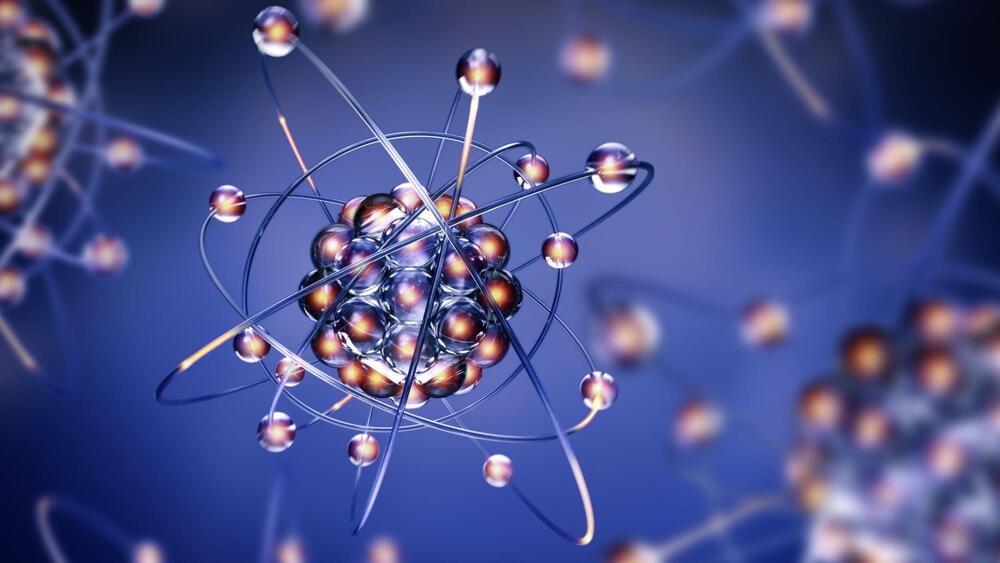
MIT researchers have made a significant breakthrough by observing and capturing images of rare edge states in ultracold atoms.
For the last three years,…
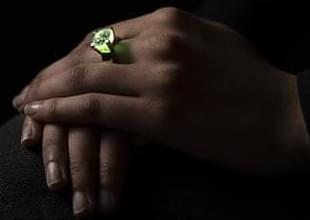
A UWE Bristol researcher hopes to revolutionise the jewellery industry and its supply chains with the creation of unique gemstone and jewellery designs with ground-breaking properties — including the world’s first single stone glow-in-the-dark manmade crystal.
For the last three years, award-winning jewellery designer Sofie Boons, who’s a Crafts Council Research Fellow at the university’s Centre for Print Research (CFPR), has been undertaking tests on the viability, limitations and use of innovative and experimentally grown crystals in the production of contemporary jewellery.
Working in collaboration with Swiss company BREVALOR Sarl and using their new material ‘BRG’, Sofie has successfully facetted a single stone out of the material – offering jewellery designers a crystal which is not only brilliant when seen in daylight, but illuminates when seen in the dark.

Researchers have discovered how certain cells transform to help control blood pressure by producing renin, a substance usually made by specialized kidney cells. This breakthrough could lead to new treatments for high blood pressure and vascular diseases by targeting the genomic “switch” that regulates renin production. Researchers at…
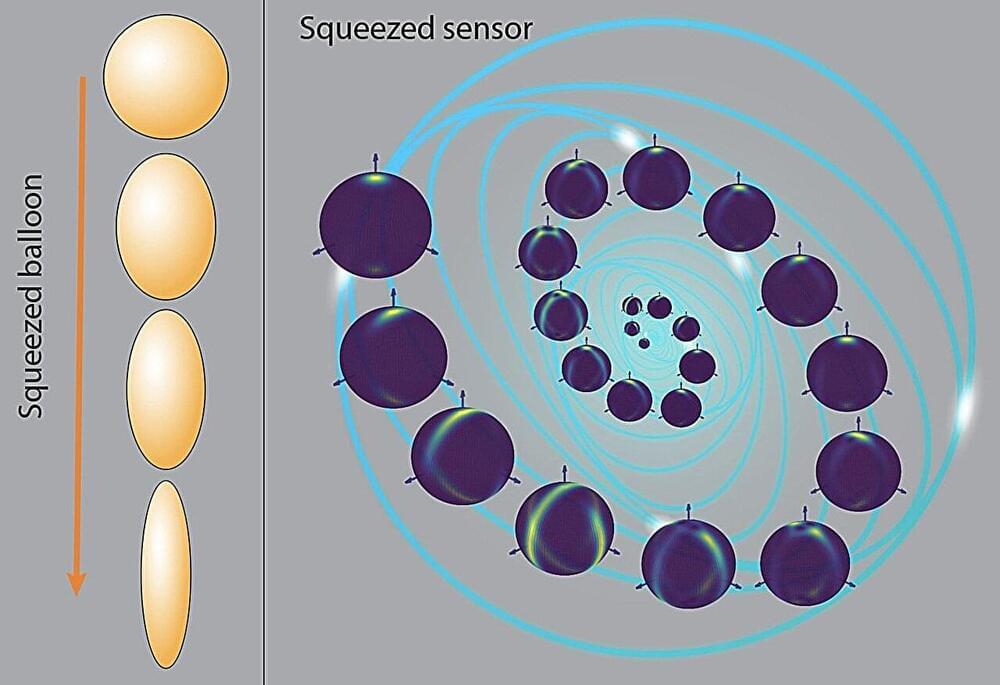
“The research aims to better understand how quantum squeezing can be used in more complicated measurement situations involving the estimation of multiple phases,” said Le. “By figuring out how to achieve the highest level of precision, we can pave the way for new technological breakthroughs in quantum sensing and imaging.”
The study looked at a situation where a three-dimensional magnetic field interacts with an ensemble of identical two-level quantum systems. In ideal cases, the precision of the measurements can be as accurate as theoretically possible. However, earlier research has struggled to explain how this works, especially in real-world situations where only one direction achieves full quantum entanglement.
This research will have broad implications. By making quantum measurements more precise for multiple phases, it could significantly advance various technologies. For example, quantum imaging could produce sharper images, quantum radar could detect objects more accurately, and atomic clocks could become even more precise, improving GPS and other time-sensitive technologies.
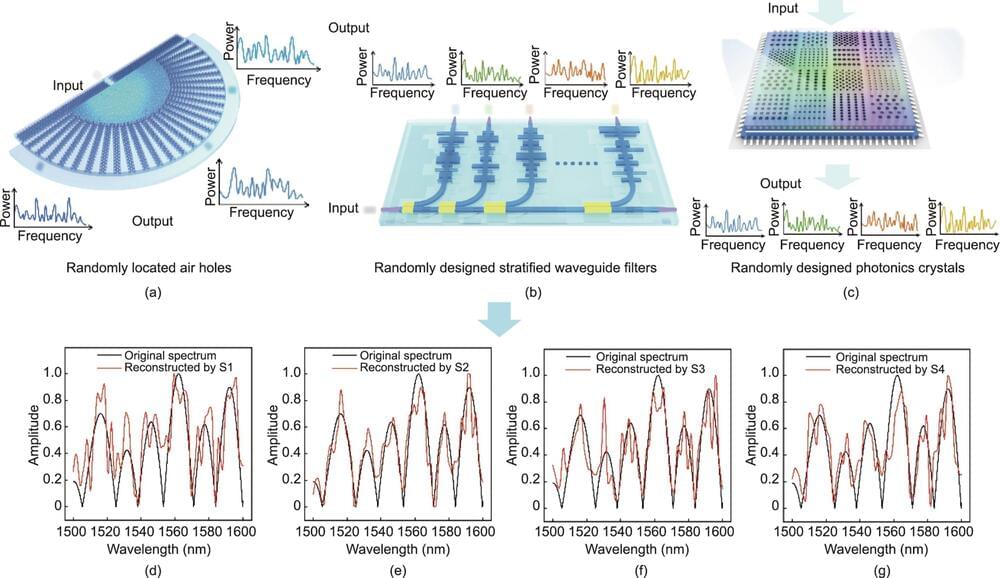
In a study published in Engineering, researchers from Nanjing University of Aeronautics and Astronautics and Zhejiang University have unveiled a pioneering approach to designing on-chip computational spectrometers, heralding a new era of high-performance and reliable integrated spectrometers. This innovative inverse-design methodology offers a dramatic leap forward in spectrometer technology, addressing longstanding challenges in performance and reproducibility.
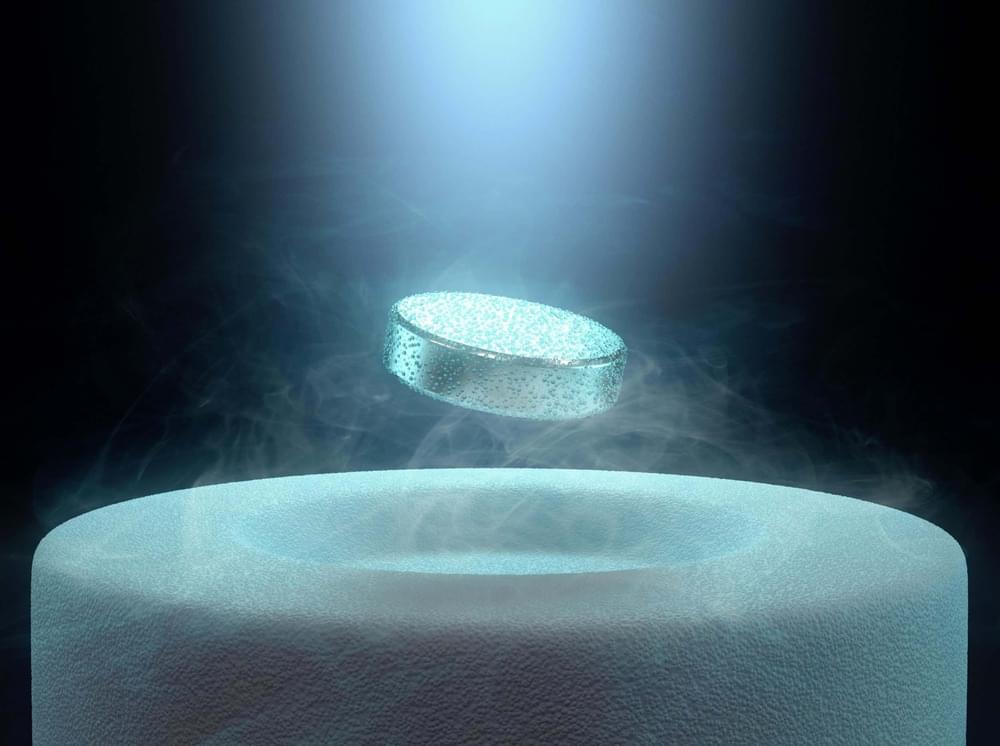
A practical superconductor would transform the efficiency of electronics. After decades of hunting, several key breakthroughs are inching us very close to this coveted prize.


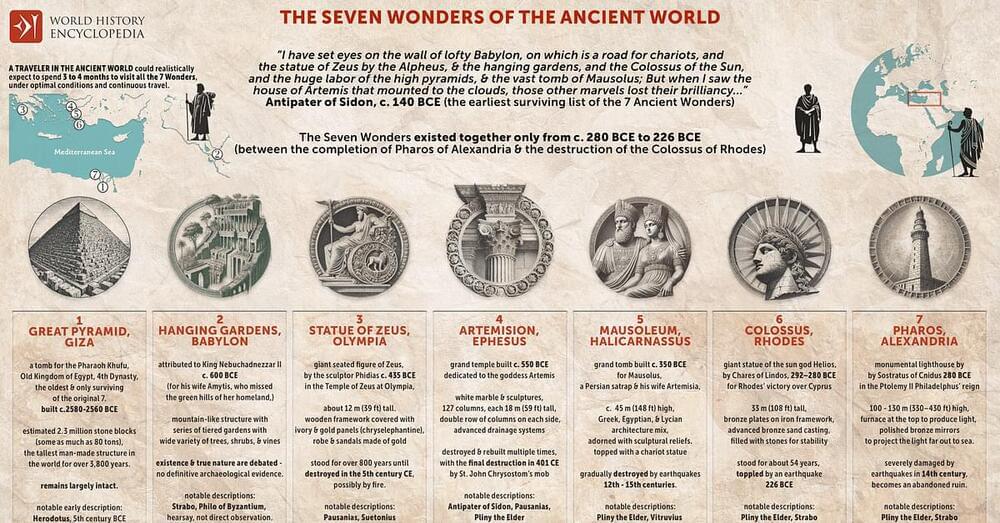
An infographic about the Seven Wonders of the Ancient World — extraordinary architectural and artistic achievements celebrated for their grandeur and innovation. The wonders included the Great Pyramid of Giza, the only surviving wonder, which served as a monumental tomb for the Egyptian Pharaoh Khufu. Although the Hanging Gardens of Babylon’s actual existence and location is debated, they were described as a lush, terraced paradise built in ancient Babylon. The Statue of Zeus at Olympia was a massive gold and ivory representation of the Greek god Zeus, crafted by the sculptor Phidias. The Temple of Artemis at Ephesus was a magnificent sanctuary dedicated to the goddess Artemis, famed for its scale and intricate decoration. The Mausoleum at Halicarnassus was an elaborate tomb for Mausolus, a Persian satrap renowned for its architectural splendor and sculptural detail.