A new Microsoft Exchange Autodiscover bug exposes the credentials of nearly 100,000 Windows domain accounts.

A new vulnerability in all Microsoft Windows systems shipped since 2012 can allow attackers to install a rootkit with ease.
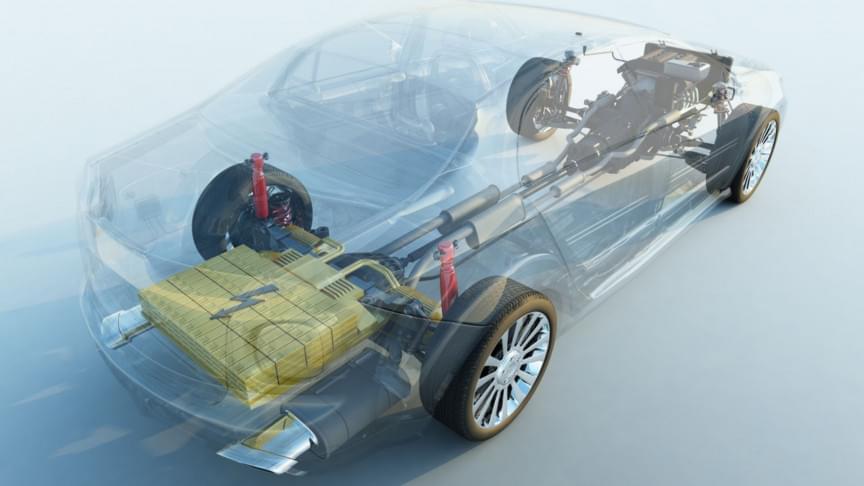
LG Energy Solutions, a partner in the research, has plans for mass production of solid-state batteries by 2027.
While the transition to renewable energies is a high priority, there is also a need to develop energy storage equipment to tide over low production cycles. Lithium-ion batteries are currently our best bet but can’t serve very high energy requirements. Researchers at the University of California, San Diego, in collaboration with LG Energy Solutions, may have solved our requirement of energy-dense batteries by developing a solid-state battery with a silicon anode.
Lithium-ion batteries use graphite coated in copper foil, as their anodes or negative electrode. While this system does work well, future applications such as electric-powered flight and energy storage for grids require batteries with high energy densities. Scientists around the globe are working to resolve this issue and ubiquitous silicon is a potential answer.
Theoretically, silicon as an anode in a lithium-ion battery can deliver 10 times the energy capacity that graphite currently offers. Scientists have known this for decades and have tried to use silicon in batteries only to see them fare poorly. Silicon reacts with the liquid electrolytes in the batteries and even expands and contracts during charging and discharging cycles. This results in capacity losses over a period of time, taking away the edge that silicon offered in the first place.

Circa 2019
Livescience.com | By LIVESCIENCE
Is our universe sitting on the edge of an expanding bubble?


It’s easy for us, as the vast architectures of cells that we are, to take it for granted that multicellularity is an unqualified advantage. But as far as we can tell from fossils, life seems to have been cheerfully unicellular for its first billion years. And even today, there are far more unicellular organisms than multicellular ones on the planet.
Researchers have discovered that environments favoring clumpy growth are all that’s needed to quickly transform single-celled yeast into complex multicellular organisms.

Israel’s Urban Aeronautics is the latest to enter the growing Electric Vertical Take-Off and Landing (eVTOL) airspace with an aircraft that, at the very least, has a pretty cool name.
The “CityHawk” has been referred by Autoevolution as the “world’s first wingless” eVTOL vehicle. The rotors of other flying EVs like the Volocopter 2X and New Future Transportation ASKA protrude from body. But the CityHawk’s “Fancraft” system features two, counter-rotating ducted rotors partially enclosed behind and in front of the cockpit.

SAN JOSE (KPIX) — Online shopping giant Amazon is ramping up deployment of its non-contact payment dubbed, “Amazon One,” announcing more than 60 locations from New York to California will feature the touchless devices.
The first such system debuted in the Bay Area at the Amazon store in San Jose on Santana Row, Tuesday morning.

This weapon is one of the finest. It is advanced and is feared by many tank commanders around the world.
Here’s What You Need to Remember: The Javelin doesn’t look as sleek and deadly as its name would have you think—it resembles a clunky dumbbell slightly over one meter in length. Fortunately, you don’t need good looks to blow up a tank.