Toggle light / dark theme

Split-Brains, Consciousness and Combining Minds | Waking Cosmos Documentary

One of the reasons branching identity is being accepted more seriously these days.


Beginning in the 1950s, experiments with split-brain patients revealed that consciousness could be divided between the two hemispheres of the brain. A surprising implication was that if consciousness could be divided, then it could also be combined. Evidence of this came in 2006, when conjoined twins Krista and Tatiana Hogan were born. The Hogan sisters were born with their brains connected by a thalamic bridge, which allowed a unique mental connection between them. We explore this surprising mental connection, and the possibility that we may one day connect our own minds with other conscious beings, together with what this might mean for our concept of self, identity, and the future of mind.

Please consider supporting my work on Patreon here ~ https://www.patreon.com/wakingcosmos.
Thank you!

This documentary is a non-profit, educational film. All footage used with permission, or in compliance with fair use/fair dealing.

Music by Scott Buckley and Aleks Michalski.

Dr. David Berson: Your Brain’s Logic & Function

Listen: YouTube | Apple Podcasts | Spotify

In this episode, Dr. Huberman is joined by Dr. David Berson, Professor and Chairman of Neuroscience at Brown University. Dr. Berson discovered the neurons in your eye that set your biological rhythms for sleep, wakefulness, mood and appetite. He is also a world-renowned teacher of basic and advanced neuroscience, having taught thousands of university lectures on this topic. Many of his students have become world-leading neuroscientists and teachers themselves.

Here Dr. Berson takes us on a structured journey into and around the nervous system, explaining: how we perceive the world and our internal landscape, how we balance, see, and remember. Also, how we learn and perform reflexive and deliberate actions, how we visualize and imagine in our mind, and how the various circuits of the brain coordinate all these incredible feats.

Consciousness & Time | Part III of Consciousness: Evolution of the Mind (2021) Documentary

Most physicists and philosophers now agree that time is emergent while Digital Presentism denotes: Time emerges from complex qualia computing at the level of observer experiential reality. Time emerges from experiential data, it’s an epiphenomenon of consciousness. From moment to moment, you are co-writing your own story, co-producing your own “participatory reality” — your stream of consciousness is not subject to some kind of deterministic “script.” You are entitled to degrees of freedom. If we are to create high fidelity first-person simulated realities that also may be part of intersubjectivity-based Metaverse, then D-Theory of Time gives us a clear-cut guiding principle for doing just that.

Here’s Consciousness: Evolution of the Mind (2021) documentary, Part III: CONSCIOUSNESS & TIME #consciousness #evolution #mind #time #DTheoryofTime #DigitalPresentism #CyberneticTheoryofMind


Watch the full documentary on Vimeo on demand: https://vimeo.com/ondemand/339083

*Based on recent book The Syntellect Hypothesis: Five Paradigms of the Mind’s Evolution (2020) by evolutionary cyberneticist Alex M. Vikoulov, available as eBook, paperback, hardcover, and audiobook on Amazon: https://www.amazon.com/Syntellect-Hypothesis-Paradigms-Minds…atfound-20

To us humans, to be alive is to perceive the flow of time. Our perception of time is linear – we remember the past, we live in the present and we look forward to the future.

Building Skills-Friendly Cities To Prepare For The Future Of Work

Skills shortages are easily brushed off as Covid collateral, but in fact, they are much more troubling signs of an education system that is not preparing people for the future of work. These issues stem from a union of education and employment that has been designed to fill specific criteria for the workforce, but the job market that young people are training for today will require a much greater emphasis on human skills to complement the repetitive tasks handled by AI and automation.

But bringing up young people with the human skills they need for a changing world of work is a mammoth task that must combine the powers of government, businesses, and dedicated organizations to reshape our education systems and integrate them with the communities they serve. I spoke with Justin van Fleet, Executive Director of the Global Business Coalition for Education (GBC-Education), about the need for a holistic and skills-centered approach to education, and how change needs to start as early as possible.

Full Story:

Why CEOs Think University Degrees are Becoming Irrelevant

What Elon Musk, Peter Thiel, Steve Jobs have to say. The first 1,000 people to use my link will get a free trial of Skillshare Premium Membership: https://skl.sh/newsthink12211 and you can also support the channel. This video is sponsored by Skillshare.

Check out our documentary on Steve Jobs mentioned in the video https://youtu.be/hggN04aCBDQ

Special thanks to the following for permission to use their material:
Elon Musk interview at the SATELLITE Conference & Exhibition https://youtube.com/watch?v=XCjj97LVI5I&feature=share.

Peter Thiel interview with Eric Metaxas for Socrates in the City https://youtube.com/watch?v=XCjj97LVI5I&feature=share.

Have a story idea? ► https://www.newsthink.ca/contact.

Merch ► teespring.com/stores/newsthink.

Elon Musk takes a dig at Web 3.0 and calls it “BS”

The idea of Web 3.0 has been disappointing for Elon Musk and he has referred to it as BS. The reasons are unclear but might be soon unveiled.


TL;DR Breakdown.

Web 2.0 has ensured that the informational needs are fulfilled and has also opened ways for education, finance, banking, health, and other domains. As all these are integrated into a new space, we have the opportunity to see the evolution of the web.

These gorgeous images could transform science education

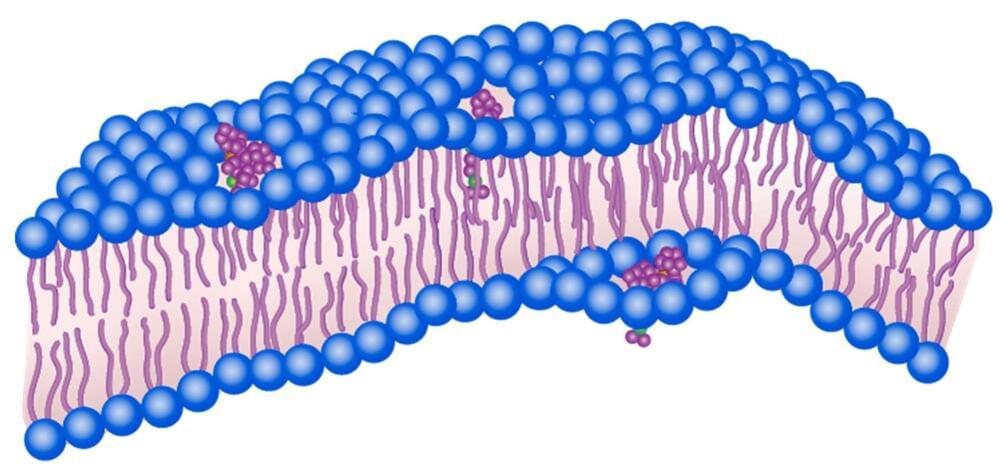
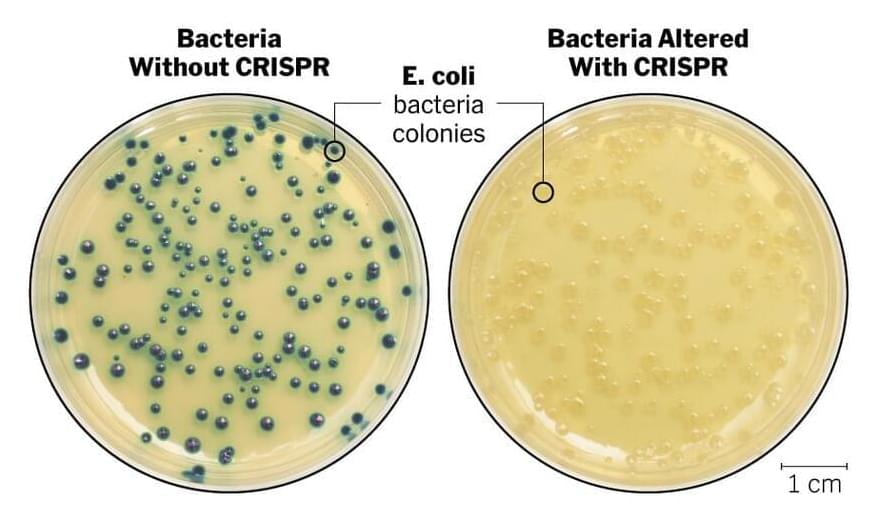
Science isn’t all lab coats and test tubes. Beautiful visuals can engage people—especially students—and inspire them to learn about science more broadly.

Scientists have often invited the public to see what they see, using everything from engraved woodblocks to electron microscopes to explore the complexity of the scientific enterprise and the beauty of life. Sharing these visions through illustrations, photography, and videos has allowed laypeople to explore a range of discoveries, from new bird species to the inner workings of the human cell.

As a neuroscience and bioscience researcher, I know that scientists are sometimes pigeonholed as white lab coats obsessed with charts and graphs. What that stereotype misses is their passion for science as a mode of discovery. That’s why scientists frequently turn to awe-inducing visualizations as a way to explain the unexplainable.

The BioArt Scientific Image and Video Competition, administered by the Federation of American Societies for Experimental Biology images with the public that are rarely seen outside the laboratory in order to introduce and educate laypeople about the wonder often associated with biological research. BioArt and similar contests reflect the lengthy history of using imagery to elucidate science.

10 Best AI Courses: Beginner to Advanced

Learn Artificial Intelligence with these online courses

#artificialintelligence … See more.


Are you looking for the Best Certification Courses for Artificial Intelligence? If yes, then your search will end after reading this article. In this article, I will discuss the 10 Best Certification Courses for Artificial Intelligence. So, give your few minutes to this article and find out the Best AI Certification Course for you.

Artificial Intelligence is changing our lives. We can see the evolution of AI almost in every industry like finance, healthcare, education, transportation, and more. The best examples of Artificial Intelligence are Self-Driven Cars, Google Assistant/Siri/Alexa, Product Recommendations, Chatbots, Facebook Image Recognition, GPS, Pandora, BLUE RIVER, and Plantix.

/* */