Apollo’s successful computing software was optimized to deal with unknown problems and to interrupt one task to take on a more important one.
Category: computing – Page 532
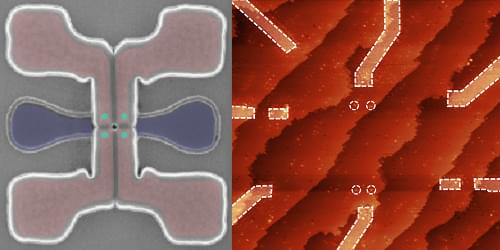


New thermal management technology for electronic devices reduces bulk while improving cooling
Electronic devices generate heat, and that heat must be dissipated. If it isn’t, the high temperatures can compromise device function, or even damage the devices and their surroundings.
Now, a team from UIUC and UC Berkeley have published a paper in Nature Electronics detailing a new cooling method that offers a host of benefits, not the least of which is space efficiency that offers a substantial increase over conventional approaches in devices’ power per unit volume.
Tarek Gebrael, the lead author and a PhD student in mechanical engineering, explains that the existing solutions suffer from three shortcomings. “First, they can be expensive and difficult to scale up,” he says. Heat spreaders made of diamond, for example, are sometimes used at the chip level, but they aren’t cheap.

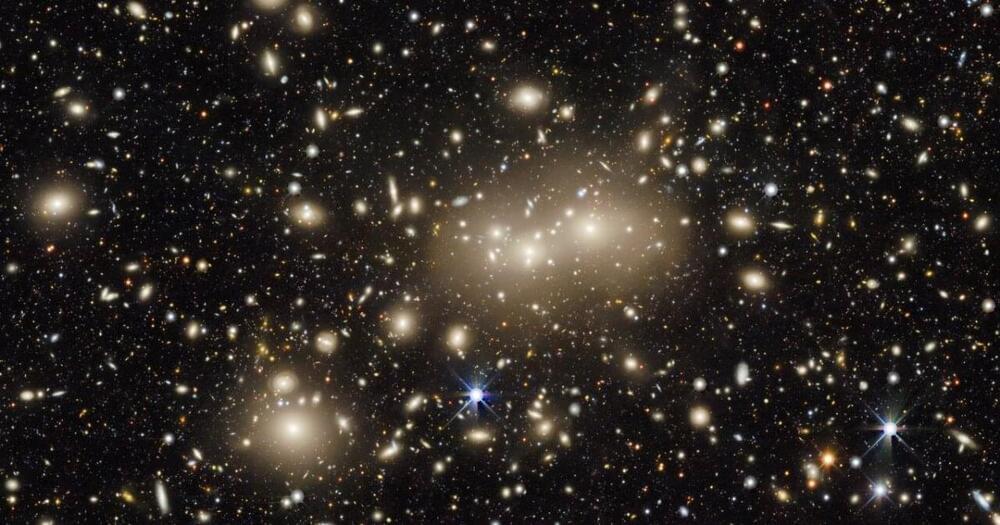
Astronomers create map of more than 1 billion galaxies
Recently an international collaboration of astronomers released the most accurate map yet of all the matter in the universe, to help to understand dark matter, and now this is being joined by the largest two-dimensional map of the entire sky, which can help in the study of dark energy. A data release from the Dark Energy Spectroscopic Instrument (DESI) Legacy Imaging Survey shared the results from six years of scanning almost half of the sky, totaling one petabyte of data from three different telescopes.
The reason that such large-scale data is required to study dark energy and dark matter is that these can only be detected due to their effects on ordinary matter — so researchers need to look at many galaxies to track how these otherwise unseen forces are adding mass or affecting the interaction between galaxies. This particular map was created to help scientists identify 40 million target galaxies which will be studied as part of the DESI Spectroscopic Survey.
To make the map as comprehensive as possible, the researchers included data taken in the near-infrared wavelength as well as the visible light wavelength. That is important as the light from distant galaxies appears redshifted, or shifted toward the red end of the spectrum, due to the expansion of the universe. “The addition of near-infrared wavelength data to the Legacy Survey will allow us to better calculate the redshifts of distant galaxies, or the amount of time it took light from those galaxies to reach Earth,” explained one of the researchers, Alfredo Zenteno of NSF’s NOIRLab, in a statement.
How Star Collisions Forge the Universe’s Heaviest Elements
Bits of the stars are all around us, and in us, too. About half of the abundance of elements heavier than iron originates in some of the most violent explosions in the cosmos. As the universe churns and new stars and planets form out of old gas and dust, these elements eventually make their way to Earth and other worlds. After 3.7 billion years of evolution on our planet, humans and many other species have come to rely on them in our bodies and our lives. Iodine, for instance, is a component of hormones we need to control our brain development and regulate our metabolism. Ocean microplankton called Acantharea use the element strontium to create intricate mineral skeletons. Gallium is critical for the chips in our smartphones and our laptop screens. And the mirrors of the JWST are gilded with gold, an element useful for its unreactive nature and ability to reflect infrared light (not to mention its popularity in jewelry).
Scientists have long had a basic idea of how these elements come to be, but for many years the details were hazy and fiercely debated. That changed recently when astronomers observed, for the first time, heavy-element synthesis in action. The process, the evidence suggests, went something like this.
Eons ago a star more than 10 times as massive as our sun died in a spectacular explosion, giving birth to one of the strangest objects in the universe: a neutron star. This newborn star was a remnant of the stellar core compressed to extreme densities where matter can take forms we do not understand. The neutron star might have cooled forever in the depths of space, and that would have been the end of its story. But most massive stars live in binary systems with a twin, and the same fate that befell our first star eventually came for its partner, leaving two neutron stars circling each other. In a dance that went on for millennia, the stars spiraled in, slowly at first and then rapidly. As they drew closer together, tidal forces began to rip them apart, flinging neutron-rich matter into space at velocities approaching one-third the speed of light. At last the stars merged, sending ripples through spacetime and setting off cosmic fireworks across the entire electromagnetic spectrum.

Samsung unveils its own solution for satellite-based smartphone communication
Earlier today, Samsung announced its own solution for satellite communication on smartphones. The company unveiled the 5G non-terrestrial networks (NTN) modem so phones can communicate with satellites in locations where there is no cellular network connectivity.
The company said that it aims to integrate this tech into its own Exynos chip, which is used in a lot of Samsung smartphones — but not the current flagship device, the Samsung Galaxy S23. The Korean tech giant describes this tech as using “satellites and other non-terrestrial vehicles” to provide connectivity in remote areas.
The move follows Apple, which launched satellite connectivity with iPhone 14 and 14 Pro for off-grid connectivity. The company first made this tech available in the U.S. and Canada, later expanding it to France, Germany, Ireland and the U.K. Apple relies on Globalstar’s satellite network.
Quantum bits: AWS releases hardware design tool; Google reduces error rates
Today’s news from the frontier of quantum computing includes Amazon Web Services’ release of cloud-based simulation software for modeling the electromagnetic properties of quantum hardware, Google’s latest technological advance aimed at lowering the error rate of quantum calculations, and new recommendations about the public sector’s role on the frontier.
Amazon opens a ‘Palace’ for designers
Amazon Web Services is introducing an open-source software platform called Palace (which stands for Pa rallel, La rge-Scale Computational Electromagnetics) that can perform 3D simulations of complex electromagnetic models and enable the design of quantum computing hardware. The code is available via GitHub and can be used in conjunction with AWS ParallelCluster.
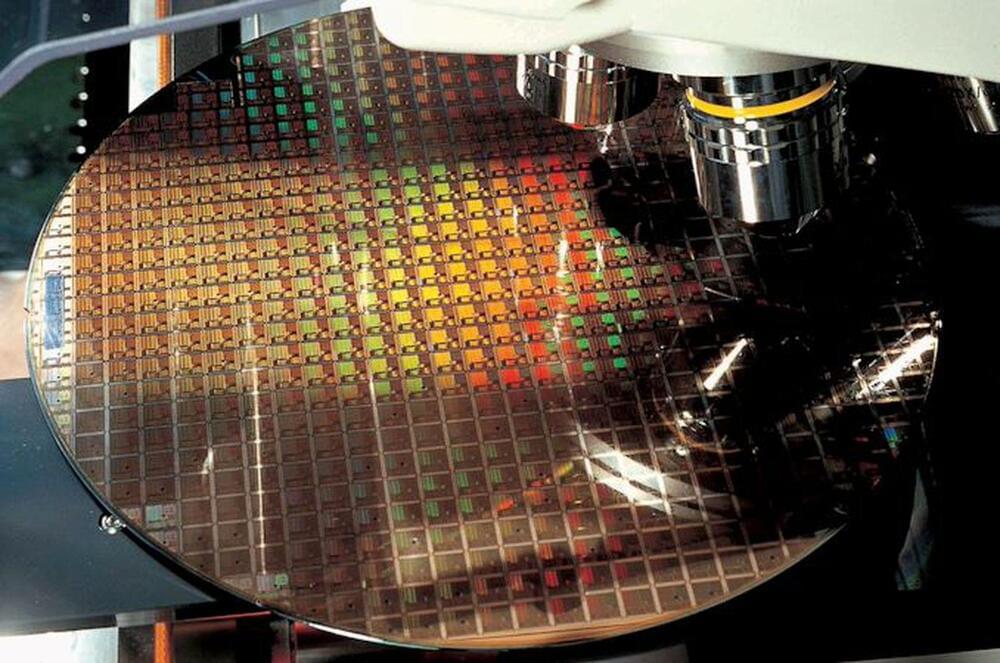
Apple Orders Entire Supply of TSMC’s 3nm Chips for iPhone 15 Pro and M3 Macs
Apple has reportedly secured all available orders for N3, TSMC’s first-generation 3-nanometer process that is likely to be used in the upcoming iPhone 15 Pro lineup as well as new MacBooks scheduled for launch in the second half of 2023.
According to a paywalled DigiTimes report, Apple has procured 100% of the initial N3 supply, which is said to have a high yield, despite the higher costs involved and the decline in the foundry’s utilization rate in the first half of 2023. Mass production of TSMC’s 3nm process began in late December, and the foundry has scaled up process capacity at a gradual pace with monthly output set to reach 45,000 wafers in March, according to the report’s sources.