Toggle light / dark theme

Billionaires are investing in brain-computer-interface systems. Here’s why

The technology has significantly progressed in the past 50 years.

Earlier this month, we reported that Bill Gates and Jeff Bezos-backed foundations (Gates Frontier and Bezos Expeditions) joined other companies.

A fifty year history.


1, 2, 3

Finally, Peter Thiel, a billionaire cofounder of PayPal, invested last year in an older BCI startup called Utah’s Blackrock Neurotech that has announced it hopes to apply for Food and Drug Administration approval soon. What is behind this popular rush to support BCI firms?

Scientists can now “see” things without “looking” at them using a new quantum technique

“We also demonstrated that even very low-power microwave pulses can be detected efficiently using our protocol.”

A team of scientists has devised a means of using quantum mechanics to “view” objects indirectly. The new method could improve measurements for quantum computers and other systems. It brings together the quantum and classical worlds.

We “see” things via the complex interaction of light photons within specialized cells in the retina of our eyes. However, some scientists have speculated that a similar phenomenon could be replicated without photo-absorption or without any light.

Big dynorphin may protect neurons from the accumulation of Alzheimer’s-associated amyloid

𝐀𝐥𝐳𝐡𝐞𝐢𝐦𝐞𝐫’𝐬 𝐃𝐢𝐬𝐞𝐚𝐬𝐞


One of the main features of Alzheimer’s disease is that the β-amyloid peptide, a molecule found inside neurons that has many diverse functions, begins to fold incorrectly and accumulates. This process, which ends up causing neuronal death, is linked to a series of other cellular alterations, making it difficult to determine whether they are the cause or the consequence. An example is the case of the deregulation of a type of dynorphin.

Dynorphins are the body’s own opioid peptides, which play a key role in many brain pathways. They are located in different areas of the brain, such as the hippocampus, amygdala or hypothalamus, and are involved in memory processes, emotion control, stress and pain, and among other processes. In addition, several studies have shown their involvement in epilepsy, stroke, addictions, depression and schizophrenia.

Now, in a study published in the Computational and Structural Biotechnology Journal, a research group led by Àlex Perálvarez-Marín, researcher in the Department of Biochemistry and Molecular Biology and the UAB Institut de Neurociències, has studied from computer models and which interactions may exist between β-amyloid peptide and big dynorphin, to determine its role in β-amyloid accumulation.

Team develops graphene-based nanoelectronics platform

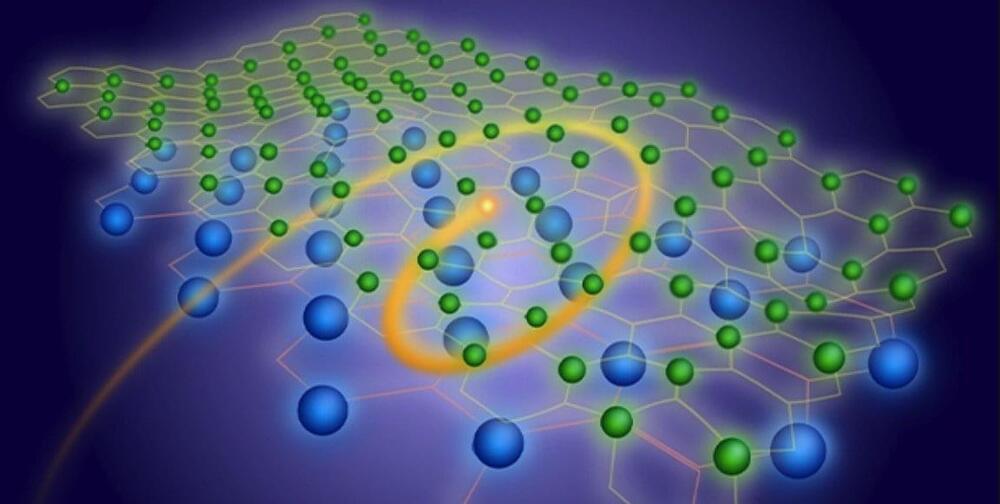
A pressing quest in the field of nanoelectronics is the search for a material that could replace silicon. Graphene has seemed promising for decades. But its potential has faltered along the way, due to damaging processing methods and the lack of a new electronics paradigm to embrace it. With silicon nearly maxed out in its ability to accommodate faster computing, the next big nanoelectronics platform is needed now more than ever.

Walter de Heer, Regents’ Professor in the School of Physics at the Georgia Institute of Technology, has taken a critical step forward in making the case for a successor to silicon. De Heer and his collaborators have developed a new nanoelectronics platform based on —a single sheet of carbon atoms. The technology is compatible with conventional microelectronics manufacturing, a necessity for any viable alternative to silicon.

In the course of their research, published in Nature Communications, the team may have also discovered a new . Their discovery could lead to manufacturing smaller, faster, more efficient and more sustainable computer chips, and has potential implications for quantum and high-performance computing.

The cloud out of space? Scientists scrambling to prevent global data storage crisis

BIRMINGHAM, United Kingdom — Servers around the world could soon face a massive data storage crunch, thanks to the “mind-blowing amount” of information people store digitally every day.

Researchers from Aston University say the global datasphere — the total amount of data worldwide — will increase by 300 percent within the next three years. Currently, all of this data sits in banks of servers stored in huge warehouses (data centers).

Unfortunately, the answer to creating more space in “the cloud” is not just to build more server warehouses. The Aston team says data centers already use up 1.5 percent of the world’s electricity every year. That makes endlessly building new facilities just for massive servers an unsustainable practice.

Research team develops direct laser writing system for high-resolution, high-efficiency nanofabrication

Peripheral photoinhibition (PPI) direct laser writing (DLW) is a lithography technique used to fabricate intricate 3D nanostructures that are widely employed in photonics and electronics. PPI-DLW uses two beams, one to excite the substrate and cause polymerization and the other to inhibit and quench the excitation at the edges. The capacity is limited in some systems, which can be improved through multifocal arrays. However, computing these beams is both time-and memory-intensive.

Recently, a group of researchers from Zhejiang University developed a parallel peripheral-photoinhibition lithography (P3L) system that can achieve higher efficiency nanoscale fabrication. Their work is published in Advanced Photonics

“The P3L system uses two channels, which allows the execution of different printing tasks and permits the system to fabricate highly complex structures with different periodicities,” says senior author Xu Liu.

/* */