Toggle light / dark theme

Scientists unveil new way to electrically control spin for ultra-compact devices using altermagnetic quantum materials

Spintronics, an emerging field of technology, exploits the spin of electrons rather than their charge to process and store information. Spintronics could lead to faster, more power-efficient computers and memory devices. However, most spintronic systems require magnetic fields to control spin, which is challenging in ultracompact device integration due to unwanted interference between components. This new research provides a way to overcome this limitation.

As published in Materials Horizons, a research team led by the Singapore University of Technology and Design (SUTD) has introduced a novel method to control electron spin using only an . This could pave the way for the future development of ultra-compact, energy-efficient spintronic devices.

Their findings demonstrate how an emerging type of magnetic material, an altermagnetic bilayer, can host a novel mechanism called layer-spin locking, thus enabling all-electrical manipulation of spin currents at room temperature.

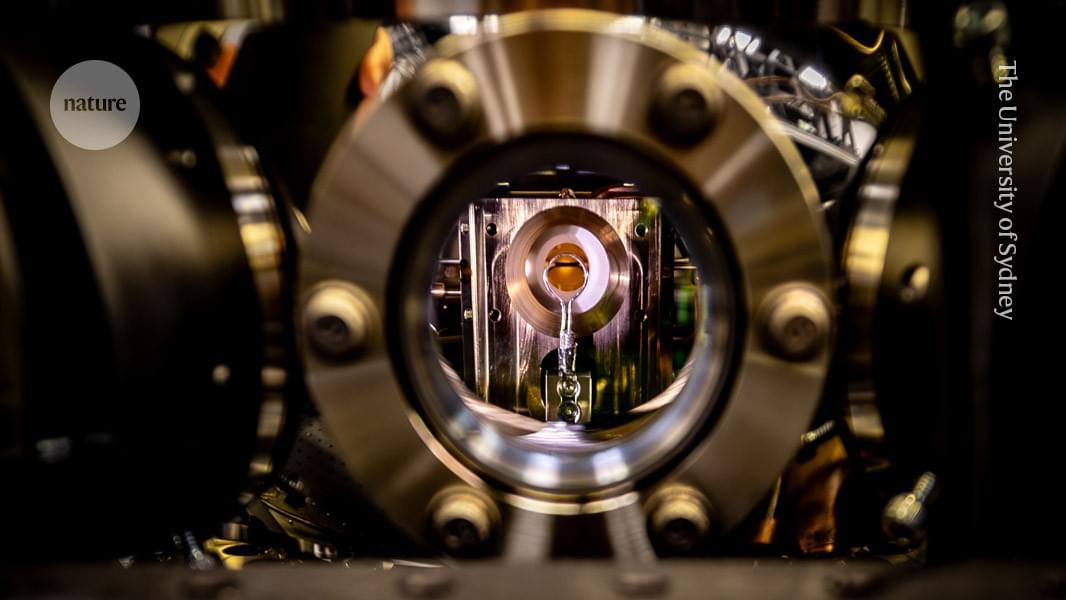
New study achieves major advance towards fault-tolerant quantum computing

A study, “Enhanced Majorana stability in a three-site Kitaev chain,” published in Nature Nanotechnology demonstrates significantly enhanced stability of Majorana zero modes (MZMs) in engineered quantum systems.

This research, conducted by a team from the University of Oxford, Delft University of Technology, Eindhoven University of Technology, and Quantum Machines, represents a major step towards fault-tolerant quantum computing.

Majorana zero modes (MZMs) are exotic quasiparticles that are theoretically immune to environmental disturbances that cause decoherence in conventional qubits. This inherent makes them promising candidates for building robust quantum computers. However, achieving sufficiently stable MZMs has been a persistent challenge due to imperfections in traditional materials.

Neuroscientists uncover the key role of dopamine in learning new motor skills

A new interdisciplinary study by researchers from the Ruth and Bruce Rappaport Faculty of Medicine and the Andrew and Erna Viterbi Faculty of Electrical and Computer Engineering at the Technion reveals a surprising insight: local release of dopamine—a molecule best known for its role in the brain’s reward system—is a key factor in acquiring new motor skills

/* */