Toggle light / dark theme

Bill Gates: The 2021 60 Minutes interview

Changing literally everything to get emissions to zero.


“Without innovation, we will not solve climate change. We won’t even come close,” Gates says. Anderson Cooper reports for 60 Minutes. https://cbsn.ws/3qnNDyG

Watch Full Episodes of 60 Minutes HERE: http://cbsn.ws/1Qkjo1F
Get more 60 Minutes from 60 Minutes: Overtime HERE: http://cbsn.ws/1KG3sdr.
Relive past episodes and interviews with 60 Minutes Rewind HERE: http://cbsn.ws/1PlZiGI
Follow 60 Minutes on Instagram HERE: http://bit.ly/23Xv8Ry.
Like 60 Minutes on Facebook HERE: http://on.fb.me/1Xb1Dao.
Follow 60 Minutes on Twitter HERE: http://bit.ly/1KxUsqX

Get the latest news and best in original reporting from CBS News delivered to your inbox. Subscribe to newsletters HERE: http://cbsn.ws/1RqHw7T

Get your news on the go! Download CBS News mobile apps HERE: http://cbsn.ws/1Xb1WC8

Building a corn cob—cell

Building a corn cob—cell by cell, gene by gene.


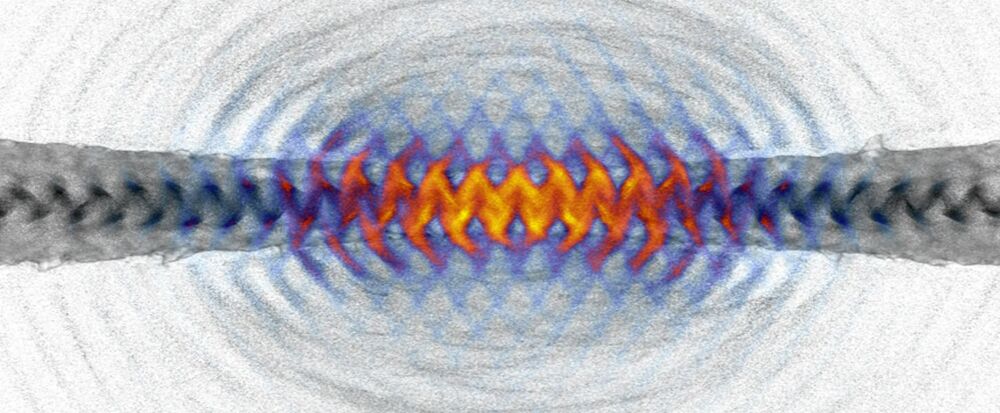
Corn hasn’t always been the sweet, juicy delight that we know today. And, without adapting to a rapidly changing climate, it is at risk of losing its place as a food staple. Putting together a plant is a genetic puzzle, with hundreds of genes working together as it grows. Cold Spring Harbor Laboratory (CSHL) Professor David Jackson worked with Associate Professor Jesse Gillis to study genes involved in corn development. Their teams analyzed thousands of individual cells that make up the developing corn ear. They created the first anatomical map that shows where and when important genes turn on and off during key steps in development. This map is an important tool for growing better crops.

New high-tech spray-on coating can make buildings, cars, and even spaceships cooler

This coating might prove useful for several sorts of applications.


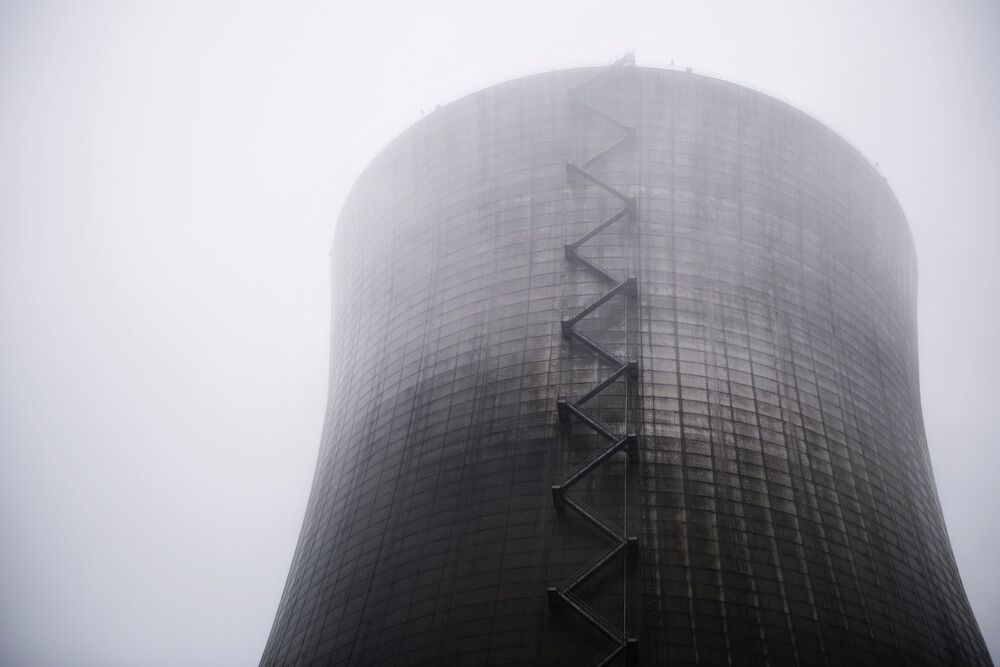
Managing temperatures in particularly hot and sunny climates can be very difficult even today. You can use air conditioning to displace the heat from inside structures and vehicles, but it sucks up so much power and can generate pollution that ultimately makes temperature problems even worse.

Elon Musk announces $100 million prize for new carbon capture tech

Things we already know: The world is growing uncomfortably warm due to humanity’s insistence on burning fossil fuels. Elon Musk is currently the wealthiest human on the planet. Yet for being among the wealthiest people on the planet, Musk’s philanthropic track record over the years has been paltry compared to the likes of Jeff Bezos. So, yeah, it did come as a bit of a surprise on Thursday when the Tesla CEO took to Twitter to announce that he plans to donate $100 million as a prize towards a winning carbon capture system.

Am donating $100M towards a prize for best carbon capture technology— Elon Musk (@elonmusk) January 212021

Details on Musk’s upcoming carbon capture competition have not been released but are expected to arrive “next week.” This is not the first time that a company has sought the public’s help with carbon capture technology, which seeks to pull this element from the atmosphere and squirrel it away to help slow the rate of human-induced climate change. In 2018, X-Prize held a similar competition and awarded five finalist teams a share of its $20 million grand prize. But with a $100 million purse on the line, Musk’s competition will not only offer five times the funding as X-Prize, it’ll also constitute his single-largest philanthropic investment to date (10 times the amount of his second-largest donations so far). Of course, this is far from the first effort to collect and convert atmospheric CO2 into consumer products.

Space station detectors found the source of weird ‘blue jet’ lightning

Blue jets have been observed from the ground and aircraft for years, but it’s hard to tell how they form without getting high above the clouds. Now, instruments on the International Space Station have spotted a blue jet emerge from an extremely brief, bright burst of electricity near the top of a thundercloud, researchers report online January 20 in Nature.

Understanding blue jets and other upper-atmosphere phenomena related to thunderstorms, such as sprites (SN: 6/14/02) and elves (SN: 12/23/95), is important because these events can affect how radio waves travel through the air — potentially impacting communication technologies, says Penn State space physicist Victor Pasko, who was not involved in the work.

Cameras and light-sensing instruments called photometers on the space station observed the blue jet in a storm over the Pacific Ocean, near the island of Nauru, in February 2019. “The whole thing starts with what I think of as a blue bang,” says Torsten Neubert, an atmospheric physicist at the Technical University of Denmark in Kongens Lyngby. That “blue bang” was a 10-microsecond flash of bright blue light near the top of the cloud, about 16 kilometers high. From that flashpoint, a blue jet shot up into the stratosphere, climbing as high as about 52 kilometers over several hundred milliseconds.

Venus may have once been habitable: Can we make it that way again?

From planet of love to scorching Hell planet—the image of Venus has changed considerably since ancient times, because it is no longer just the third brightest natural object in Earth’s skies. The ancients equated the mysterious third light with the goddess of love; in Greece that was Aphrodite, whom the Romans conflated with the goddess Venus. That’s where our closest planetary neighbor got its name and why Men are from Mars, Women are from Venus worked as a best-selling title, as recently as 1992, and still sells. But since the mid-20th century, we’ve known in detail why a paradise Venus is not. Average temperature on the surface is a scorching 462° Celsius (864° Fahrenheit) while atmospheric pressure is 90 times that of Earth at sea level, or equivalent to being at 900 meters depth in Earth’s oceans.

A handful of Russian landing probes have survived for several minutes on the planet’s surface before being cooked and crushed, but the conditions are unquestionably inhospitable for life forms. Consequently, you do not hear about astrobiologists searching for native microorganisms on the Venusian surface the way you hear about the search for microorganisms on Mars. Nevertheless, since the late 20th century, planetary scientists have speculated that Venus could have boasted a much more hospitable environment in the distant past, perhaps 2–3 billion years ago. That’s around the time that Earth was accumulating oxygen in its oceans and atmosphere. At that point in history, Venus and Earth may have had similar climates.

What’s been in the news lately is a study involving computer climate simulations in which data from NASA’s Magellan mission to Venus were found to support the idea of a once habitable Venus. The study involved researchers from NASA, Uppsala University in Sweden, Columbia University, and the Planetary Science Institute in Tucson, AZ.

Ten computer codes that transformed science

Although no list like this can be definitive, we polled dozens of researchers over the past year to develop a diverse line-up of ten software tools that have had a big impact on the world of science. You can weigh in on our choices at the end of the story.


From Fortran to arXiv.org, these advances in programming and platforms sent biology, climate science and physics into warp speed.

/* */