Toggle light / dark theme

Yale Research Identifies Causes of Cancer

A team of researchers led by Yale University.

Established in 1,701, Yale University is a private Ivy League research university in New Haven, Connecticut. It is the third-oldest institution of higher education in the United States and is organized into fourteen constituent schools: the original undergraduate college, the Yale Graduate School of Arts and Sciences and twelve professional schools. It is named after British East India Company governor Elihu Yale.

Rare Isotopes for the Choosing

The Facility for Rare Isotope Beams opens its doors to experiments that will study the formation of heavy elements in the Universe and provide critical tests of nuclear theories.

The nuclear physics community is hailing the kickoff of a long-awaited facility for producing beams of radioactive isotopes, with a cohort of users gearing up for the first experiments. The Facility for Rare Isotope Beams (FRIB) at Michigan State University opens its doors to experimenters this week. FRIB is expected to deliver the widest range of rare isotopes of any existing facility, including many never-before-synthesized isotopes. The facility will also allow researchers to control the energies of the isotope beams so that they match those relevant to nuclear processes in stars and supernovae.

Rare isotopes get their name from their scarcity—these unstable nuclei decay radioactively and thus cannot be found naturally on Earth. But making sizable quantities of these elements in a lab will allow scientists to tackle important open problems in physics. Current nuclear theories, for instance, can’t describe many nuclei, and rare isotopes provide extreme cases on which to test why such theories fail. Rare isotopes are also relevant to the cosmic nucleosynthesis of heavy elements, a process for which there isn’t yet a satisfactory explanation. On the applied side, radioactive isotopes can be useful for medical imaging, cancer treatment, and other industrial applications.

Eating Sea Squirts May Reverse the Signs of Aging

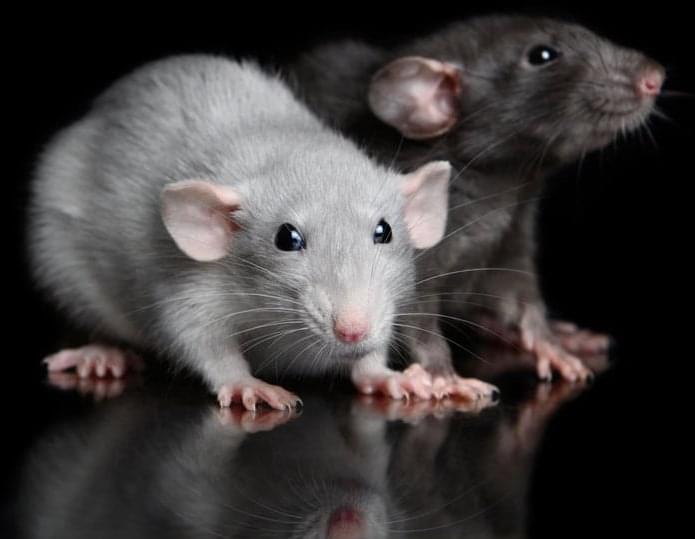
Summary: Supplementing a diet with Ascidiacea, or sea squirts, reversed some of the main signs of aging in mouse models.

Source: Xi’an jiaotong-Liverpool University.

If you have ever looked in the mirror and seen graying hair and wrinkles or forgotten the name of a close friend, you’d be forgiven for wishing for a pill that could slow or even reverse the effects of aging.

Gene Editing a “Factory Reset” for the Brain To Cure Anxiety and Excessive Drinking

Gene editing reverses brain genetic reprogramming caused by adolescent binge drinking.

Gene editing may be a potential treatment for anxiety and alcohol use disorder in adults who were exposed to binge drinking in their adolescence, according to the findings of an animal study published on May 4, 2022, in the journal Science Advances.

The study was issued by researchers from the University of Illinois Chicago (UIC) who have been studying the effects of early-life binge drinking on health later in life.

Dr Holly Ganz, PhD — CSO, AnimalBiome — Modulating Pet Gut Microbiomes For Longer And Happier Lives

Modulating pet gut microbiomes for longer, healthier & happier lives — dr. holly ganz, CSO and co-founder, animalbiome.


Dr. Holly Ganz, Ph.D. is Chief Science Officer And Co-Founder of AnimalBiome (https://animalbiome.com/home), a company with a goal of helping cats and dogs lead longer, happier lives by using science to unlock the mysteries of the pet gut microbiome, providing access to genetic data on the health of the gut microbiome, better ways to log health and diet records, and offering remedies to treat chronic digestive disorders.

Dr. Ganz received her PhD from UC Davis Entomology and Evolutionary Ecology, an MS from the Scripps Institution of Oceanography in Marine Biology, UC San Diego and a BS in Biology from George Washington University and has studied the interaction between microbes and their hosts for over 20 years.

After receiving her doctorate, she was awarded an international postdoctoral fellowship from the National Science Foundation to study how genetics affects the spread of fungal infections in animal populations in Switzerland. Subsequently she was a postdoctoral fellow at UC Berkeley studying how bacterial pathogens survive in soil to infect African wildlife.

Dr. Ganz has published more than 20 papers in the peer-reviewed scientific literature.

A Physiology Clock for Human Aging: BP and FEV1 As Top Predictors

Join us on Patreon!
https://www.patreon.com/MichaelLustgartenPhD

Papers referenced in the video:
A Physiology Clock for Human Aging (preprint)
https://www.biorxiv.org/content/10.1101/2022.04.14.488358v1

Predicting Age by Mining Electronic Medical Records with Deep Learning Characterizes Differences between Chronological and Physiological Age.
https://www.ncbi.nlm.nih.gov/pmc/articles/PMC5716867/

Spirometry Reference Equations for Central European Populations from School Age to Old Age.
https://pubmed.ncbi.nlm.nih.gov/23320075/

An Integrated, Multimodal, Digital Health Solution for Chronic Obstructive Pulmonary Disease: Prospective Observational Pilot Study.
https://pubmed.ncbi.nlm.nih.gov/35142291/

CRISPR Technology in Gene-Editing-Based Detection and Treatment of SARS-CoV-2

Outbreak and rapid spread of coronavirus disease (COVID-19) caused by coronavirus acute respiratory syndrome (SARS-CoV-2) caused severe acute respiratory syndrome (SARS-CoV-2) that started in Wuhan, and has become a global problem because of the high rate of human-to-human transmission and severe respiratory infections. Because of high prevalence of SARS-CoV-2, which threatens many people worldwide, rapid diagnosis and simple treatment are needed. Genome editing is a nucleic acid-based approach to altering the genome by artificially changes in genetic information and induce irreversible changes in the function of target gene. Clustered, regularly interspaced short palindromic repeats (CRISPR/Cas) could be a practical and straightforward approach to this disease. CRISPR/Cas system contains Cas protein, which is controlled by a small RNA molecule to create a double-stranded DNA gap. Evidence suggested that CRISPR/Cas was also usable for diagnosis and treatment of SARS-CoV-2 infection. In this review study, we discoursed on application of CRISPR technology in detection and treatment of SARS-CoV-2 infection. Another aspect of this study was to introduce potential future problems in use of CRISPR/Cas technology.

Coronavirus disease (COVID-19) was spread in December 2019 and was recognized as a zoonotic disease (Drosten et al., 2017; Andersen et al., 2020). Severe acute respiratory syndrome (SARS) virus was detected in sputum samples in 2003, and advanced stages in fecal samples may have been transmitted to humans by an intermediate host such as bats and civets (Wang and Eaton, 2007; Graham and Baric, 2010). Severe acute respiratory syndrome coronavirus-2 (SARS-CoV-2) can be transmitted from an unknown carrier to a healthy person who could infect many people. SARS-CoV-2 resulted in pneumonia in Wuhan, China, with various symptoms reported. The disease has developed into a pandemic (Wu C. et al., 2020; Wu D. et al., 2020; Guan et al., 2020). Appropriate methods could treat and control the disease. CRISPR/Cas9 was first recognized as a microbial immune system through which these organisms acquire immunity to invading viruses and plasmids (Garneau et al., 2010).

/* */