Though previous studies have identified brain regions that are involved in moral behavior and moral judgement, little is known about how brain activity underpins moral inconsistency.
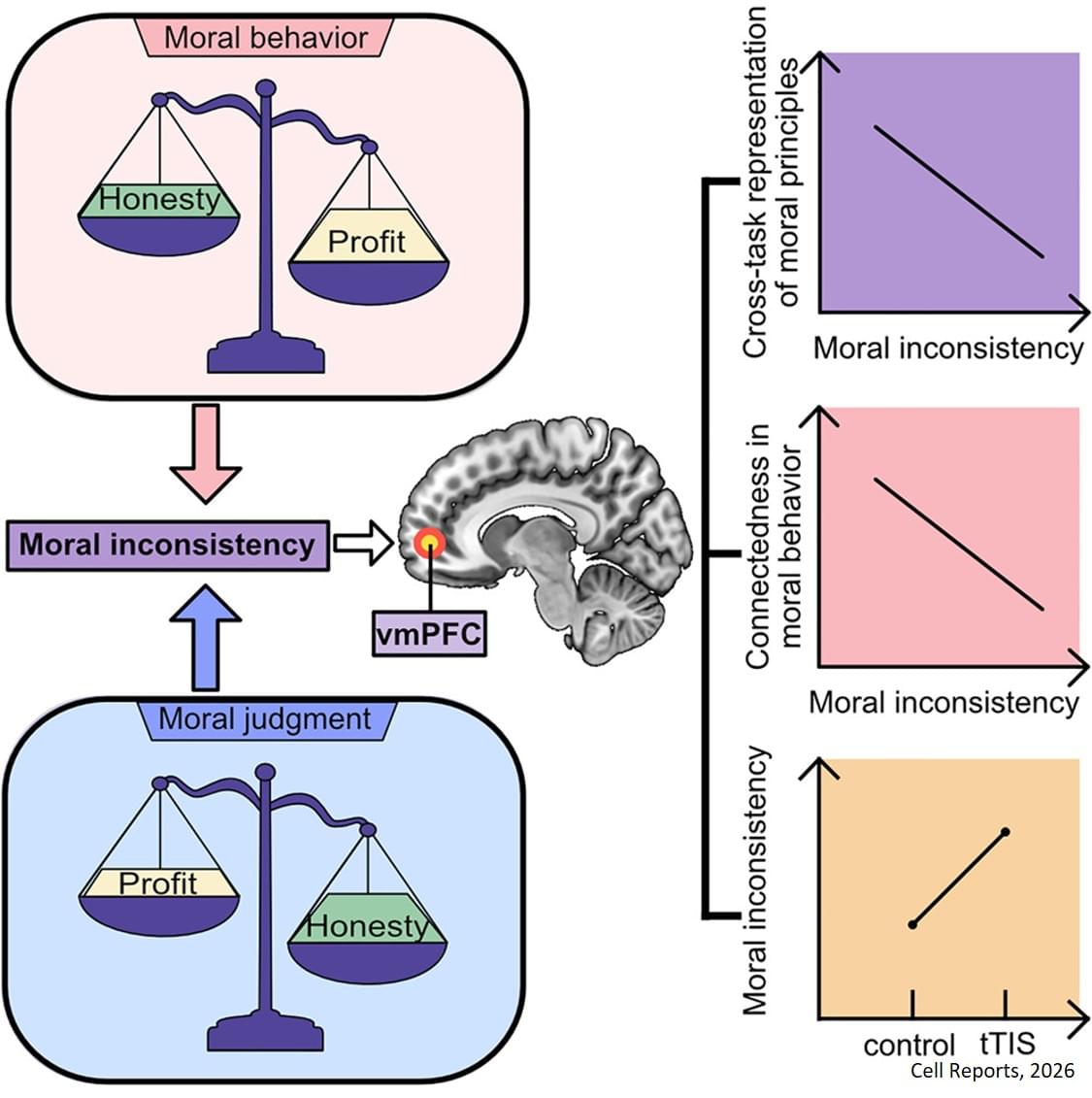
To identify brain regions associated with moral inconsistency, the researchers used fMRI imaging to scan people’s brains during a task that required them to weigh honesty and profit. Participants could earn more money by being dishonest, but they were also asked to rate their own behavior on a 10-point scale from “extremely immoral” to “extremely moral.” The team also monitored the participants’ brain activity while they judged the morality of other people undertaking the same task.
In people who were morally consistent—meaning, they judged themselves and others by the same moral standards—the vmPFC was activated similarly during both the behavioral and judgement tasks. However, in morally inconsistent participants—those who judged other people’s cheating as immoral but rated their own cheating more leniently—the vmPFC was less active during the behavioral task and less connected to other brain regions involved in decision making and morality.
To examine whether vmPFC activity plays a causal role in moral inconsistency, the researchers stimulated some participants’ vmPFCs via a non-invasive method called transcranial temporal interference stimulation (tTIS) before they undertook the behavioral and judging tasks. They showed that vmPFC stimulation resulted in higher levels of moral inconsistency compared to participants who received mock stimulation.
These results suggest that people who are morally inconsistent don’t make use of their vmPFC to integrate information when making behavioral decisions, the researchers say. “Individuals exhibiting moral inconsistency are not necessarily blind to their own moral principles; they are just biologically failing to consider and apply them in their own moral behavior,” says the author. ScienceMission sciencenewshighlights https://sciencemission.com/Moral-inconsistency