Toggle light / dark theme

Get the latest international news and world events from around the world.

Log in for authorized contributors

How worried should you be about an asteroid smashing into Earth?

Somewhere, out in the cold depths of space, there is a space rock that could destroy a large chunk of life on Earth. Is this fate inevitable? Could we find a way to stop it, or will we eventually suffer the same fate as the dinosaurs? And should this existential threat be keeping you up at night? Here’s what we know.

The asteroid that killed the dinosaurs 66 million years ago was at least 10 kilometres across, big enough to cause megatsunamis, ignite enormous forest fires and darken the skies the world over. Asteroids of that size are estimated to hit Earth about every 60 million years, based on the planet’s crater record. For the next size class down, asteroids about 1 kilometre across, estimates suggest they hit Earth about every million years, and the most recent one was about 900,000 years ago. Those numbers are enough to make you nervous.

But one of the things that sets humanity apart from the dinosaurs is our ability to look out into space and interpret what we see there. Naturally, researchers around the world have used this ability to attempt to learn how many asteroids are out there and what proportion of them are on trajectories that could be dangerous.

Image: angel_nt/Getty Images.


The dinosaurs were wiped out by an asteroid, but does that mean we risk suffering the same fate — and should you be worried about the possibility? Leah Crane sets the matter straight.

By Leah Crane

Interplay between cancer cell lipotypes and disease states

Lipid metabolism in cancer.

Cancer cells exhibit distinct lipotypes to sustain functional states crucial for tumorigenesis.

Various lipid metabolism components like biosynthesis, uptake, storage, and degradation of lipids contribute to cancer cell fitness.

Cancer cells dynamically transition across lipotypes under microenvironmental stress.

Targeting essential nodes in lipid metabolism may offer novel cancer therapeutics. sciencenewshighlights ScienceMission https://sciencemission.com/cancer-cell-lipotypes


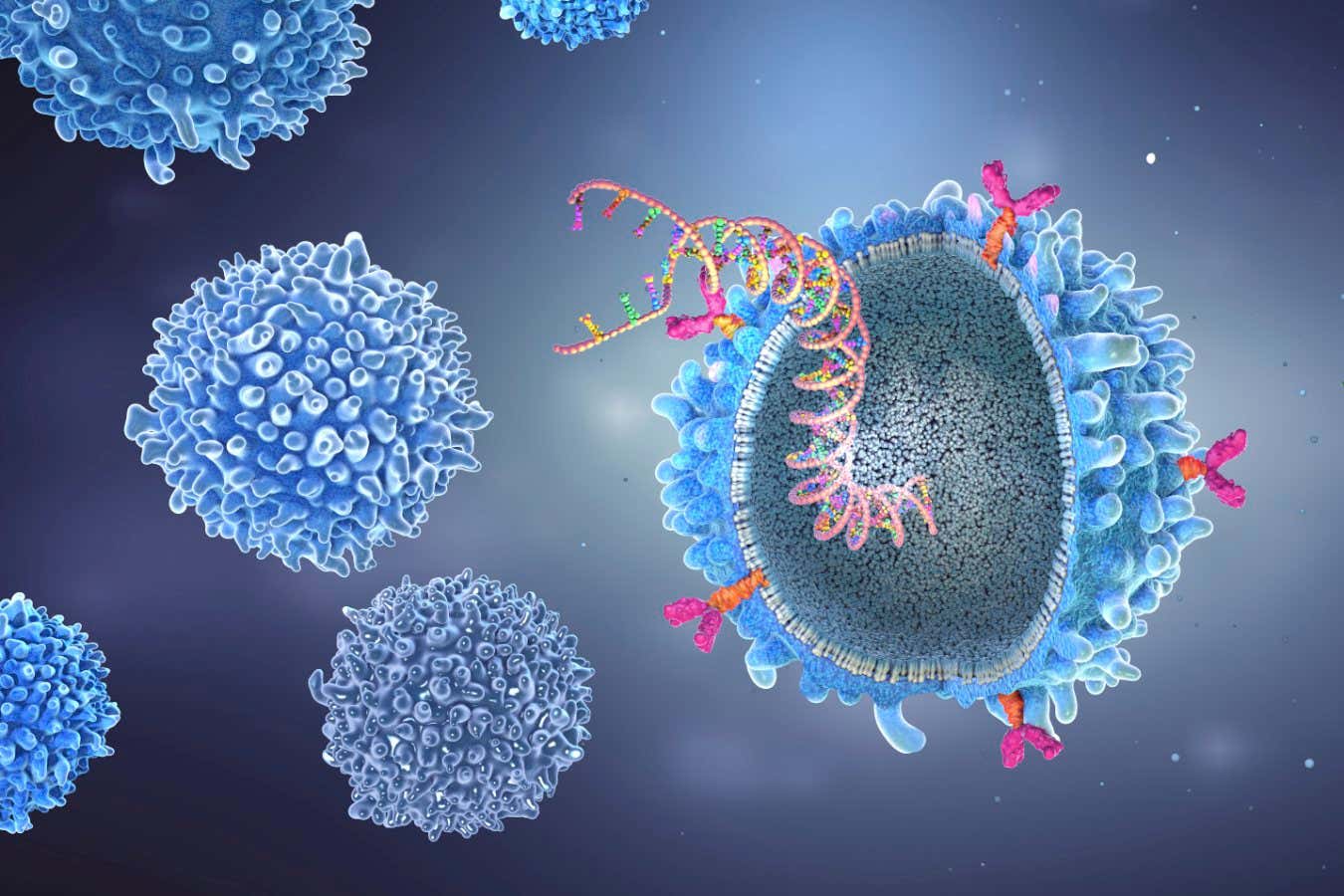
While the initial transformation of cancer cells is driven by genetic alterations, tumor cell behaviors and functional states are dynamically regulated by cell-intrinsic factors including proteins, metabolites and lipids, and extrinsic microenvironmental factors. Emerging multi-omics technologies highlighted that cancer cells exhibit distinct lipidome compositions and employ specific lipid metabolic circuits for chemical conversions – collectively defined as ‘lipotypes’. We review the interplay between cancer lipotypes and cellular states, focusing on interpreting how being at different positions along the spectra of representative lipid metabolic axes influences cancerous traits. We aim to instill a system biology perspective to integrate ‘lipotypes’ into the established ‘genotype–phenotype’ framework in cancer.

Identifying Key Regulators in Odorant Receptor Trafficking

JNeurosci: Lu and Matsunami analyzed gene activity to find proteins that help odor-detecting receptors reach the cell surface. They identified three helper genes—Gfy, Clgn, and Syt1—that support receptor function as olfactory cells mature.

▶️


Odor detection in mammals is primarily mediated by odorant receptors (ORs), the largest family of G-protein-coupled receptors, expressed in olfactory sensory neurons (OSNs; [Buck and Axel, 1991][1]). However, most ORs exhibit little or no cell surface expression in nonolfactory cell types ([Lu et al., 2003][2]; [Hague et al., 2004][3]). While the accessory protein RTP1 and RTP2 enhance the expression of certain ORs, we hypothesized that additional proteins coregulated with RTP1 and RTP2 during OSN maturation may further enhance OR cell surface expression ([Saito et al., 2004][4]; [Zhuang and Matsunami, 2007][5]). To test this, we developed a computational pipeline based on publicly available single-cell transcriptomic data to create an interactive tool for exploring gene expression during OSN maturation.

One-question screen may flag hoarding in Alzheimer’s and other dementias

Researchers at the University of Colorado Anschutz have developed a simple, one-question screening tool that could help doctors quickly identify hoarding behaviors in patients with memory loss and other brain disorders. Early detection, they said, could lead to early intervention, helping to reduce safety risks, relieve caregiver stress and improve the quality of life for both patients and families.

The new tool was examined in a study published this month in The Journal of Neuropsychiatry and Clinical Neurosciences. The study was co-led by Peter Pressman, MD and Julia Schaffer, BA. The senior author is David Arciniegas, MD, professor of neurology at CU Anschutz.

“This was really born of shared observations in the memory clinic,” said Pressman, associate professor of neurology at Oregon Health & Science University who conducted the research while at CU Anschutz. “We noticed that hoarding was very common in these patients but it was not part of any screening protocols.”

Engineered protein markers read living brain gene activity in monkeys via blood

Gene therapy has been successfully used to treat a number of diseases, including immune deficiencies, hereditary blindness, hemophilia and, recently, Huntington’s disease, a fatal neurological disorder.

An advance reported in the journal Neuron adds to the technique’s growing track record of evidence supporting the view that it could unlock powerful, personalized therapies: Rice University bioengineer Jerzy Szablowski and collaborators in Vincent Costa’s lab at Emory University found that released markers of activity (RMAs) — engineered proteins designed to cross the blood-brain barrier and persist in the blood for hours at a time, providing a reliable and noninvasive way to get information about gene expression in the brain — work just as well in monkeys as they do in mice.

On the route from laboratory discovery to lifesaving treatment, large animal model studies are a critical part of the process. Most research never reaches this stage.

Bioengineered neuronal ‘circuit board’ mimics conditions of the human brain

A new bioengineered neuronal circuit board “BioConNet” allows scientists to artificially engineer human brain-like wiring at scale and can be used to engineer any possible circuit. The fully programmable, open-source system allows generation of large-scale circuits, while maintaining the ability to focus on single connections between neurons.

This is a key advance in engineering human-like neural circuits as it allows for a new level of wiring complexity compared to previous systems. BioConNet allows scientists increased control over wiring in the culture compared to existing methods such as organoids and commercially available systems. The research is published in the journal Advanced Healthcare Materials.

“By combining engineering and neurobiology with the most recent stem cell culture techniques, we can now create human-specific, functional, large-scale complex neural circuits in the lab,” said senior author, Dr. Andrea Serio, Reader in Neural Tissue Engineering, Group Leader at the UK Dementia Research Institute (UK DRI) at King’s and Senior Group Leader at the Crick.

High-Pressure Freezing EM Tomography of Entire Ribbon Synapses in the Retina

JNeurosci: Using advanced electron microscopy in rats, Zhang et al. captured 3D images of chemical synapses that perform visual computations in the retina. Their findings reveal how neural connections are structured for efficient visual signaling.

▶️


In the retina, presynaptic active zones in photoreceptors and bipolar cells are distinguished by a plate-like “ribbon” linked to the plasma membrane (PM) and surrounded by dozens of synaptic vesicles (SVs) tethered to it. SVs at the base of the ribbon, closest to the PM, are thought to constitute the readily releasable vesicle pool (RRP), i.e., SVs primed to be released 1–2 ms following stimulation. The number of SVs in the RRP is a critical synaptic parameter that influences synaptic strength and varies with light levels to enable ribbon synapses to compute visual information. Physiological RRP measurements agree well with anatomical estimates obtained via electron microscopy (EM), although EM often employs chemical fixation, which causes exocytotic artifacts that may influence RRP size.

BREAKING: A Dark Mysterious Force Just Ripped Across the Milky Way

A viral post claimed that a mysterious force passed through the Milky Way without light or warning. But what are astronomers actually observing? In this video, we break down the real science behind high-velocity gas clouds, dark matter halos, and how our galaxy continues to evolve.

Chapters:
00:00 Introduction.
00:51 DISCOVERY
03:05 SCIENTIFIC IMPORTANCE & THEORIES
05:32 IMPLICATIONS & WHAT’S NEXT
08:15 Outro.
08:39 Enjoy.

MUSIC TITLE : Starlight Harmonies.

MUSIC LINK : https://pixabay.com/music/pulses-star… our website for up-to-the-minute updates: www.nasaspacenews.com Follow us Facebook: / nasaspacenews Twitter: / spacenewsnasa Join this channel to get access to these perks: / @nspacenews #NSN #NASA #Astronomy.
Visit our website for up-to-the-minute updates:
www.nasaspacenews.com.

Follow us.
Facebook: / nasaspacenews.
Twitter: / spacenewsnasa.

Join this channel to get access to these perks:

/* */