Singularity Development Goals for 2045: The Evolution of the UN Development Goals from Millennium in 2000 to Singularity in 2045
by Lifeboat Foundation Advisory Board member José Luis Cordeiro, MBA, Ph.D.
The Genesis of Global Development Goals in the 1990s
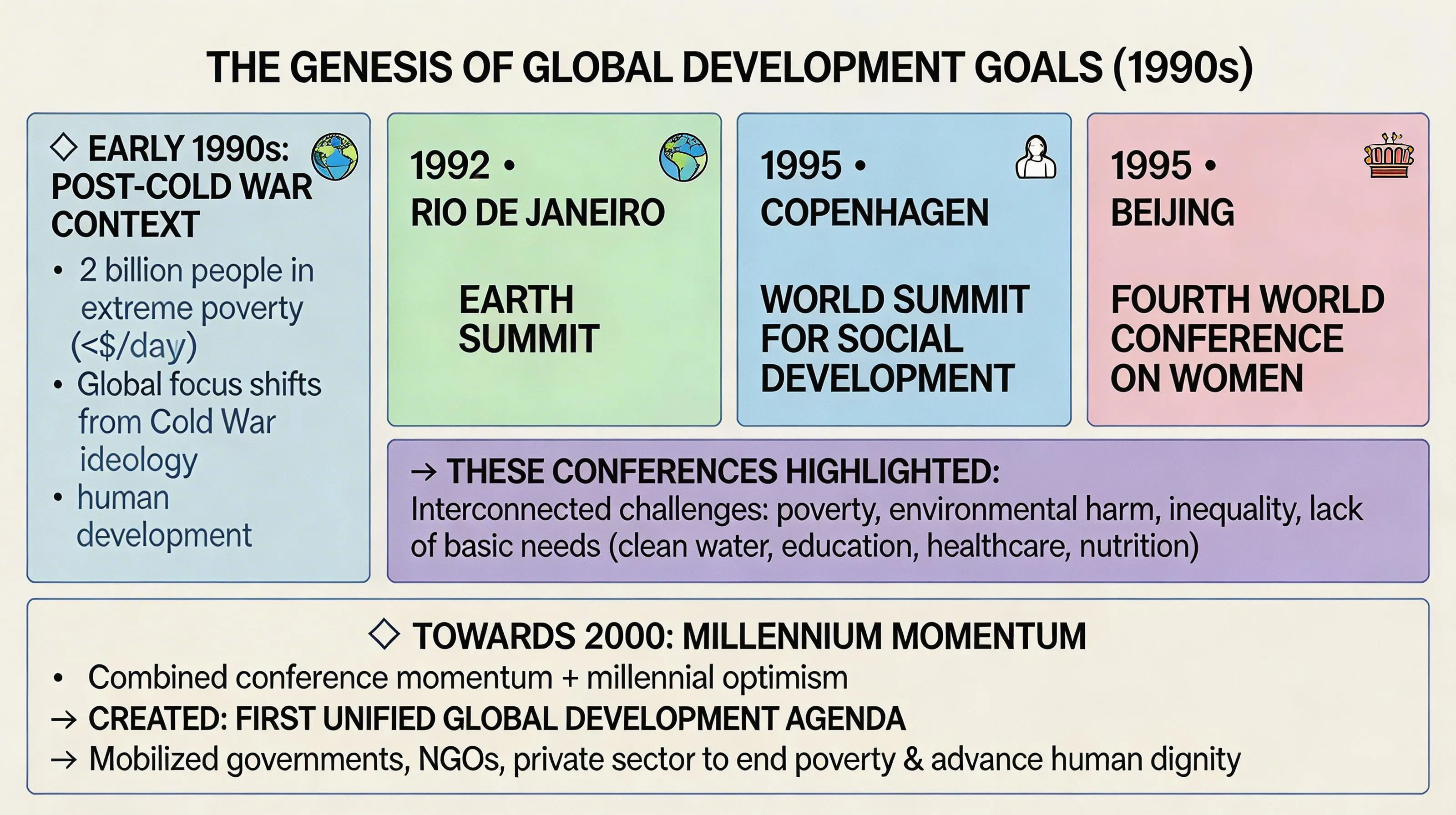
The closing decade of the twentieth century witnessed an unprecedented convergence of global consciousness regarding human development. Following the end of the Cold War, the international community found itself at a critical juncture where the ideological battles that had dominated geopolitics for half a century gave way to a renewed focus on addressing the fundamental challenges facing humanity. The 1990s were marked by stark disparities in wealth, health, and opportunity across nations, with almost 2 billion people living in extreme poverty, surviving on less than one dollar per day.
During this period, the United Nations hosted a series of landmark conferences that would shape development discourse for decades to come. The 1992 Earth Summit in Rio de Janeiro, the 1995 World Summit for Social Development in Copenhagen, and the 1995 Fourth World Conference on Women in Beijing collectively highlighted the interconnected nature of poverty, environmental degradation, inequality, and social injustice. These gatherings revealed a sobering truth: despite remarkable technological advances and economic growth in certain regions, vast swathes of humanity remained trapped in cycles of deprivation, lacking access to basic necessities such as clean water, adequate nutrition, primary education, and healthcare.
The momentum from these conferences, combined with the symbolic power of entering a new millennium, catalyzed world leaders to establish a comprehensive framework for addressing global poverty and inequality. The United Nations recognized that incremental improvements would be insufficient to tackle the magnitude of challenges facing developing nations. What was needed was a bold, unified vision with clear targets and deadlines that could mobilize governments, international organizations, civil society, and the private sector toward common objectives. This realization led to the creation of the first systematic global development agenda, one that would transform how the international community approached poverty alleviation and human development.
The millennium itself provided a powerful symbolic moment for reflection and renewal. As humanity prepared to cross the threshold into the year 2000, there was a collective desire to leave behind the injustices and failures of the past century and embrace a future defined by shared prosperity and dignity for all people. This combination of practical necessity, accumulated political will, and millennial optimism created the conditions for the United Nations to launch its most ambitious development initiative to date.
The Millennium Development Goals: 2000–2015
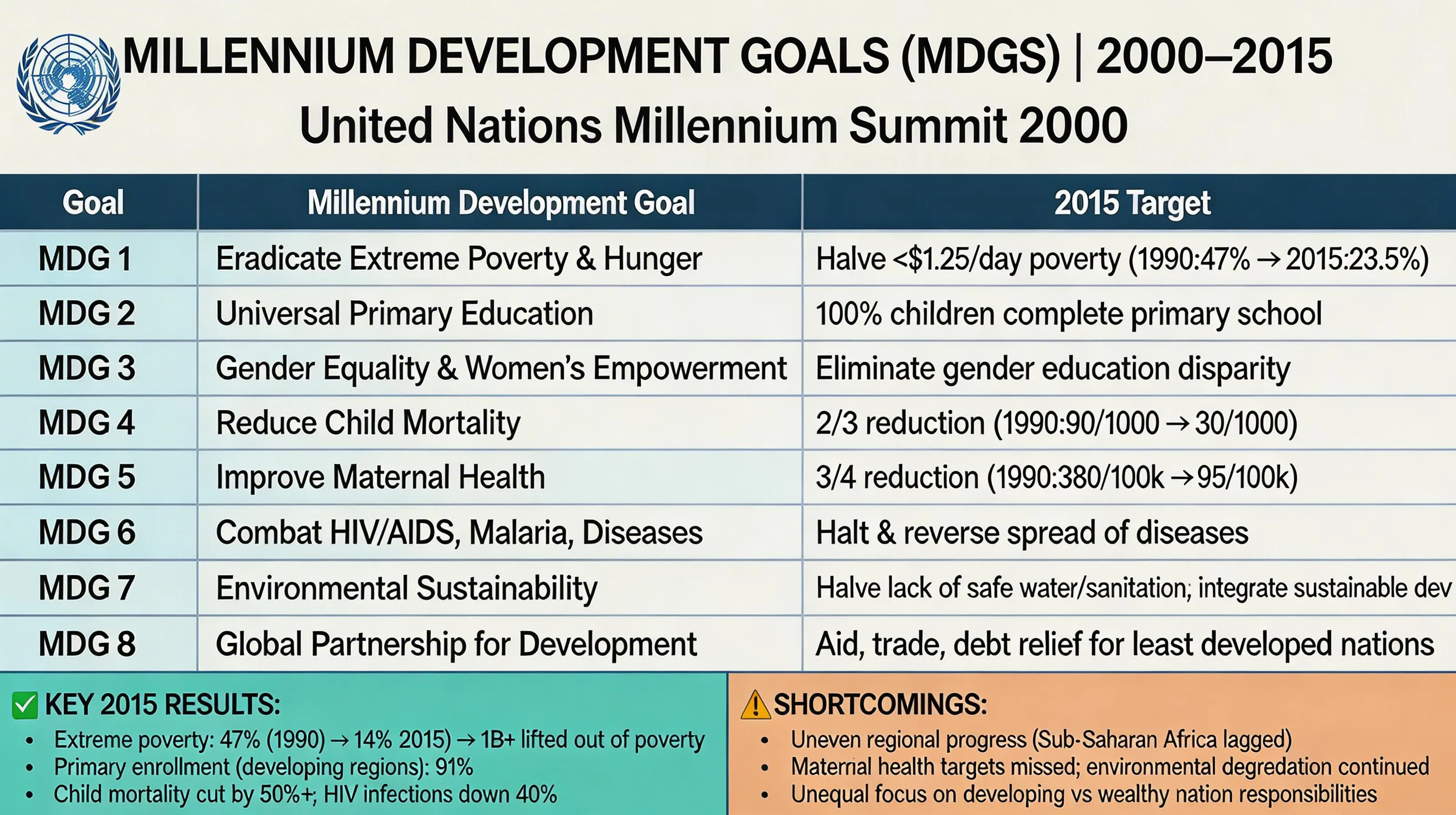
In September 2000, world leaders gathered at the United Nations Millennium Summit and adopted the Millennium Declaration, which gave birth to the Millennium Development Goals. These eight goals represented a historic commitment by 189 member states to combat poverty, hunger, disease, illiteracy, environmental degradation, and discrimination against women. The MDGs established 2015 as the target year for achievement and provided a framework with specific, measurable indicators that enabled progress tracking across countries and regions.
The MDGs marked a paradigm shift in international development by establishing clear accountability mechanisms and focusing global attention on outcomes rather than inputs. For the first time, the international community agreed upon a common agenda with specific numerical targets that could be monitored and evaluated. This approach transformed development from a nebulous aspiration into a concrete action plan with defined responsibilities for both developing and developed nations.
| Goal | Millennium Development Goal | Key Metric Target for 2015 |
|---|---|---|
| MDG 1 | Eradicate extreme poverty and hunger | Halve the proportion of people living on less than $1.25/day (from 1990 baseline of 47% to 23.5%) |
| MDG 2 | Achieve universal primary education | Ensure all children complete primary schooling (100% enrollment rate) |
| MDG 3 | Promote gender equality and empower women | Eliminate gender disparity in primary, secondary, and tertiary education |
| MDG 4 | Reduce child mortality | Reduce under-five mortality rate by two-thirds (from 1990 baseline of 90 deaths per 1,000 live births to 30) |
| MDG 5 | Improve maternal health | Reduce maternal mortality ratio by three-quarters (from 1990 baseline of 380 deaths per 100,000 live births to 95) |
| MDG 6 | Combat HIV/AIDS, malaria, and other diseases | Halt and reverse the spread of HIV/AIDS, malaria, and other major diseases |
| MDG 7 | Ensure environmental sustainability | Integrate sustainable development principles; halve proportion without access to safe drinking water and sanitation |
| Develop a global partnership for development | Address needs of least developed countries through aid, trade, and debt relief |
The implementation of the MDGs achieved remarkable results in several areas. Extreme poverty rates were more than halved globally, falling from 47% in 1990 to 14% by 2015, lifting over one billion people out of destitution. Primary school enrollment in developing regions reached 91%, and child mortality dropped by more than half worldwide. New HIV infections fell by approximately 40% between 2000 and 2013, while malaria prevention efforts saved millions of lives across sub-Saharan Africa.
However, the MDG era also revealed significant shortcomings. Progress was uneven across regions and within countries, with sub-Saharan Africa lagging behind in most indicators. Maternal mortality reduction fell short of targets, environmental degradation continued, and inequality widened in many nations. Critics noted that the goals were conceived primarily by technocrats in developed countries with insufficient input from those most affected by poverty. Moreover, the MDGs focused predominantly on developing nations while placing less emphasis on the responsibilities of wealthy countries regarding issues like consumption patterns, carbon emissions, and global financial systems.
Despite these limitations, the MDGs established a foundation for global cooperation on development challenges and demonstrated that coordinated international action could produce measurable improvements in human welfare. The lessons learned from this 15-year experiment would inform the creation of a more comprehensive and inclusive framework for the next phase of global development.
The Sustainable Development Goals: 2015–2030
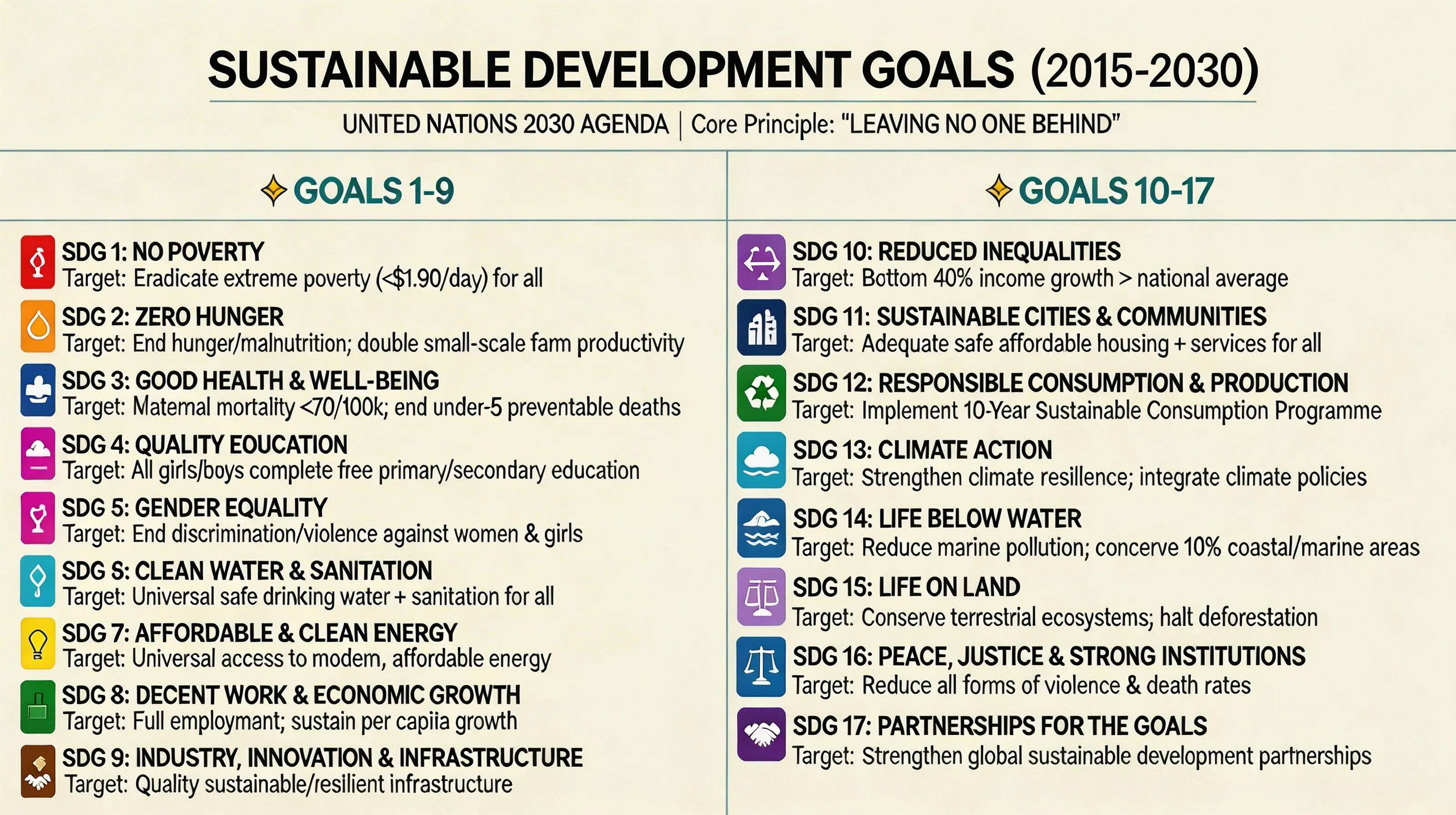
Building upon the achievements and lessons of the MDGs, the United Nations launched the Sustainable Development Goals in September 2015 as part of the 2030 Agenda for Sustainable Development. The SDGs represented a more ambitious, holistic, and universal approach to development that recognized the interconnectedness of social, economic, and environmental challenges. Unlike the MDGs, which primarily targeted developing countries, the SDGs apply to all nations, acknowledging that every country faces sustainability challenges regardless of its level of development.
The SDG framework expanded from 8 goals to 17, with 169 specific targets designed to address a broader range of issues including climate change, inequality, sustainable consumption, peace and justice, and institutional effectiveness. This expansion reflected a more sophisticated understanding of development that integrated environmental sustainability with economic growth and social inclusion. The principle of “leaving no one behind” became central to the SDG agenda, emphasizing the importance of reaching the most vulnerable and marginalized populations.
| Goal Number | Sustainable Development Goal | Key Metric Target for 2030 |
|---|---|---|
| SDG 1 | No Poverty | Eradicate extreme poverty (living on less than $1.90/day) for all people everywhere |
| SDG 2 | Zero Hunger | End all forms of hunger and malnutrition; double agricultural productivity of small-scale farmers |
| SDG 3 | Good Health and Well-being | Reduce global maternal mortality to less than 70 per 100,000 live births; end preventable deaths of newborns and children under 5 |
| SDG 4 | Quality Education | Ensure all girls and boys complete free, equitable, quality primary and secondary education |
| SDG 5 | Gender Equality | End all forms of discrimination and violence against women and girls everywhere |
| SDG 6 | Clean Water and Sanitation | Achieve universal and equitable access to safe and affordable drinking water and sanitation for all |
| SDG 7 | Affordable and Clean Energy | Ensure universal access to affordable, reliable, and modern energy services |
| SDG 8 | Decent Work and Economic Growth | Sustain per capita economic growth; achieve full and productive employment for all |
| SDG 9 | Industry, Innovation, and Infrastructure | Develop quality, reliable, sustainable, and resilient infrastructure, including regional and transborder |
| SDG 10 | Reduced Inequalities | Progressively achieve and sustain income growth of the bottom 40% at rates higher than the national average |
| SDG 11 | Sustainable Cities and Communities | Ensure access for all to adequate, safe, and affordable housing and basic services |
| SDG 12 | Responsible Consumption and Production | Implement the 10-Year Framework of Programmes on Sustainable Consumption and Production Patterns |
| SDG 13 | Climate Action | Strengthen resilience and adaptive capacity to climate-related hazards; integrate climate measures into policies |
| SDG 14 | Life Below Water | Prevent and significantly reduce marine pollution; conserve at least 10% of coastal and marine areas |
| SDG 15 | Life on Land | Ensure conservation, restoration, and sustainable use of terrestrial ecosystems; halt deforestation |
| Peace, Justice, and Strong Institutions | Significantly reduce all forms of violence and related death rates everywhere | |
| Partnerships for the Goals | Strengthen global partnership for sustainable development through finance, technology, capacity-building |
The SDGs acknowledge that ending poverty must go hand-in-hand with strategies that build economic growth while addressing climate change, environmental protection, social inclusion, and good governance. This integrated approach recognizes that interventions in one area affect outcomes in others, requiring coordinated action across multiple domains. The goals also emphasize the role of technology and innovation in accelerating progress, particularly in areas like renewable energy, sustainable agriculture, and digital connectivity.
As of the mid-2020s, progress toward the SDGs has been mixed and significantly disrupted by the COVID-19 pandemic, which reversed years of gains in poverty reduction and education. Climate change continues to pose an existential threat, with global temperatures rising and extreme weather events becoming more frequent and severe. Inequality within and between nations remains stubbornly high, and conflicts continue to displace millions of people worldwide. Nevertheless, advances in renewable energy deployment, digital technology adoption, and awareness of sustainability issues provide reasons for cautious optimism as the world approaches the 2030 deadline.
Proposal for Singularity Development Goals: 2030–2045
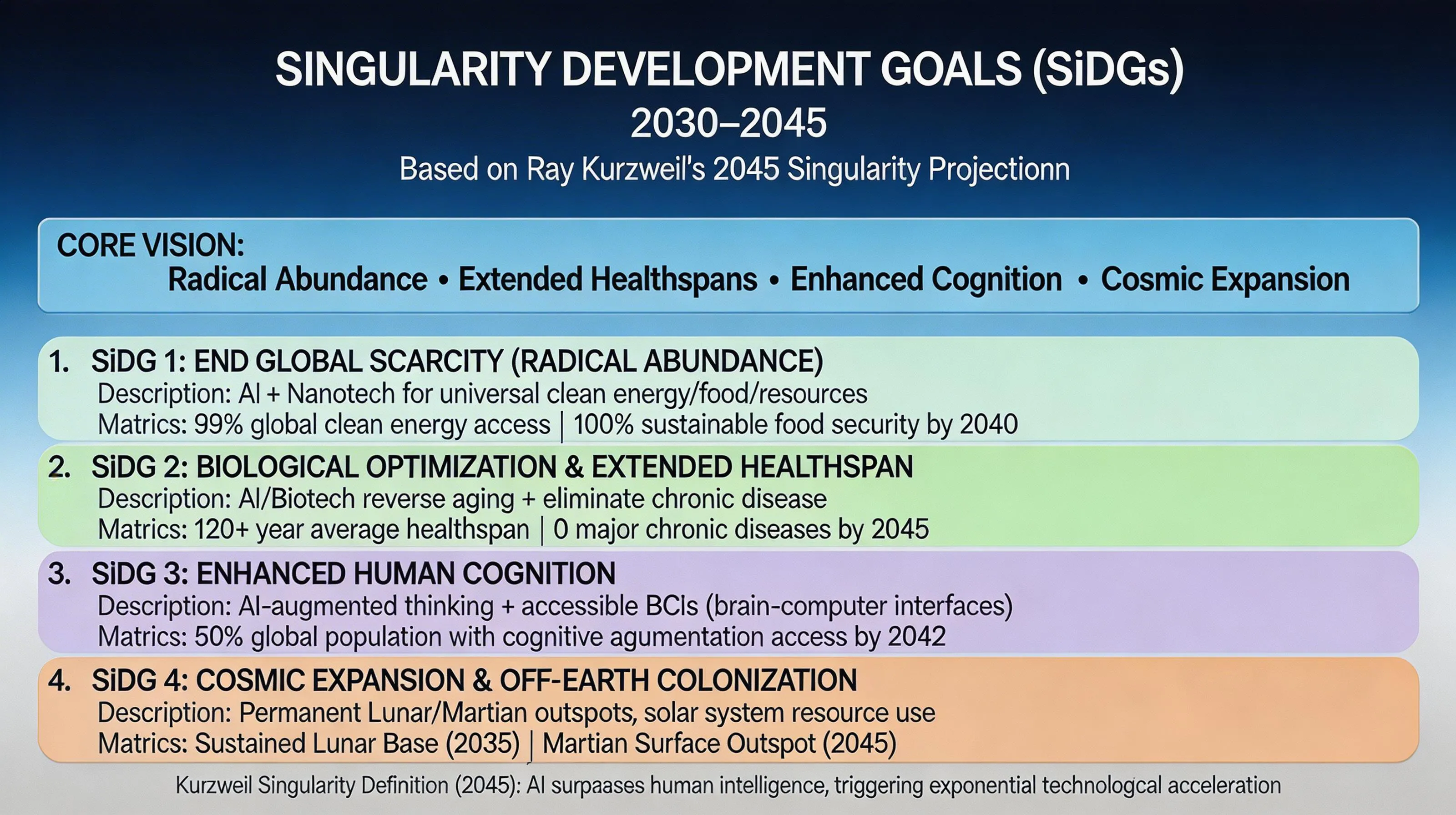
As we stand on the cusp of what technologist and futurist Ray Kurzweil has termed “the Singularity”—a projected point around 2045 when artificial intelligence will surpass human intelligence and trigger unprecedented technological acceleration—it becomes imperative to reimagine our development framework for this transformative era. The Singularity Development Goals represent a bold vision for humanity’s evolution beyond the constraints of twentieth-century thinking into a future characterized by radical abundance, extended healthspans, enhanced cognition, and cosmic expansion by 2045, the expected date of the “Singularity” according to Ray Kurzweil.
The SiDGs acknowledge that the exponential growth of technologies including artificial intelligence, biotechnology, nanotechnology, and quantum computing will fundamentally transform what is possible for human civilization. Rather than incremental improvements to existing systems, these goals embrace discontinuous leaps that could eliminate long-standing sources of human suffering while opening new frontiers for exploration and development. The SiDGs are designed not merely to solve problems but to transcend limitations that have constrained humanity throughout its history. Below are my 4 proposed SiDGs including a brief description and some possible metrics, with the help of some artificial intelligence:
SiDG 1: Longevity Escape Velocity — From Healthcare to Immortality
Goal Statement: Achieve longevity escape velocity whereby medical advances add more than one year of healthy life expectancy per year, effectively enabling biological immortality for those who choose it, and ensure universal access to life-extension technologies.
Core Principles: This goal recognizes that aging is not an inevitable biological destiny but a treatable condition amenable to medical intervention through cellular reprogramming, senescent cell clearance, telomere extension, organ regeneration, and molecular repair mechanisms. The integration of AI-driven personalized medicine, nanotechnology-based therapies, and genetic engineering will enable precise interventions at the cellular and molecular levels.
2045 Metrics:
- Global average healthy life expectancy passes 120+ years (from current ~73 years), with trends toward indefinite lifespans
- Biological age reversal therapies available to 90% of global population
- Cancer mortality reduced by 99% through AI-powered early detection and nanomedicine
- Alzheimer’s and neurodegenerative diseases effectively cured through neural regeneration technologies
- Organ regeneration and replacement through 3D bioprinting accessible in all nations
- 80% of population utilizing continuous AI health monitoring and predictive intervention systems
SiDG 2: Intelligence Amplification — From Education to Cognitive Enhancement
Goal Statement: Transcend baseline human intelligence (IQ 100) through the integration of artificial general intelligence, brain-computer interfaces, and cognitive enhancement technologies, ensuring equitable access to intelligence amplification while preserving human agency and diversity of thought.
Core Principles: This goal embraces the merger of biological and artificial intelligence to expand human cognitive capabilities beyond evolutionary constraints. Rather than replacing human intelligence, AGI serves as a collaborative partner that amplifies creativity, problem-solving, memory, and learning capacity while respecting individual autonomy and cognitive diversity.
2045 Metrics:
- Achieve AGI (Artificial General Intelligence) that passes comprehensive Turing tests across all domains
- 70% of population utilizing brain-computer interfaces for enhanced memory, processing speed, and knowledge access
- Average effective IQ increased to 150+ through neuroplastic training, nootropics, and cognitive enhancement, with trends toward continuously augmenting IQs
- Universal access to AI tutoring systems providing personalized education optimized for individual learning styles
- Neural lace technology enabling direct brain-to-brain communication for 50% of population
- Elimination of learning disabilities through targeted neural pathway enhancement
- Real-time language translation through neural interfaces making linguistic barriers obsolete
- Integration of collective intelligence networks enabling collaborative problem-solving at unprecedented scales
SiDG 3: Universal Abundance — From Scarcity Economics to Post-Scarcity Reality
Goal Statement: Transition from scarcity-based economic systems to an era of radical abundance where energy, food, water, materials, and computational resources are available to all humans at near-zero marginal cost through exponential technologies.
Core Principles: This goal recognizes that artificial intelligence, robotics, renewable energy, molecular manufacturing, and vertical farming can eliminate resource scarcity as a constraint on human flourishing. By harnessing exponential technologies, humanity can create systems where basic needs and beyond are met for everyone without depleting planetary resources.
2045 Metrics:
- 100% renewable energy transition complete; fusion power supplying half of global energy needs at close to $0.1/kWh
- Molecular assemblers and advanced 3D printing providing consumer goods at 99% cost reduction
- Vertical farming and cellular agriculture eliminating traditional agriculture’s environmental footprint while feeding 10+ billion people
- Universal access to clean water through atmospheric water harvesting and desalination at close to $0.1/liter
- Guaranteed universal basic income in all nations funded by AI-driven productivity gains and robotic manufacturing
- Average global per capita income (adjusted) reaches $100,000/year with 90% reduction in wealth inequality
- Automated mining operations in space providing rare earth elements and eliminating terrestrial extraction
- AI-managed circular economy achieving 90% material recycling rate with zero-waste manufacturing
- Post-scarcity healthcare where medical treatment costs approach zero through AI diagnosis and nanomedicine
SiDG 4: Cosmic Expansion — From Planetary Civilization to Multi-World Species
Goal Statement: Establish permanent, self-sustaining human settlements beyond Earth, beginning with the Moon and Mars, and launch humanity’s expansion into the solar system and beyond, ensuring our species’ long-term survival and cosmic potential.
Core Principles: This goal acknowledges that humanity’s future lies not in remaining confined to a single planet but in becoming a spacefaring civilization capable of inhabiting multiple worlds. The development of reusable rockets, in-situ resource utilization, and closed-loop life support systems makes this expansion both feasible and necessary for long-term species survival.
2045 Metrics:
- Permanent lunar base with a population of 100+ supporting research, manufacturing, and tourism
- Self-sustaining Martian colony of 1,000+ inhabitants producing their own food, water, oxygen, and energy
- Launch costs reduced to less than $100/kg through fully reusable spacecraft and the first experimental space elevators
- Asteroid mining operations providing metals and water to support space infrastructure
- Space-based solar power satellites transmitting clean energy to Earth
- First interstellar probe launched toward Alpha Centauri using breakthrough propulsion systems
- 2,000+ humans living and working in space (stations, Moon, Mars, asteroid habitats)
- Establishment of first orbital manufacturing facilities producing materials impossible to create in Earth’s gravity
- Space tourism industry enabling 1 million people/year to experience space in low Earth orbit (LEO) and beyond
- Detection of technosignatures from extraterrestrial civilizations through advanced SETI arrays
Evolution and Synthesis: From Millennium to Singularity
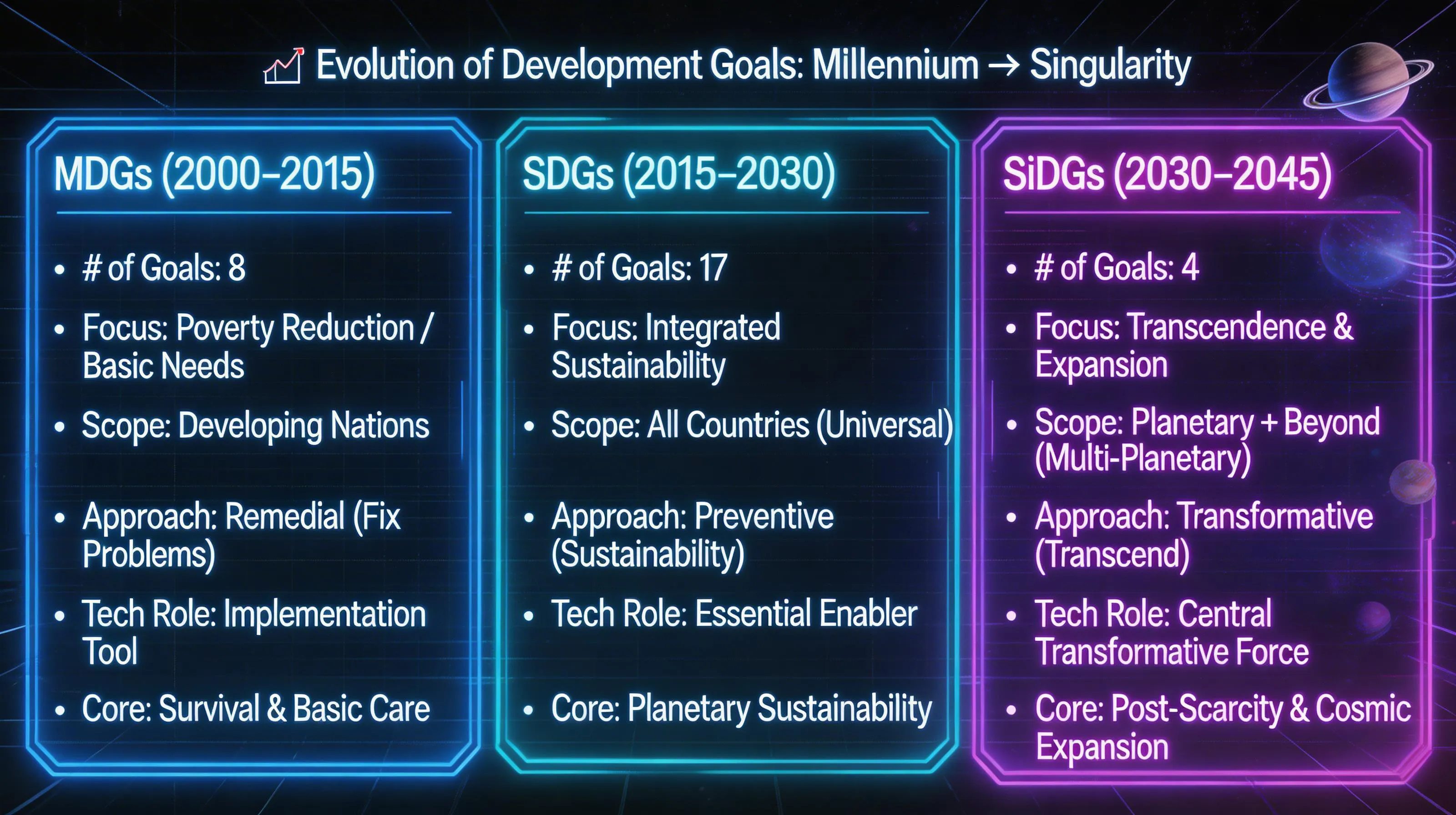
The evolution of United Nations development goals over half a century reflects humanity’s expanding vision of what is possible and necessary for our collective flourishing. From the pragmatic focus on basic needs in the MDGs, through the integrated sustainability approach of the SDGs, to the transformative ambitions of the proposed Singularity Development Goals, we observe a trajectory that mirrors our growing technological capabilities and our deepening understanding of interconnected global challenges.
Comparative Framework: Three Generations of Development Goals
| Aspect | MDGs (2000–2015) | SDGs (2015–2030) | SiDGs (2030–2045) |
|---|---|---|---|
| Number of Goals | 8 | 17 | 4 |
| Primary Focus | Poverty reduction and basic needs | Integrated sustainability | Transcendence and expansion |
| Scope | Primarily developing nations | Universal (all countries) | Planetary and beyond |
| Philosophical Approach | Remedial (fixing problems) | Preventive (sustainability) | Transformative (transcendence) |
| Time Horizon | 15 years | 15 years | 15 years and beyond |
| Key Innovation | Measurable targets | Integration of environment, society, economy | Integration of exponential technologies |
| Technology Role | Tool for implementation | Essential enabler | Central transformative force |
| Human Capability View | Fixed baseline to improve | Developable through education | Radically enhanceable through technology |
| Resource Paradigm | Scarcity requiring fair distribution | Sustainability requiring efficiency | Abundance through technological leverage |
| Geographic Scope | Earth-based development | Planetary sustainability | Multi-planetary expansion |
| Lifespan Assumption | ~70–80 years | ~80–90 years | 120+ years extending toward indefinite |
| Intelligence Model | Fixed biological IQ ~100 | Enhanced through education | Amplified through AGI and BCI to 150+ |
| Economic Model | Growth and redistribution | Sustainable inclusive growth | Post-scarcity abundance |
| Greatest Challenge Addressed | Survival and extreme poverty | Sustainability and climate change | Existential risk and cosmic expansion |
The progression from MDGs to SDGs to SiDGs represents not merely an expansion of goals but a fundamental reconceptualization of human potential and purpose. The MDGs addressed immediate suffering through incremental improvement. The SDGs recognized systemic interconnections and the need for sustainability. The SiDGs embrace the possibility of transcending historical constraints through exponential technologies, while acknowledging that such power must be wielded wisely and equitably.
The Transhumanist Vision: Humanity’s Next Chapter
As we contemplate the Singularity Development Goals, we must acknowledge that we are proposing something unprecedented in human history: the conscious direction of our own evolution beyond biological constraints. The transhumanist philosophy underlying the SiDGs recognizes that humanity need not accept the limitations imposed by our evolutionary heritage. Through the ethical application of technology, we can enhance our physical capabilities, extend our lifespans, amplify our intelligence, and expand our presence throughout the cosmos.
Super Longevity represents our liberation from the tyranny of aging and death. For millennia, humans have accepted mortality as inevitable, structuring our civilizations, religions, and philosophies around this constraint. The convergence of biotechnology, nanotechnology, and artificial intelligence now makes it scientifically plausible to treat aging as a curable condition. By 2045, we may witness the first generation of humans for whom death from aging becomes optional rather than inevitable.
This transformation will fundamentally reshape human psychology, social structures, and our relationship with time itself. When death no longer looms at 80 or 90 years, humans can pursue multi-decade projects, accumulate wisdom across centuries, and develop depths of expertise impossible within current lifespans.
Super Intelligence allows the expansion of human consciousness and cognitive capability beyond the constraints of our biological neural networks. The average human IQ of 100 represents not a ceiling but a baseline that can be transcended through brain-computer interfaces, genetic enhancement, and synergistic collaboration with artificial general intelligence.
Imagine a world where every person has access to the collective knowledge of humanity, can process information at computational speeds, and can communicate thoughts directly brain-to-brain without the lossy compression of language. This amplification of intelligence could enable us to solve problems currently beyond our comprehension, from the nature of consciousness to the structure of reality itself. The fusion of biological and artificial intelligence creates not a replacement of humanity but an elevation of it.
Super Abundance reimagines economics in an era where exponential technologies eliminate scarcity as a constraint. When energy from fusion and solar power becomes too cheap to meter, when molecular assemblers can create any object from raw materials at negligible cost, when artificial intelligence can manage production and distribution with superhuman efficiency, the fundamental assumptions of scarcity economics collapse.
Post-scarcity does not mean the end of economics or human striving—it means liberation from want, allowing humans to pursue meaning, creativity, and exploration rather than mere survival. Universal abundance creates the foundation for genuine freedom, where every person can develop their potential without being constrained by lack of resources.
Cosmic Expansion represents humanity’s graduation from a planetary species to a cosmic civilization. Earth has been humanity’s cradle, but a species confined to a single planet lives under perpetual existential threat from asteroid impacts, super volcanoes, or our own technological misadventures. By establishing self-sustaining colonies on the Moon, Mars, and throughout the solar system, we ensure our long-term survival and open infinite frontiers for exploration and development.
The cosmos contains resources, knowledge, and possibilities beyond our current imagination. As we spread throughout the galaxy over the coming centuries and millennia, we fulfill not just a practical imperative but a spiritual one—the urge to explore, discover, and transcend boundaries that has driven human progress since our ancestors first looked at the stars.
Inspirational Voices for Humanity’s Future
Throughout history, visionaries have imagined futures that seemed impossible to their contemporaries but later became reality. As we stand at the threshold of the most transformative century in human existence, their words light the path forward:
“The future belongs to those who believe in the beauty of their dreams.”
Eleanor Roosevelt
“The best way to predict the future is to invent it.”
Alan Kay
“We are not going to be able to operate our Spaceship Earth successfully nor for much longer unless we see it as a whole spaceship and our fate as common. It has to be everybody or nobody.”
Buckminster Fuller
“The universe is probably littered with the one-planet graves of cultures which made the sensible economic decision that there’s no good reason to go into space—each discovered, studied, and remembered by the ones who made the irrational decision.”
Randall Munroe
“The coming era of Artificial Intelligence will not be the era of war, but be the era of deep compassion, non-violence, and love.”
Amit Ray
“The Earth is the cradle of humanity, but mankind cannot stay in the cradle forever.”
Konstantin Tsiolkovsky
“I don’t think the human race will survive the next thousand years, unless we spread into space. There are too many accidents that can befall life on a single planet.”
Stephen Hawking
“By 2029, computers will have emotional intelligence and be convincing as people. By 2045, we will multiply our intelligence a billionfold by linking wirelessly from our neocortex to a synthetic neocortex in the cloud.”
Ray Kurzweil
“The reasonable man adapts himself to the world; the unreasonable one persists in trying to adapt the world to himself. Therefore, all progress depends on the unreasonable man.”
George Bernard Shaw
Conclusion: Choosing Our Destiny
The Singularity Development Goals represent more than a policy framework—they embody a choice about what kind of future humanity will create. We stand at a pivotal moment where our technologies have become powerful enough to reshape reality itself, for better or worse. The path to super longevity, super intelligence, super abundance, and cosmic expansion is neither guaranteed nor without peril. These technologies could create a utopia of abundance and flourishing, or they could amplify existing inequalities and create new forms of suffering.
The SiDGs challenge us to aim higher than mere survival, sustainability, or incremental improvement. They call us to embrace our potential as a species capable of transcending biological limitations, spreading throughout the cosmos, and creating forms of flourishing currently beyond our imagination. Yet they also demand that we proceed with wisdom, ensuring that these transformative technologies benefit all of humanity rather than just a privileged few.
From the modest but essential goals of the MDGs—ensuring children had enough food and could attend school—through the integrated sustainability vision of the SDGs, to the transcendent ambitions of the SiDGs, we see a species that refuses to accept limitations as permanent, that dares to dream of a future radically better than its past. Whether we will achieve the Singularity Development Goals by 2045 remains uncertain, but the act of articulating and pursuing them shapes our trajectory and declares our intention: humanity chooses not merely to survive but to thrive, not merely to persist but to flourish, not merely to inhabit one world but to embrace the infinite possibilities of the cosmos.
The journey from the original Millennium Development Goals in 2000 to the proposed Singularity Development Goals by 2045 is not just about technological achievement—it is about evolving our consciousness, expanding our compassion, and fulfilling our cosmic potential. As we move forward into this extraordinary future, we carry with us the accumulated wisdom of our ancestors and the dreams of generations yet unborn. The Singularity Development Goals light the path toward a future where every human can live with dignity, purpose, and the opportunity to explore the full depths of what existence can mean. This is our challenge, our opportunity, and our destiny.